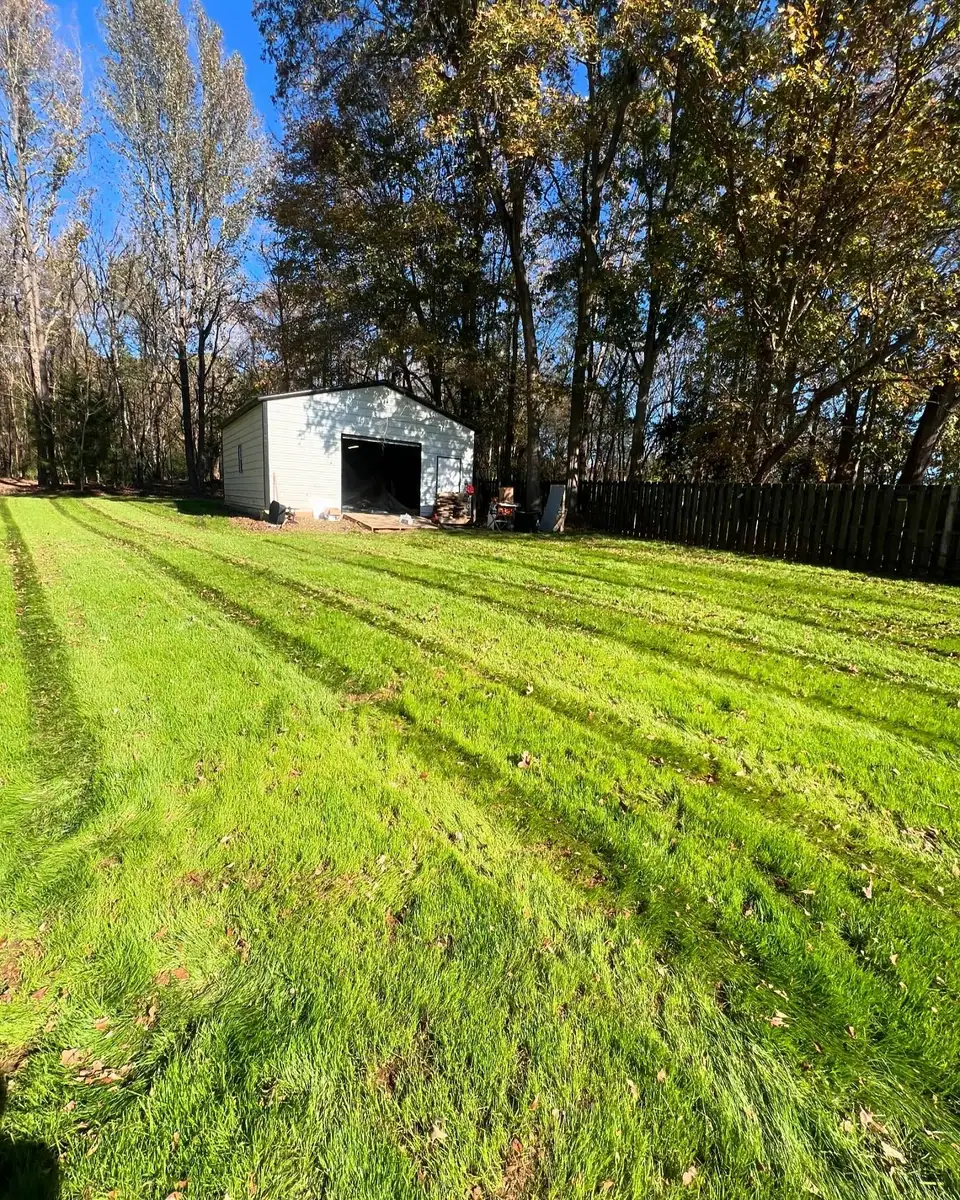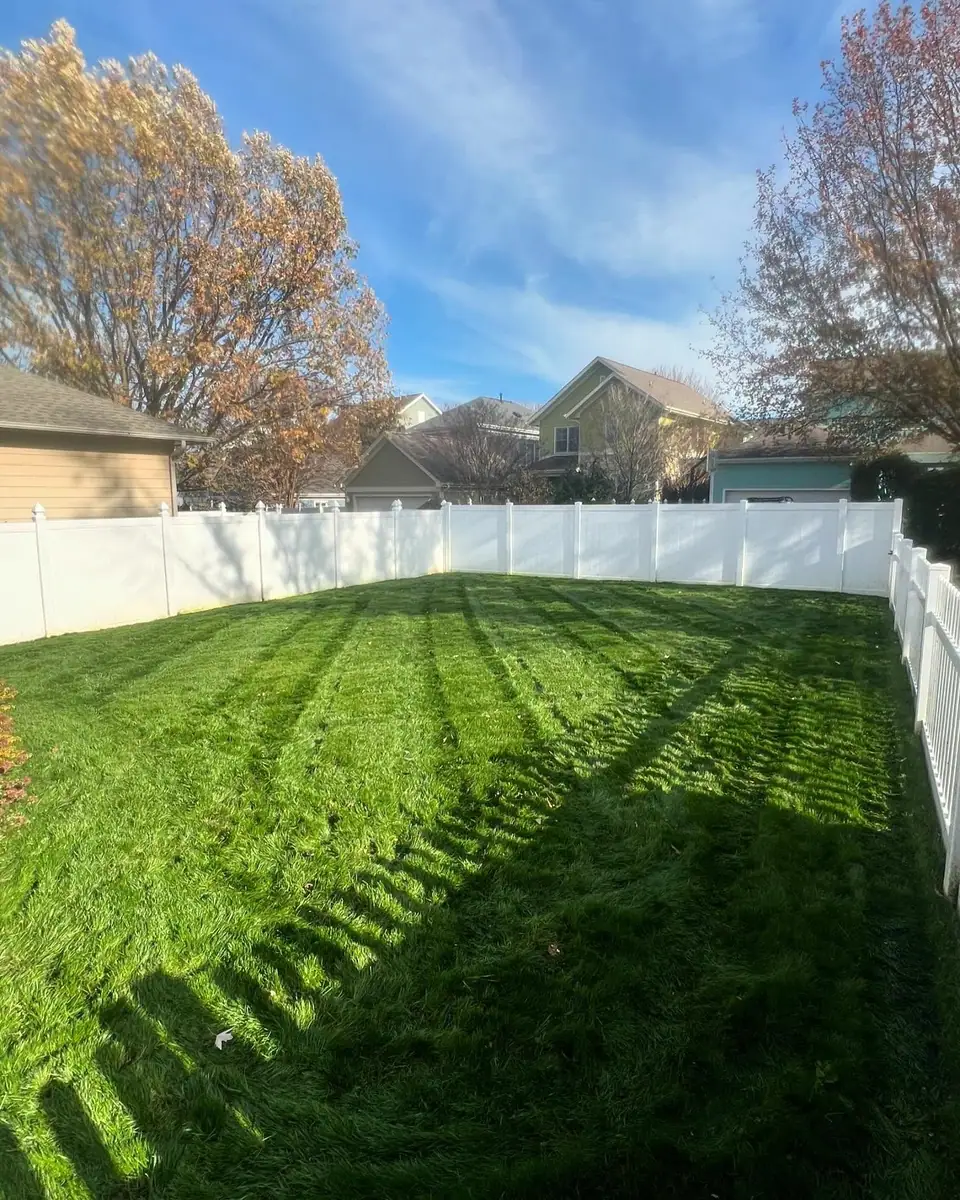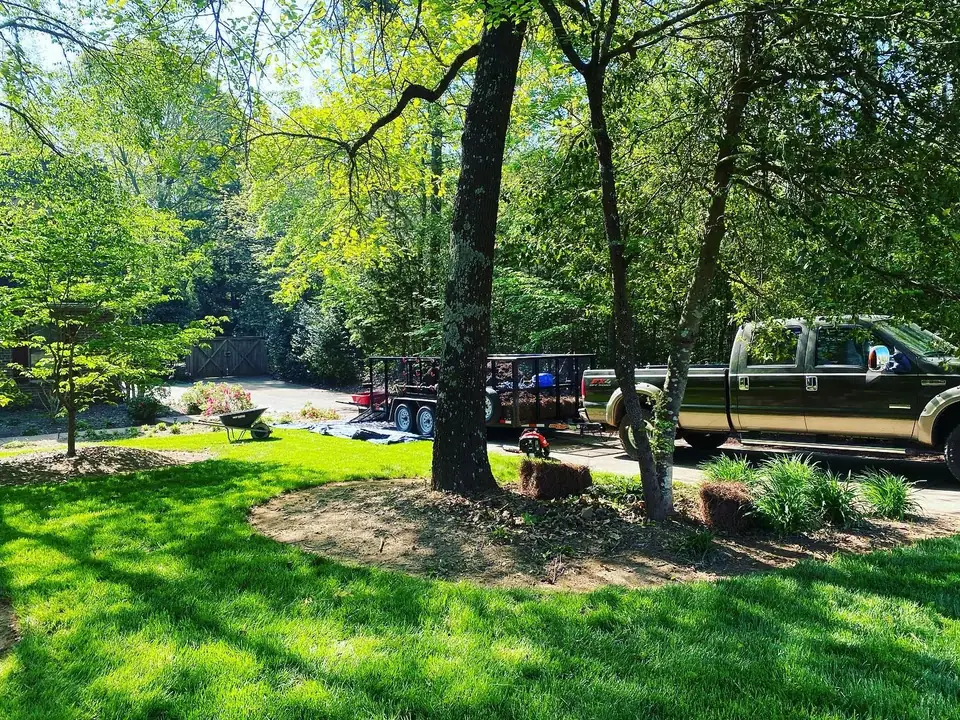
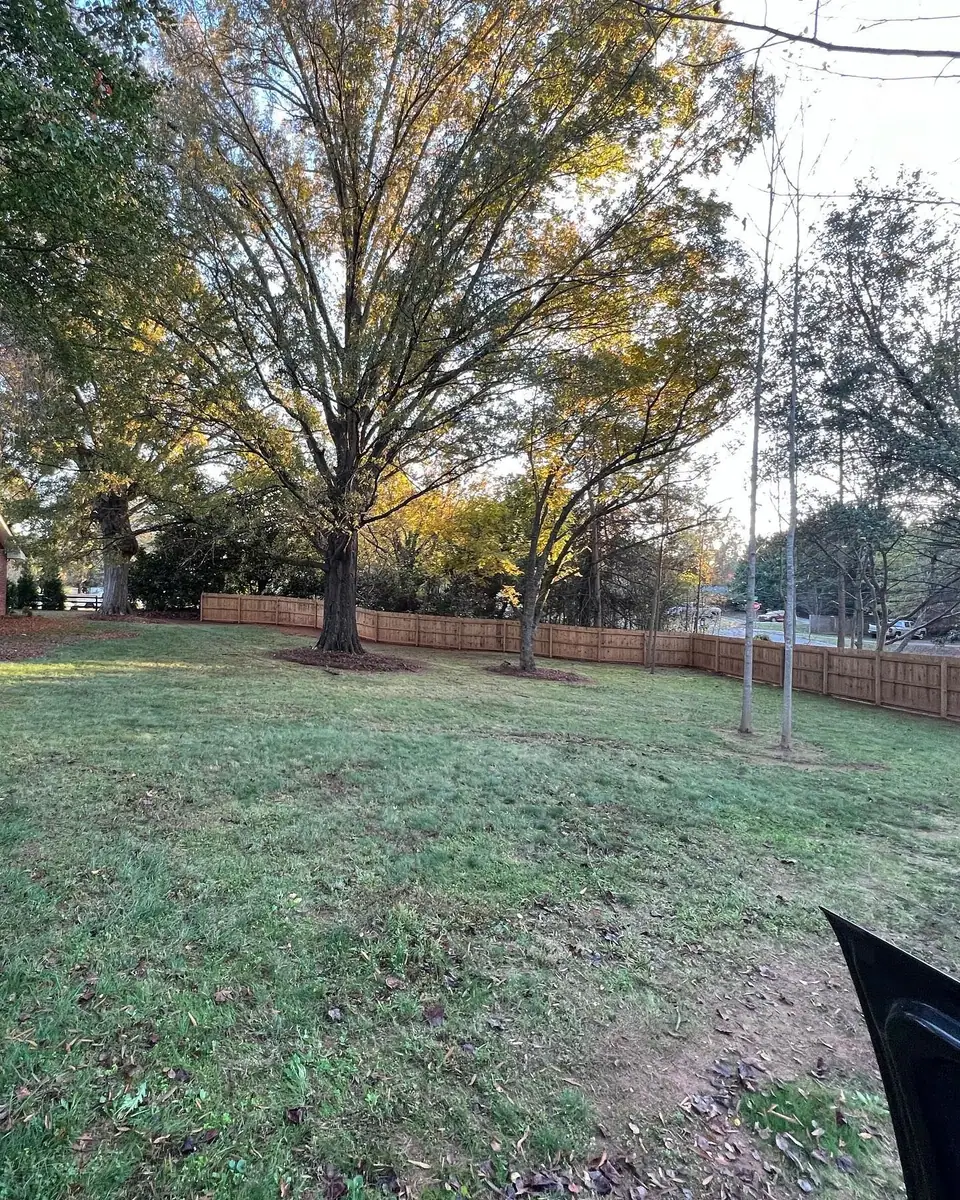
For most Weddington, NC lawns, aeration and overseeding should happen in early fall, roughly September into October, because the Tall Fescue that grows under the area’s mature oaks and hickories germinates best then. Core aeration relieves compacted clay, overseeding fills thin areas, and starter fertilizer, lime and steady leaf removal help the new grass take hold.
Weddington is known for big, wooded lots, long frontages and mature hardwoods. Those trees are a big part of why the properties look the way they do, and they are also why so many Weddington lawns are Tall Fescue that thins out every summer. Aeration and overseeding in Weddington, NC is how a shaded Fescue lawn on clay gets thicker year after year instead of slowly giving way to bare soil and moss.
Galloway Scapes provides core aeration and overseeding for homes across Weddington, Marvin and Waxhaw. Here is how timing, shade and leaf season fit together on larger lots, and what to do if this fall’s window has already passed.
- Tall Fescue is the usual lawn grass under Weddington’s mature trees
- Early fall is the best window for Fescue aeration and overseeding
- Core aeration, not spike aeration, is what relieves compacted clay
- Leaf removal through late fall protects new seedlings
Why Weddington lawns thin out
Three things work against lawns here. The first is shade: under oaks, hickories, maples and pines, Tall Fescue is usually the only practical lawn grass, because Bermuda won’t grow without full sun. The second is soil: Union County red clay compacts under mowers, foot traffic and heavy rain, so water sheds off and roots stay shallow. The third is summer heat, which Fescue tolerates but doesn’t love. A Fescue lawn that looks good in May and thin by August is the predictable result.
Fescue doesn’t spread much on its own the way Bermuda does, so it doesn’t fill those thin spots by itself. It has to be reseeded. That is why aeration and overseeding every fall is the core of Fescue care.
When to aerate and overseed in Weddington
For Tall Fescue in the North Carolina Piedmont, the best window is early fall, roughly September into October. Soil is still warm, which speeds germination, while cooling air and fall rain favor young grass. Seed sown then has the rest of fall and the following spring to build roots before summer heat arrives.
Spring overseeding is a backup option, but seedlings face their first summer with shallow roots and many don’t survive. Warm-season lawns like Bermuda and Zoysia are on a different schedule: they are aerated in early summer, generally June and July, and are not overseeded with Fescue.
Core aeration for Weddington clay soil
A core aerator pulls thousands of small plugs of soil from the lawn and leaves them on the surface. Each hole gives roots room to grow and lets water, oxygen, fertilizer and lime reach the root zone. The plugs look messy for a week or two, then break down with rain and mowing. Spike aerators only push soil aside, which on clay can compact the soil around each hole, so we use core aeration, often with multiple passes on heavily compacted areas.
Before the aerator runs, sprinkler heads and shallow utility lines are flagged so they aren’t damaged. That matters on large Weddington properties, where irrigation often runs along long frontages and driveways.
Overseeding Fescue under mature trees
After aeration, quality Tall Fescue seed is spread across the lawn and concentrated in thin areas so it falls into the aeration holes for good seed-to-soil contact. A starter fertilizer gives seedlings the nutrients they need, and lime is applied when the soil calls for it, since clay soils in this region tend to be acidic. You get written instructions for watering and mowing while the new grass establishes.
Under the heaviest canopy, even Fescue can struggle. Raising the canopy with selective tree pruning lets more light reach the turf, and in spots where grass simply won’t hold, a mulched or pine straw bed connecting the tree rings can look more intentional and cost less to maintain than fighting for grass every year.
Leaf season and new seedlings
On a heavily wooded lot, leaves don’t fall once. They come down from late October through December, with oaks often finishing last. A single big cleanup lets leaves mat on the lawn for weeks and smother newly overseeded Fescue right when it needs light. Repeated visits through peak drop keep the seedlings uncovered. Blowing is also gentler on new grass than aggressive raking. The year-round Galloway Lawn Program includes eight consecutive weeks of fall leaf cleanup, which suits properties with a lot of canopy.
Aftercare: watering and mowing
- Keep the seedbed consistently moist for the first two to three weeks with light, frequent watering
- Shift to deeper, less frequent watering as the grass fills in
- Let new grass reach normal mowing height before the first cut, and mow with a sharp blade
- Keep foot traffic light and use a blower rather than a rake over new seedlings
- Hold off on standard pre-emergent, which stops grass seed from germinating along with weeds
Most lawns show germination within a week or two and fill in noticeably through fall. One season helps; repeating aeration and overseeding every fall is how thin Fescue lawns on clay become thick ones.
Missed the fall window? What to do now
If it is already late fall and the lawn wasn’t overseeded, the most useful steps now are keeping leaves off the turf, mowing at the right height until growth stops and planning for next September. Late winter brings pre-emergent decisions, so if you intend to overseed in spring as a stopgap, the weed control plan needs to account for it. Winter is also a good time to fix the problems that cause thin turf in the first place, like low spots that hold water or washouts along long driveways, so next fall’s seed lands on ground that drains. For areas that are bare rather than thin, sod on prepared soil can be the faster route.
Questions from local homeowners
When is the best time to aerate and overseed in Weddington, NC?
For Tall Fescue lawns, early fall, roughly September into October. Soil is still warm for germination, air temperatures are cooling and fall rain helps keep the seedbed moist. Bermuda and Zoysia lawns are aerated in early summer instead and are not overseeded with Fescue.
Is it too late to overseed in late November?
For most Weddington Fescue lawns, late November is past the reliable window. Spring overseeding is possible as a backup, but seedlings face summer heat with shallow roots. Most homeowners get better results by planning aeration and overseeding for next September and keeping leaves off the lawn in the meantime.
Can you aerate and overseed a large, multi-acre Weddington property?
Yes. Larger properties are planned around their layout, with equipment sized for wide-open turf and extra passes on compacted areas. Fall aeration and overseeding is also built into the year-round Galloway Lawn Program for Fescue lawns.
How much does aeration and overseeding cost?
Pricing depends on lawn size, how compacted the soil is and whether multiple passes are needed, how much seed the thin areas require, and whether starter fertilizer and lime are included. Slopes, gates and obstacles also affect time on site. Galloway Scapes provides a free written estimate after looking at the lawn.
Will grass grow under my oak trees?
Tall Fescue is the best option for shaded Weddington yards, and raising the tree canopy helps. In the deepest shade, a mulched or pine straw bed connecting the tree rings is often a better long-term answer than reseeding every year.
Want next fall’s aeration and overseeding on the calendar, or a plan for the thin spots now? Request a free estimate or call (803) 487-5240. We will walk the lawn, check the soil and shade, and put the plan in writing.
Need help with lawn maintenance?
Free, written estimates from an owner-led crew.