★★★★★ 4.9 on Google · 16 reviewsLicensed, bonded & insuredOwner on every jobFree written estimates
Our approach
How we approach standing water removal.
Standing water kills turf, breeds mosquitoes and softens the ground. We figure out whether it’s a low spot, compacted clay or water arriving from elsewhere — then fill and regrade, aerate, or drain it to a safe outlet.
Standing water removal in Waxhaw, NC: ending puddles that won't go away
The short answer
Standing water in a yard is a symptom, not the problem. Permanent removal means finding why water collects, usually a low spot, compacted clay, poor grading or roof water, and then fixing it by regrading, installing a catch basin with solid pipe, adding a French drain or redirecting downspouts, so the area drains within hours of a storm instead of days.
01Why does water pool in my yard?
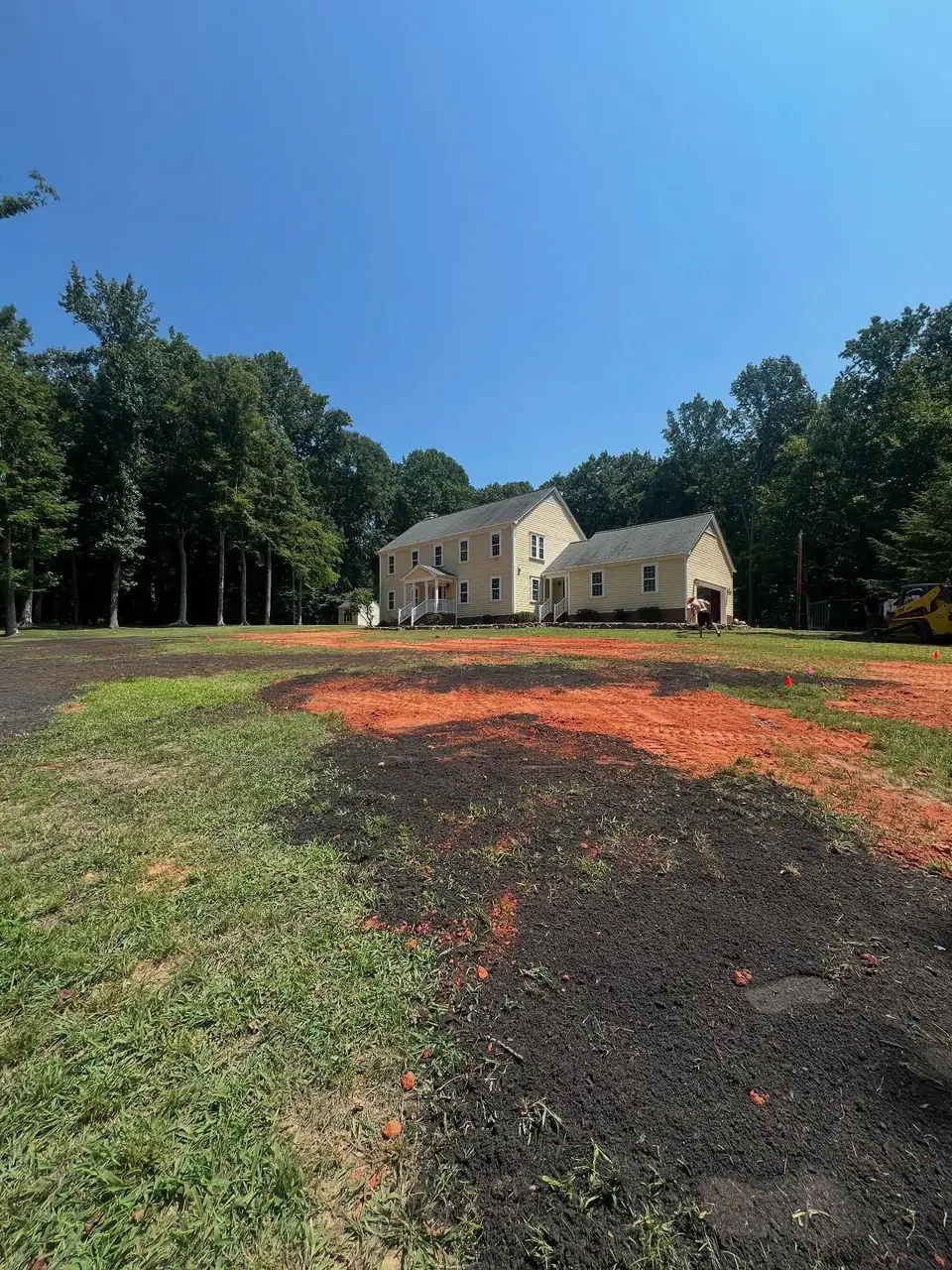
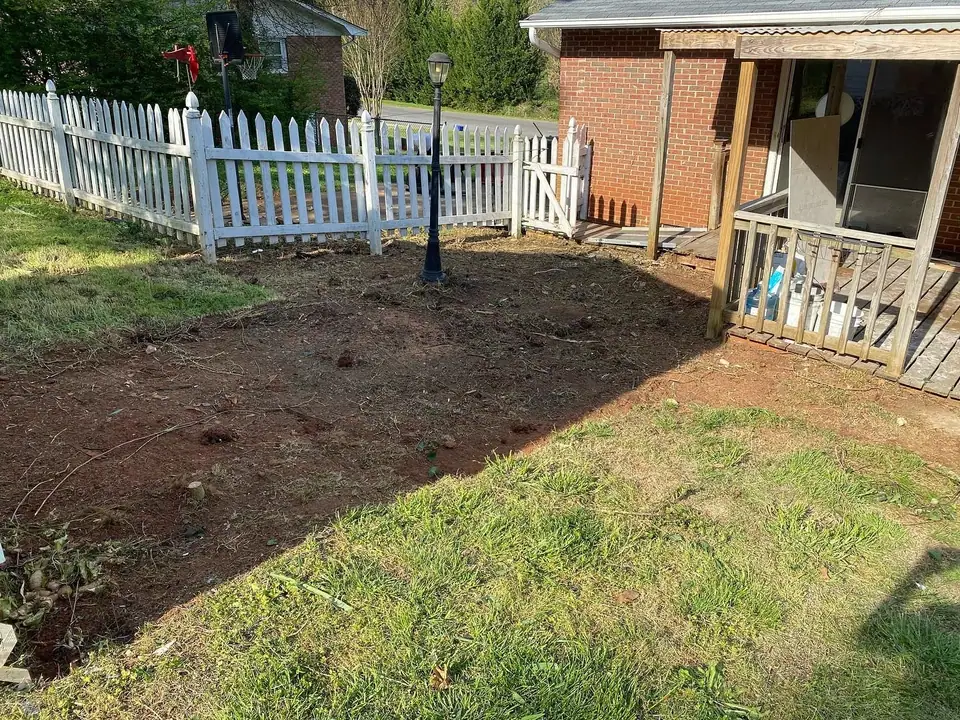
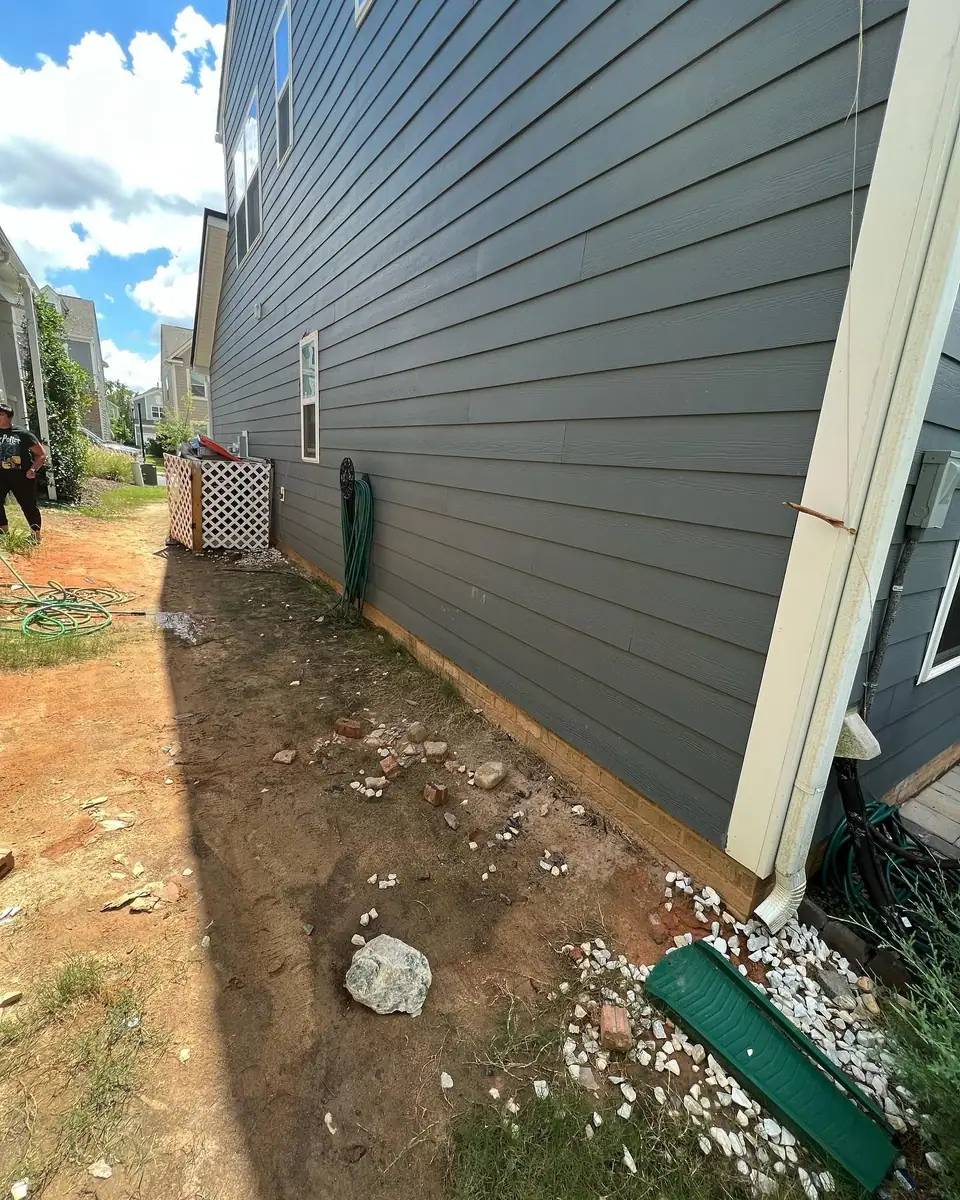
Water pools wherever it can't flow away or soak in fast enough. In the Charlotte area, both happen easily: red clay absorbs water slowly, and many yards have subtle low spots left from construction grading, settling over old trenches or tree removals, or areas where soil was never shaped to drain.
Other common causes include downspouts discharging into low areas, runoff from a neighbor's yard, compacted soil along driveways and play areas, and swales that have filled in with sediment or been blocked by landscaping changes.
Low spots: settled areas or construction grading errors
Compaction: clay sealed by traffic and equipment
Roof water: downspouts emptying into the problem area
Blocked swales: drainage paths filled in or landscaped over
Uphill runoff: water arriving from neighboring lots
02Is standing water in the yard a problem?
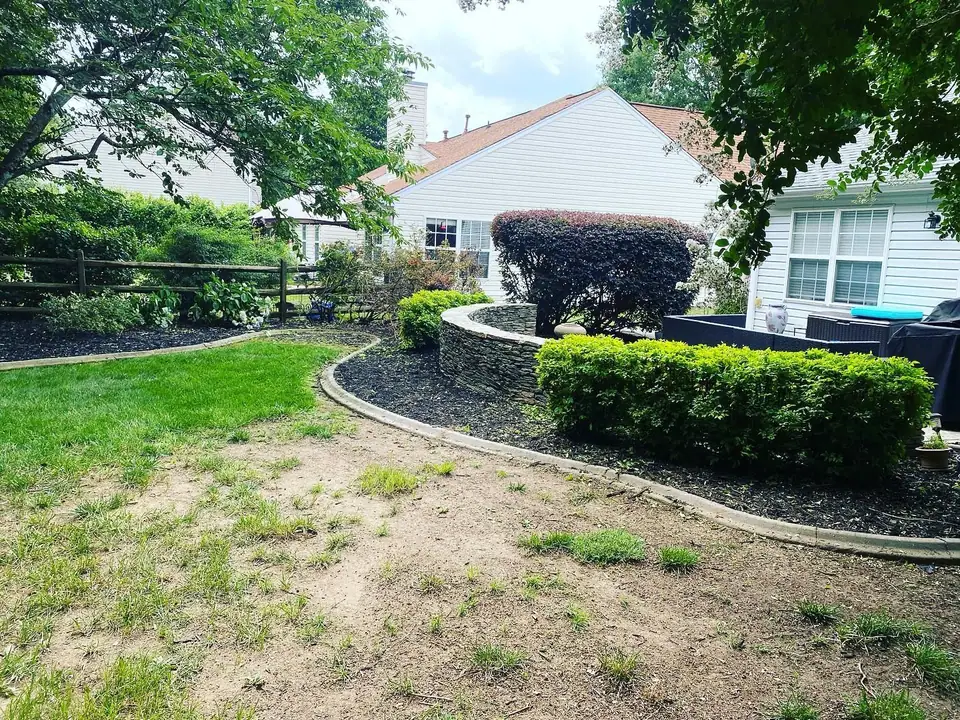
Beyond the obvious mess, it causes real damage. Grass under standing water suffocates and dies, leaving muddy bare patches. Mosquitoes can breed in water that sits for several days. Saturated soil near the house contributes to foundation and crawl space moisture. And soggy areas get rutted by mowers and foot traffic, making the problem worse each time.
If water pools against the foundation, along a patio or across a walkway, it is worth addressing sooner rather than later.
03How is standing water fixed permanently?
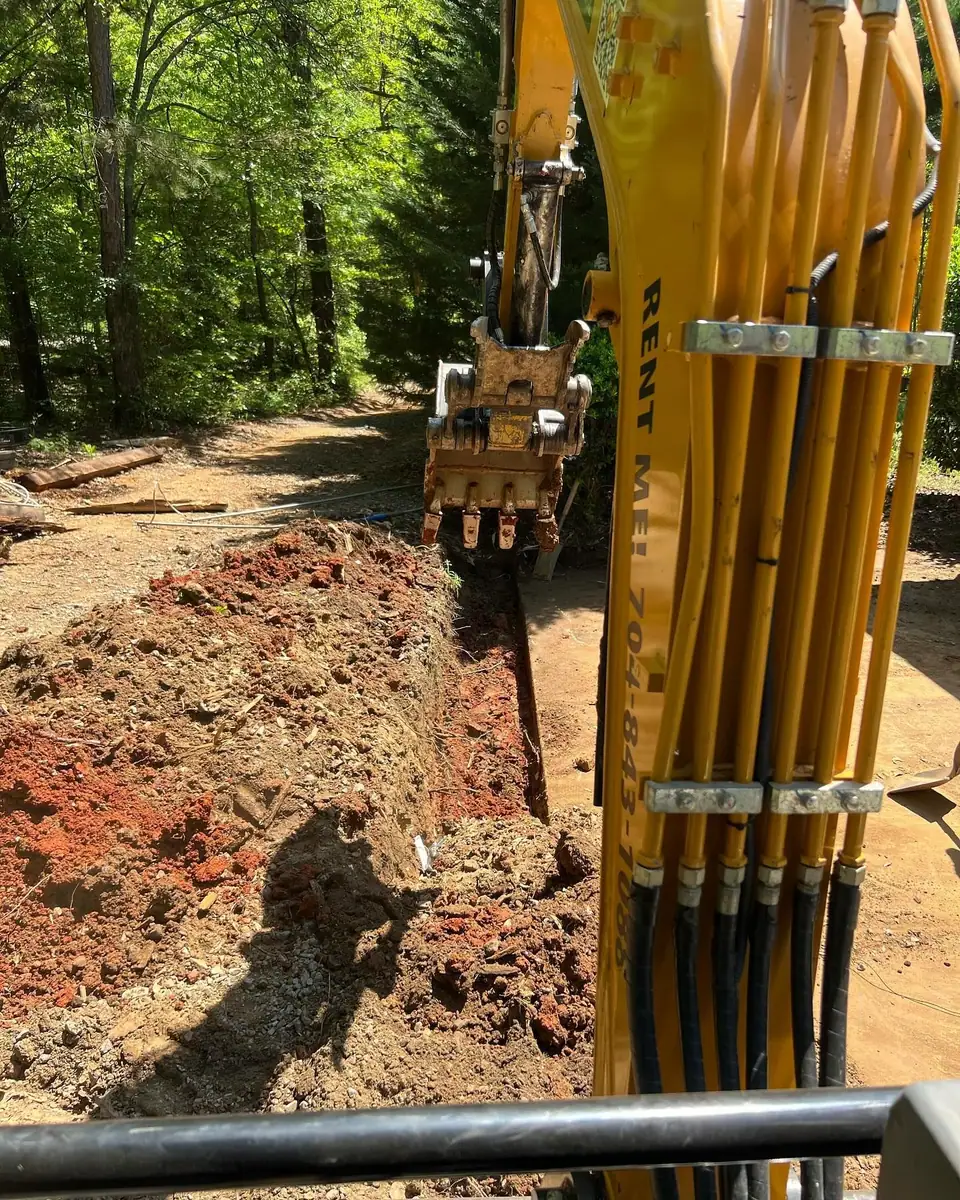
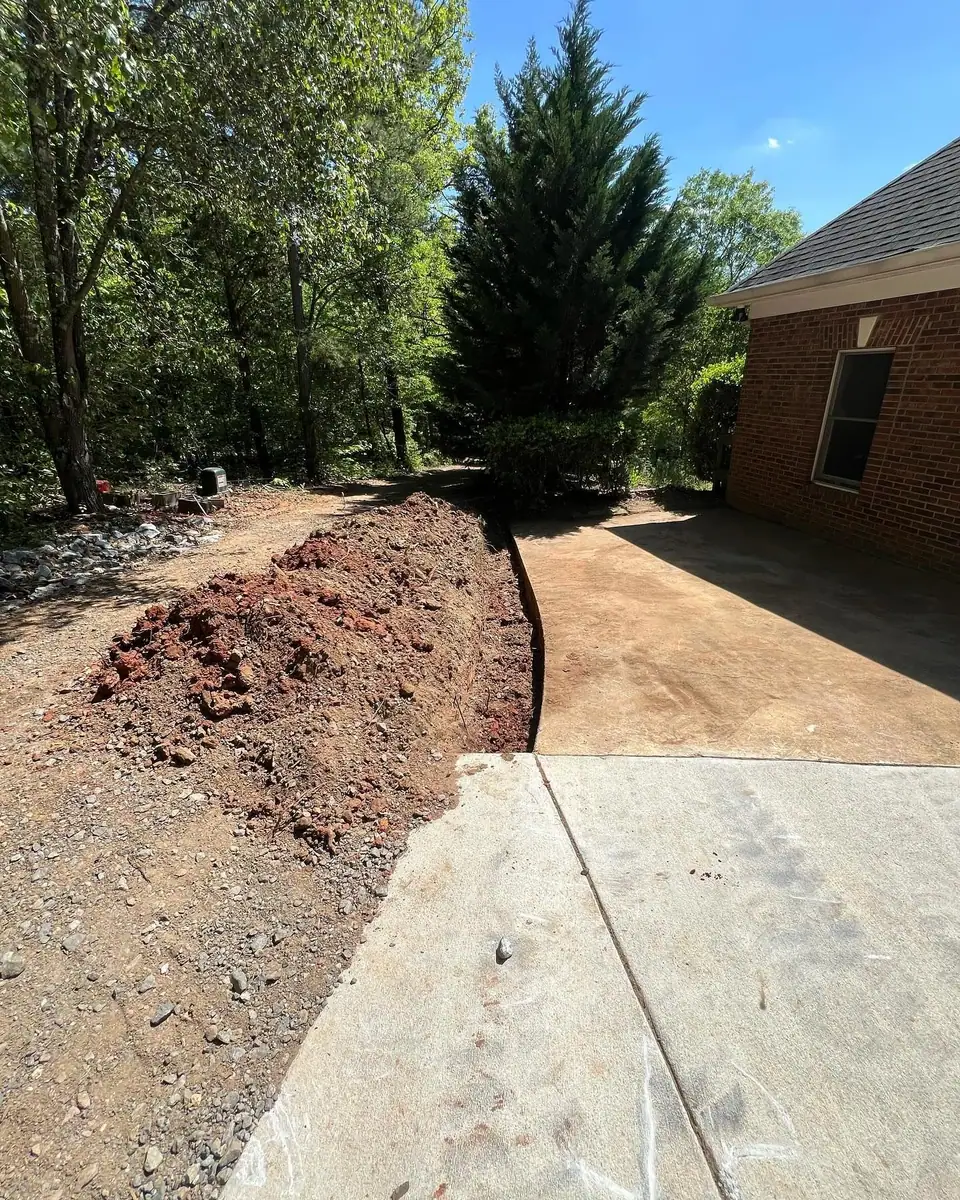
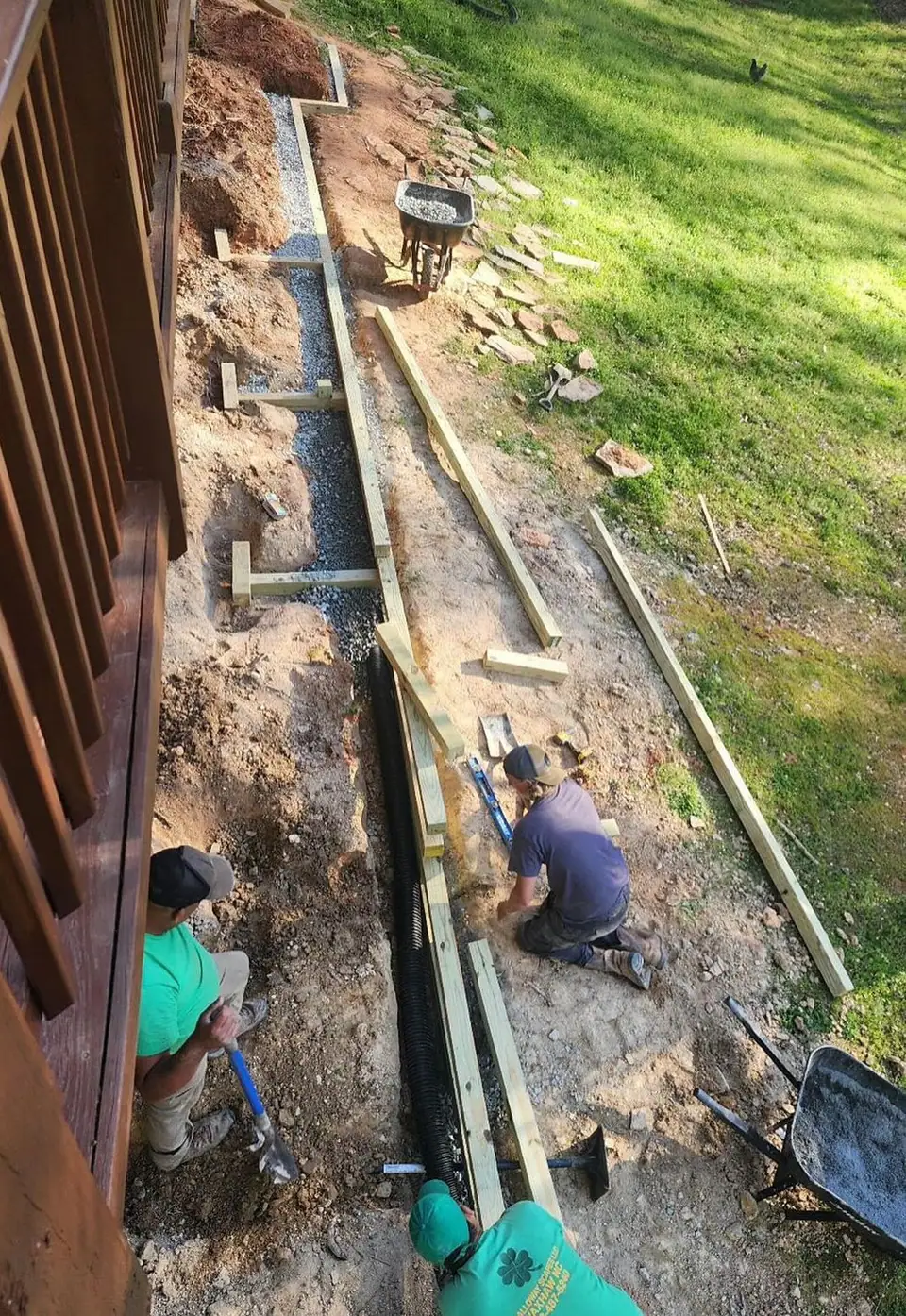
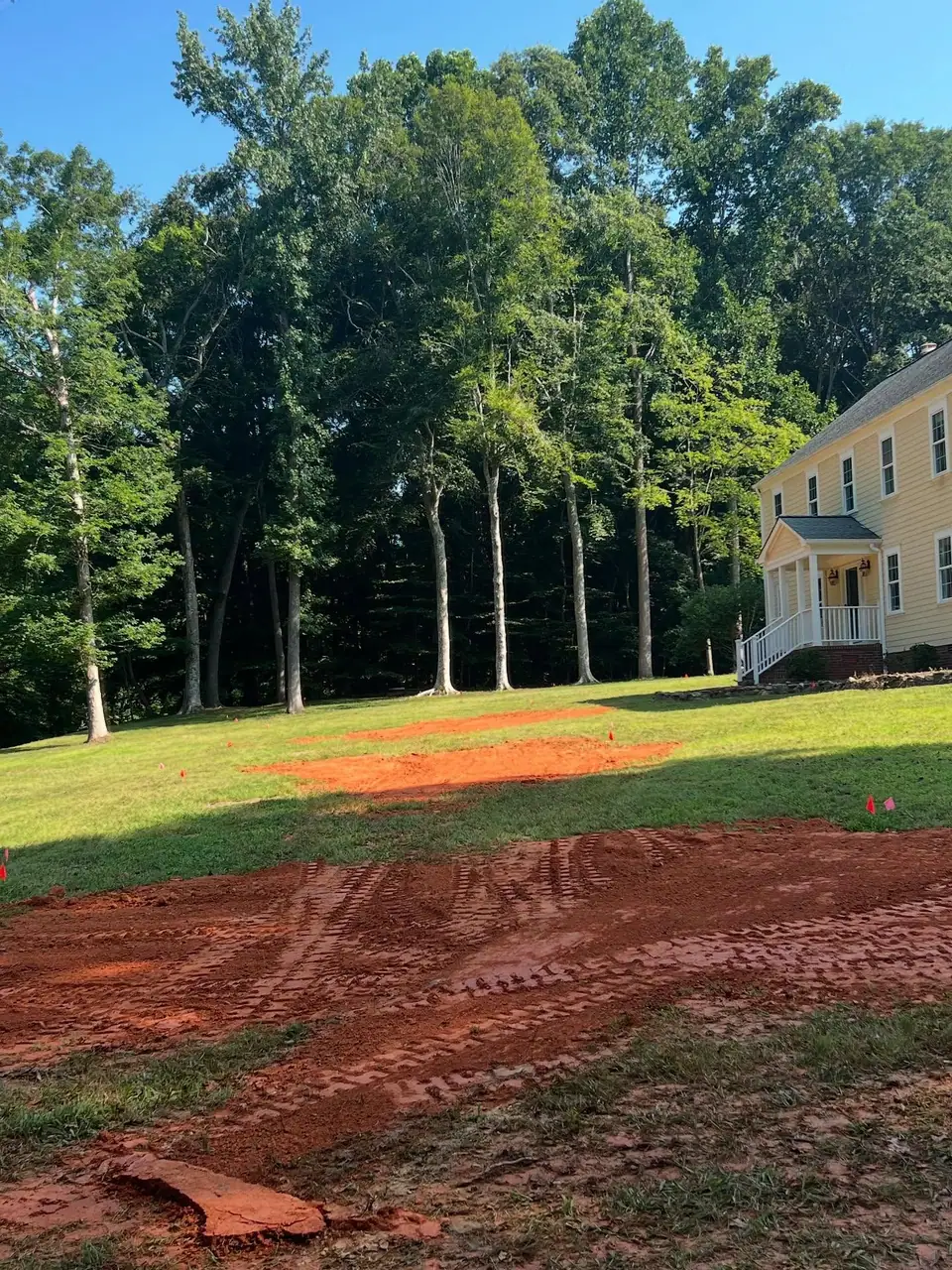
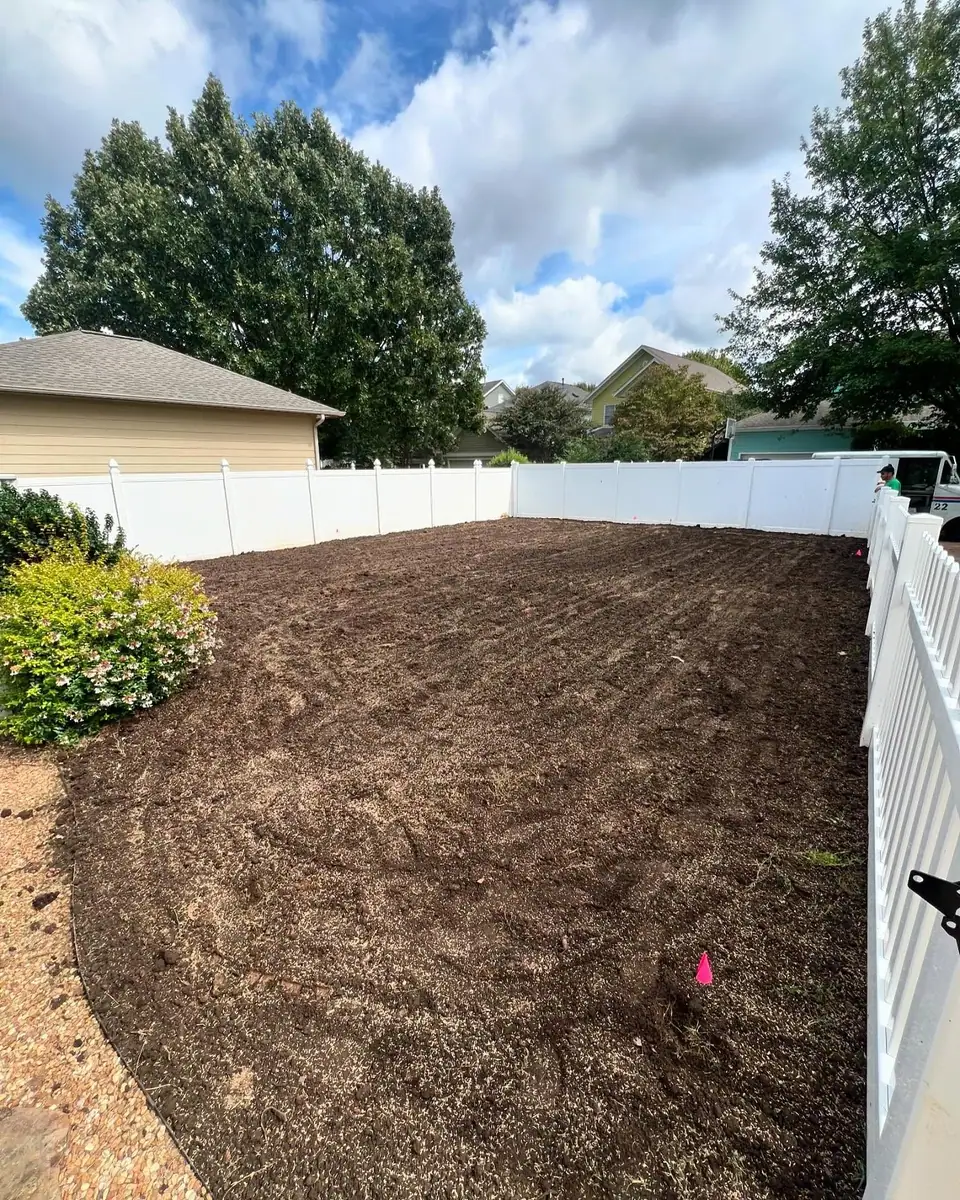
Pumping or spreading sand only moves the problem. A permanent fix changes how water moves. For shallow low spots, regrading with topsoil can raise the area and give it a gentle slope to drain. For larger depressions, a catch basin at the low point collects surface water and a solid pipe carries it to a safe outlet. If the ground stays saturated below the surface, a French drain is added.
When roof water is part of the problem, downspouts are piped away. Often the best result combines two or more of these steps.
04What happens during a standing water project?
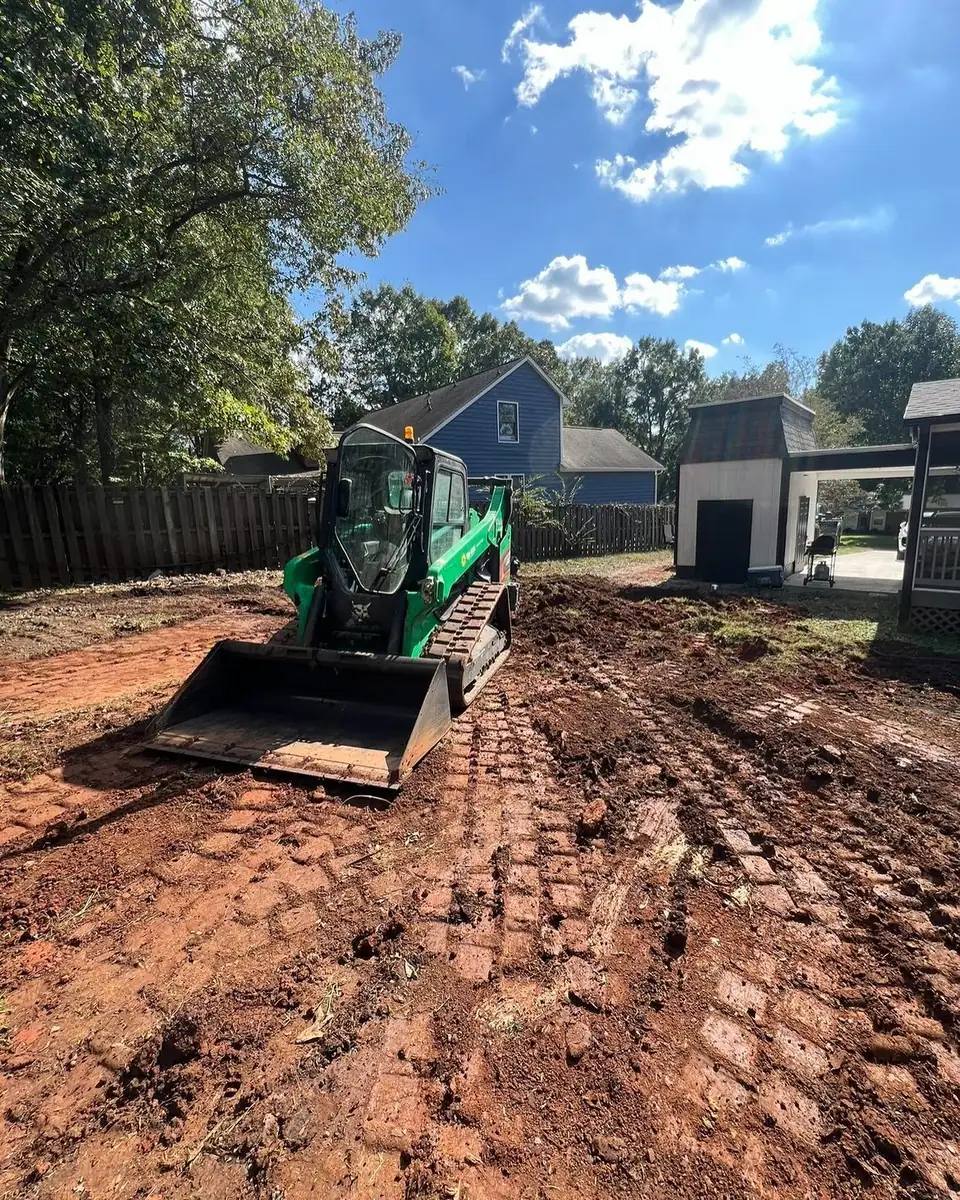
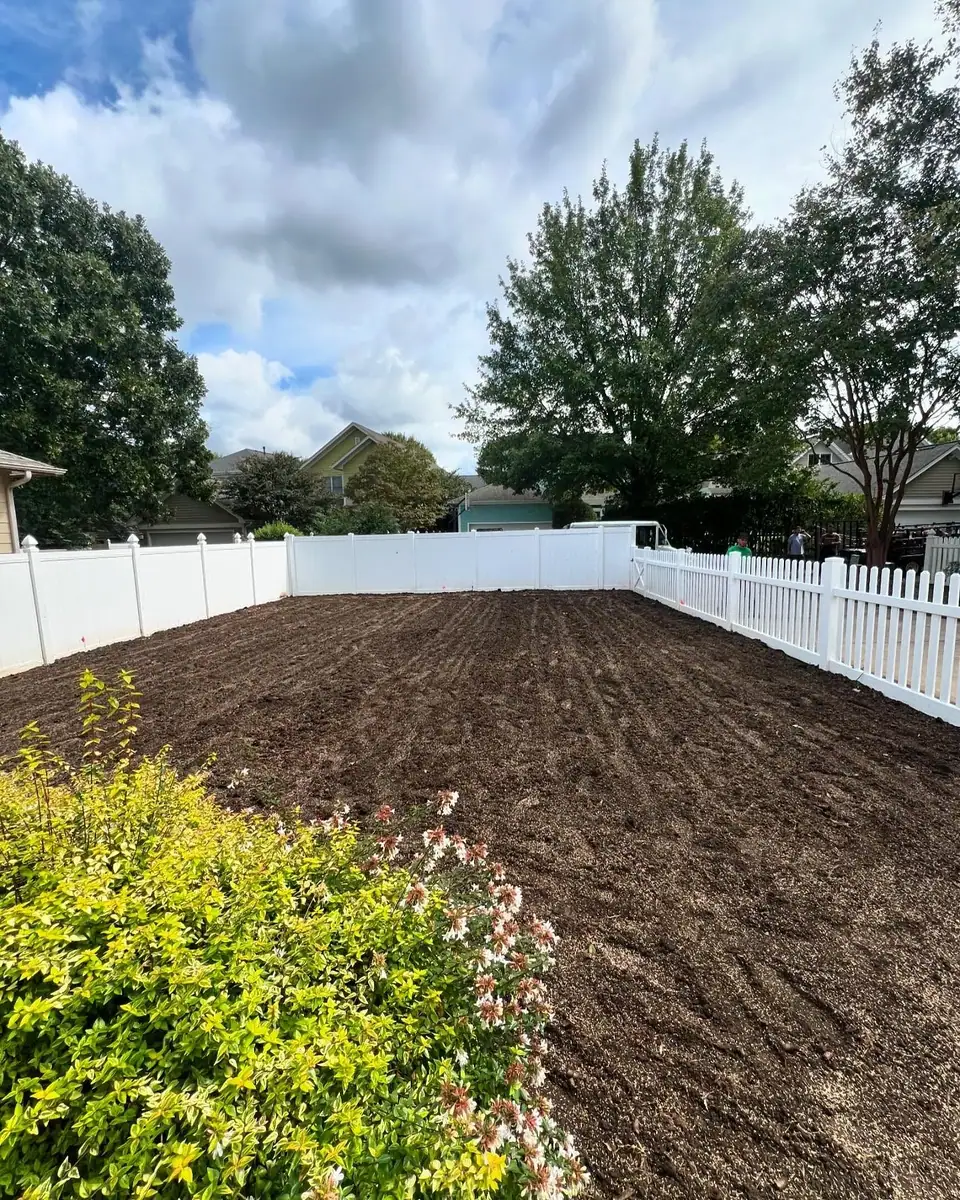
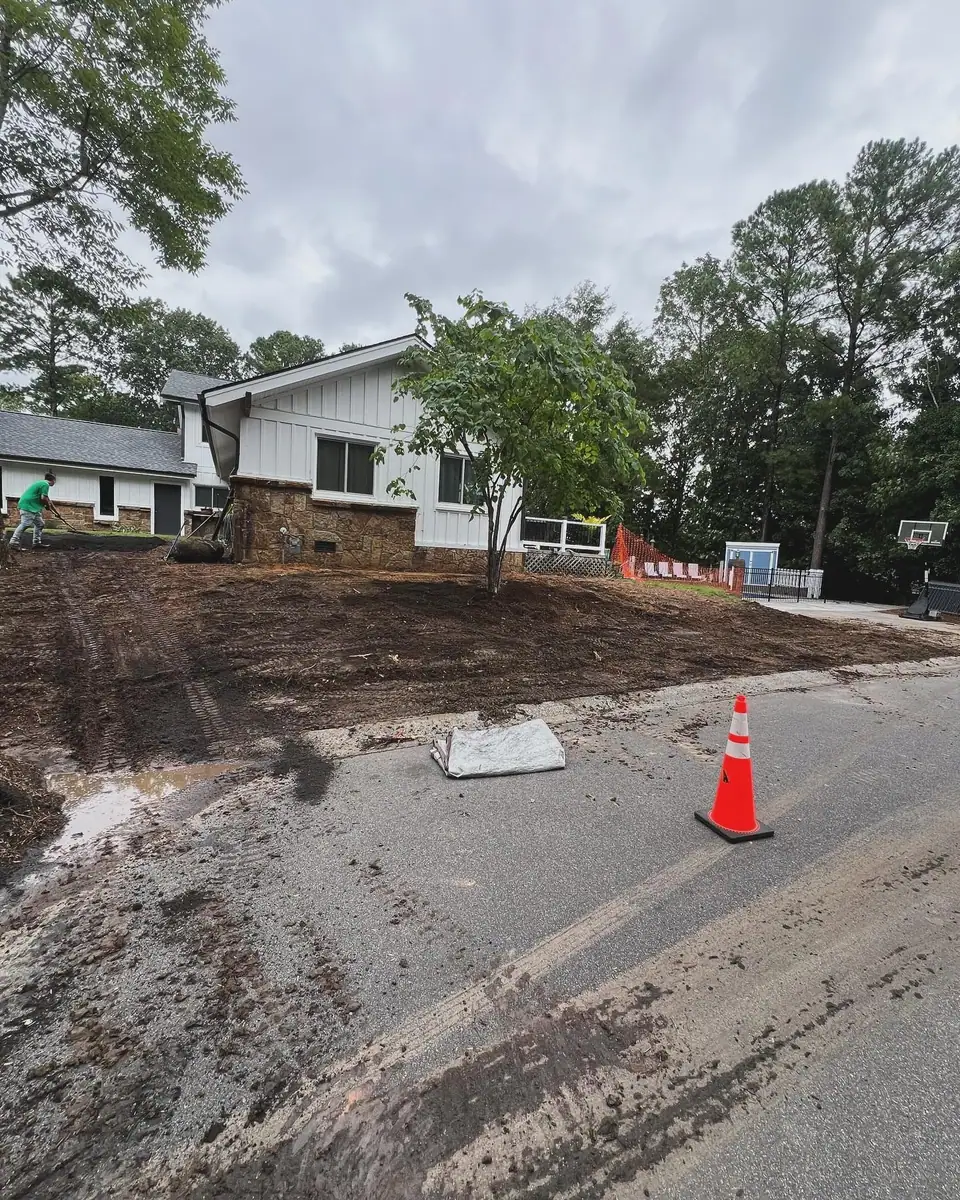
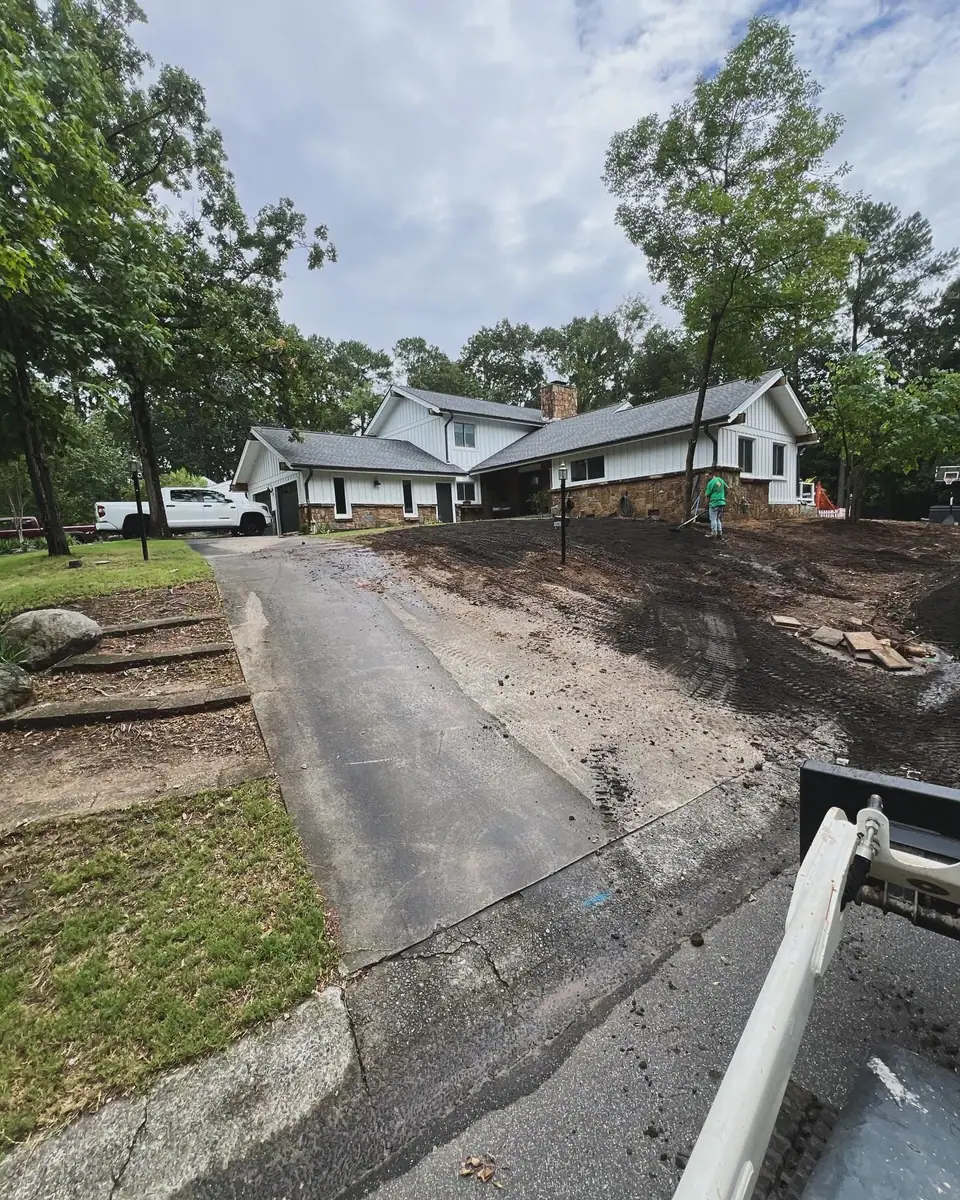
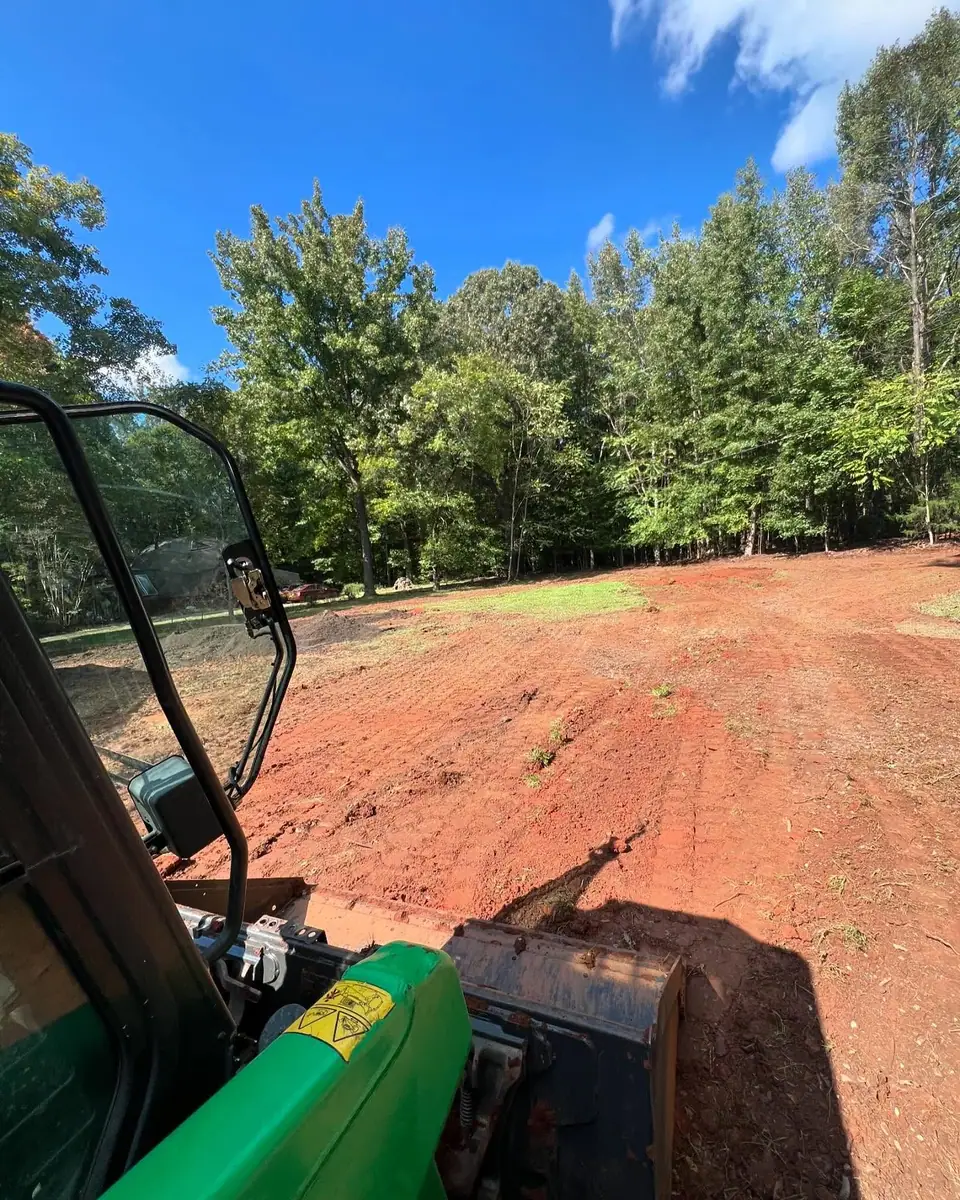
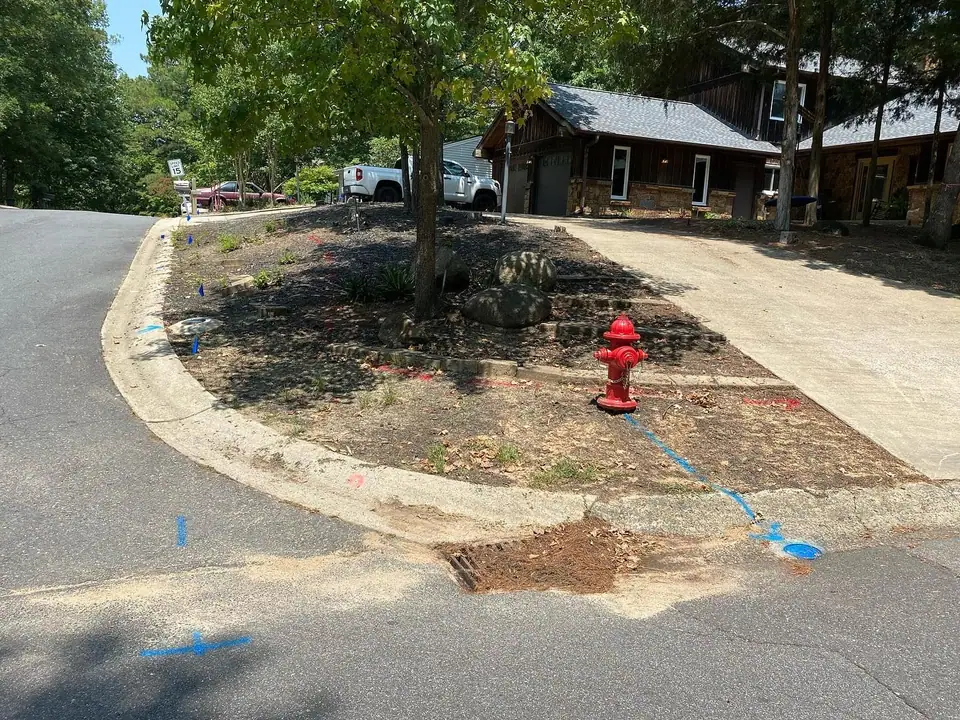
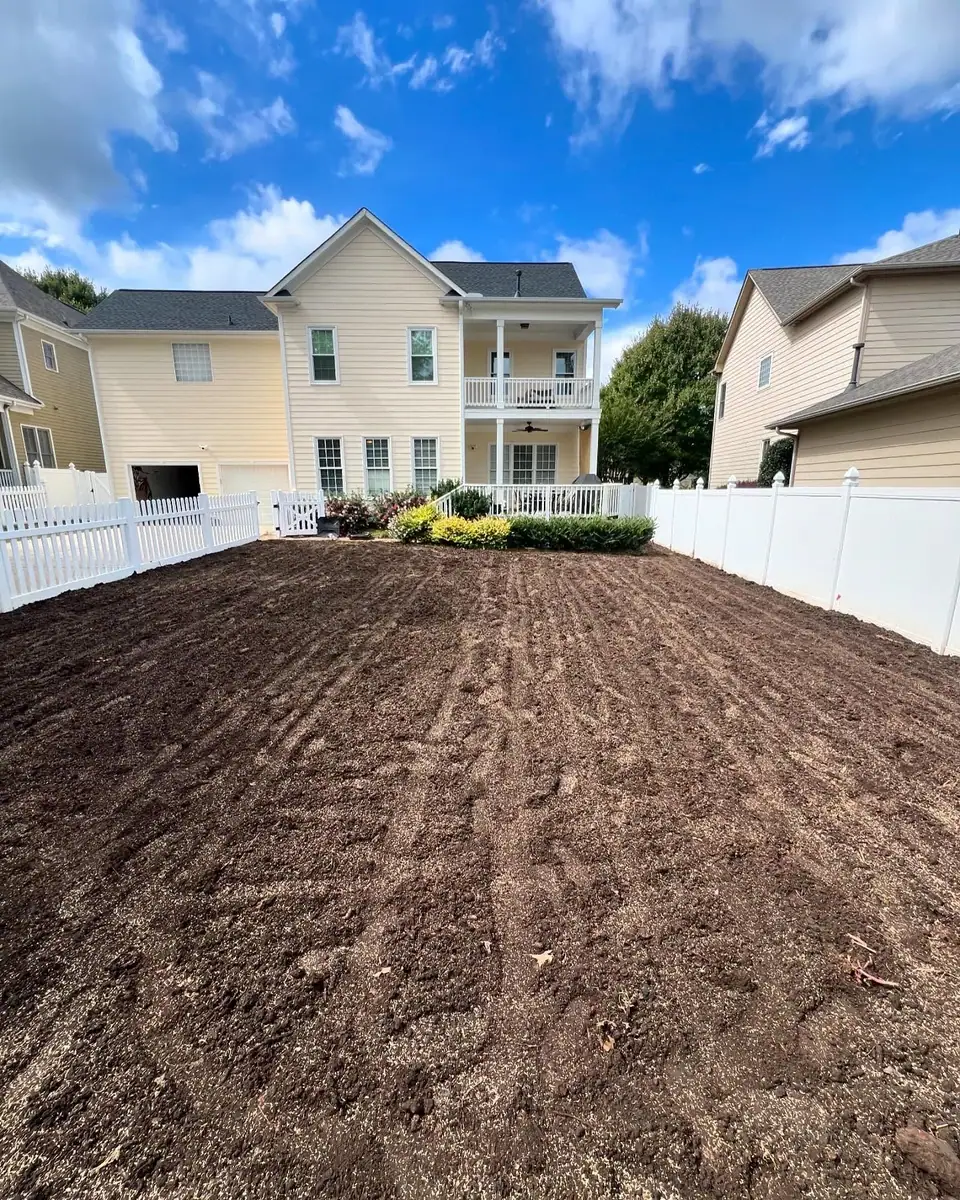
Terry walks the property, ideally after rain or with your photos, and checks grades and outlets. You get a written plan explaining the cause and the fix. Utilities are marked through 811 before digging. The crew then grades, trenches and installs pipe and basins with our own equipment, tests the system with water, and restores the lawn with topsoil and seed or sod. One crew handles every step.
05Can I just fill the low spot with dirt?
For a small, shallow depression where water has a clear path to drain once the spot is raised, top-dressing with topsoil can work. But filling a low spot that is the natural low point of the yard only moves the puddle a few feet, often closer to the house or a neighbor. Filling with heavy clay can also make drainage worse. The key question is where the water will go once the low spot is gone.
How it works
Four steps. No surprises.
From the first call to the final cleanup, you deal with the same owner-run crew.
01
Call or send the form
Tell us what’s bothering you about the yard. We get back to you within 24 hours.
02
Walk the property
We look at slope, soil, drainage paths, turf type and how you actually use the space. No guessing from a photo.
03
A written estimate
You get a plain-language scope and price. No surprise add-ons after the crew shows up.
04
Owner-led work and cleanup
Terry is on the job. Beds edged, debris hauled off and the driveway blown clean before we leave.
How much does it cost to fix standing water in a yard?
The cost of fixing standing water depends on the cause and the solution. Raising a small, shallow low spot with topsoil is a modest project. Installing a catch basin with solid pipe to a curb or daylight outlet costs more, and a combination of regrading, catch basins, French drains and downspout lines across a larger area is a bigger investment. Length of pipe, depth, soil and rock conditions, access and lawn restoration all affect price. Galloway Scapes provides a free written estimate after diagnosing the cause, so you are paying for a fix that actually stops the water rather than a temporary patch.
How long should water stand in a yard after rain?
In a healthy yard, surface water from a normal storm should drain or soak in within a few hours, and even after a heavy downpour the lawn should be firm within a day or so. Clay soil in the Charlotte region drains more slowly than sandy soil, so occasional short-lived puddles are common. If water regularly stands for more than a day, if the same spot stays soggy for several days, or if water collects against the foundation, it indicates a grading or drainage problem worth fixing. Standing water for several days can also kill turf and allow mosquitoes to breed.
Will a catch basin fix standing water?
A catch basin can be very effective for surface water that collects in a defined low spot. The basin is set at the lowest point, with a grate at grade, and a buried solid pipe carries the collected water to a safe outlet such as a curb, daylight outlet or natural low area. For it to work, the pipe must slope continuously downhill to an outlet lower than the basin, and the surrounding lawn may need light grading so water flows into the grate. If the problem is groundwater that keeps the soil saturated, a catch basin alone won't solve it and a French drain may be needed as well.
Can standing water damage my foundation?
Yes, standing water near the house can contribute to foundation problems over time. Clay soil swells when it is saturated and shrinks when it dries, and that repeated movement puts pressure on foundation walls and slabs. Water pooling along the house can also lead to damp crawl spaces, basement seepage, wood rot on sills and trim, and conditions that attract termites and other pests. The most effective protections are grading soil to slope away from the house and piping roof water well away from the foundation. Galloway Scapes handles grading and drainage, and if we see signs of structural damage we will recommend you have a foundation specialist inspect it.
Why does my yard flood after every heavy rain?
Yards that flood every storm usually have more water arriving than the soil and grade can handle. Common causes around Waxhaw include clay soil that absorbs water slowly, lots graded flat or toward the house, roof water from downspouts released into the yard, runoff from uphill neighbors and swales that have filled in over the years. New-construction lots are especially prone because topsoil was stripped and the clay compacted. The solution is to capture and route the water: regrade to create drainage paths, install catch basins and pipe, add French drains for saturated soil and pipe downspouts away. A walkthrough after rain shows exactly where the water comes from.
We had several landscaping projects completed at our property, including new sod installation, mulching, and drainage work, and I couldn’t be happier with how everything turned out. The sod installation completely transformed the appearance of our yard.Cameron JonesSod, mulch & drainage
★★★★★
We contacted Galloway Scapes for lawn leveling and are very pleased with their service. Terry and his crew are incredible and did a great job on our lawn! They arrived on schedule and did a thorough job.Marianne NietoLawn leveling
★★★★★
Terry and his crew are the best! He is attentive, professional, and knowledgeable. I have a fast growing weed in my lawn and he works diligently on keeping it under control.Debbie HeilemannLawn care
★★★★★
Reliable, efficient, and professional, with great attention to detail. Everything looked clean, green, and well cared for.Blake TrewLandscaping
★★★★★
Very good, consistent service. They are responsive when asked about things and address concerns as they arise.David DeaconLawn maintenance
★★★★★
Reliable, punctual, creative, clean, and professional throughout the process. I really appreciated how easy they made everything.Ryan BrzyckiLandscaping
★★★★★
Knowledgeable and skilled approach to lawn maintenance and yard landscaping, with meticulous attention to detail. Fair pricing combined with outstanding results.Noelle IsheeLawn & yard landscaping
Free estimate
Tell us about your standing water removal project.
A few quick details. We reply within 24 hours, usually sooner, and we walk the property before we price anything.