01
Grading
Drainage Grading
The cheapest drain is a yard shaped correctly.
★★★★★ 4.9 on Google · 16 reviewsLicensed, bonded & insuredOwner on every jobFree written estimates
Our approach
Talk it through with Terry →
How we approach drainage grading.
We set positive slope away from the foundation, cut swales to carry runoff between houses and toward safe outlets, and compact the finish so it holds its shape.
What’s included
Every drainage grading job covers this.
Written into your estimate, so you know exactly what the crew will do before anyone shows up.
Get a Grading Estimate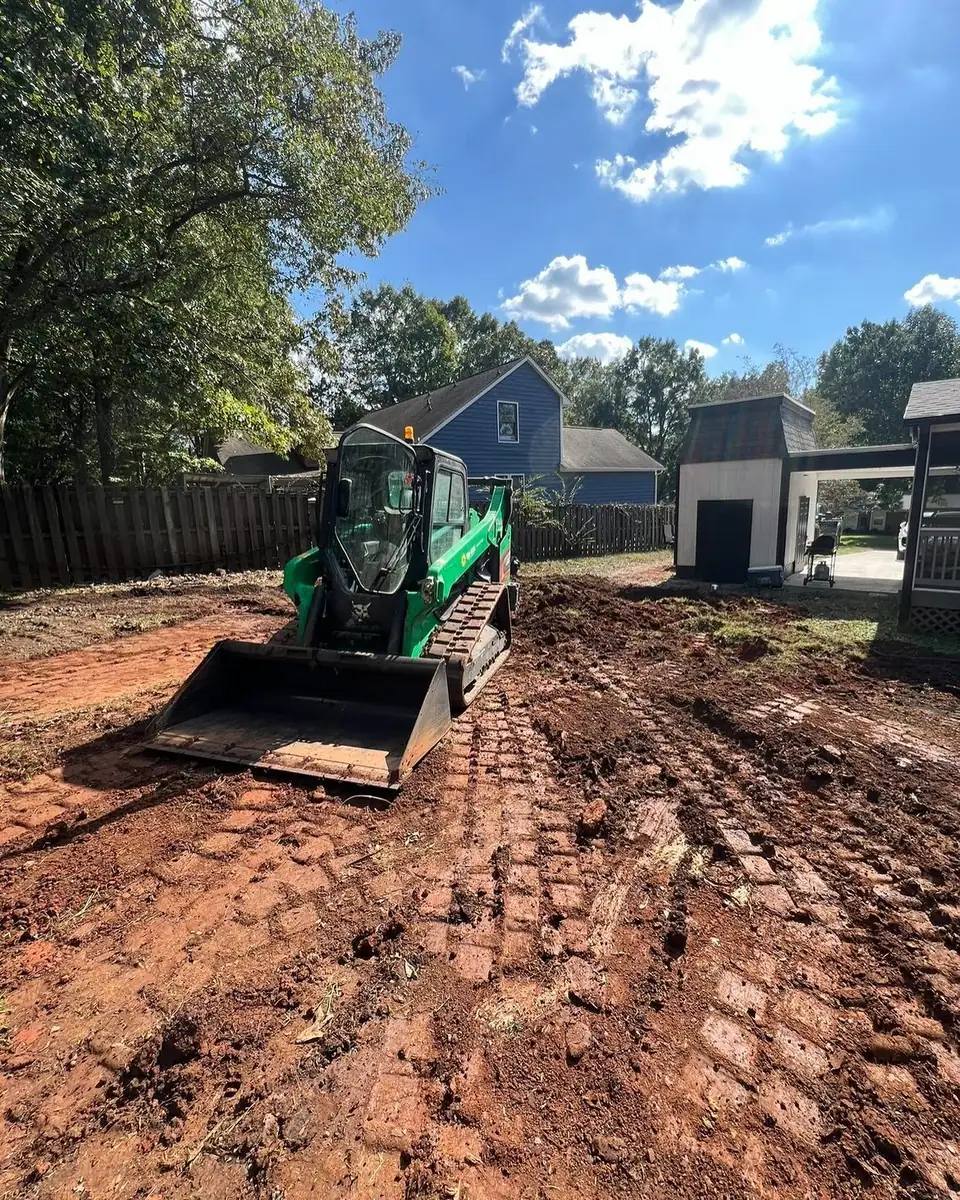
02
Swales
03
Outlet planning
04
Compaction and finish
When to call
Signs it’s time.
- Water toward the house
- Runoff between neighbors
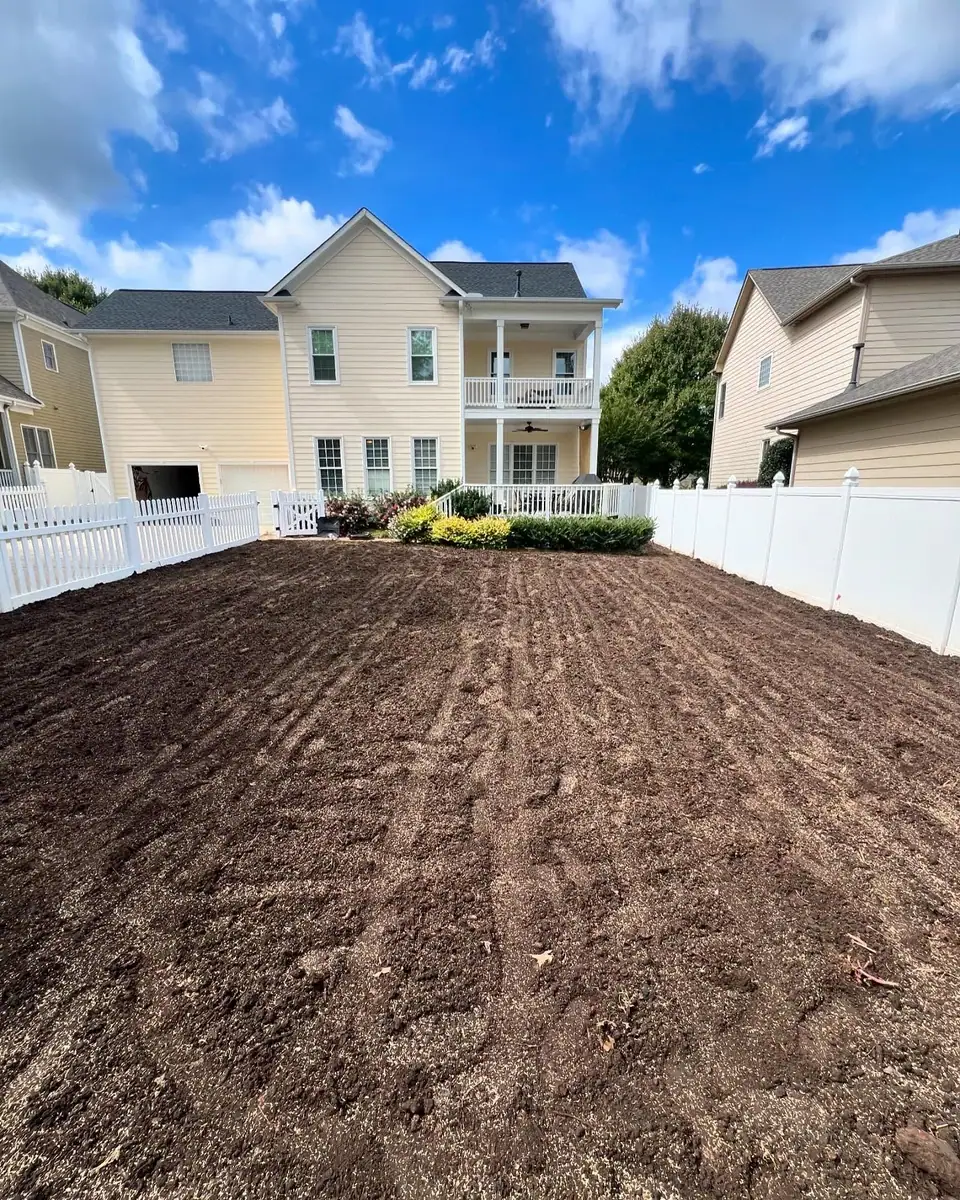
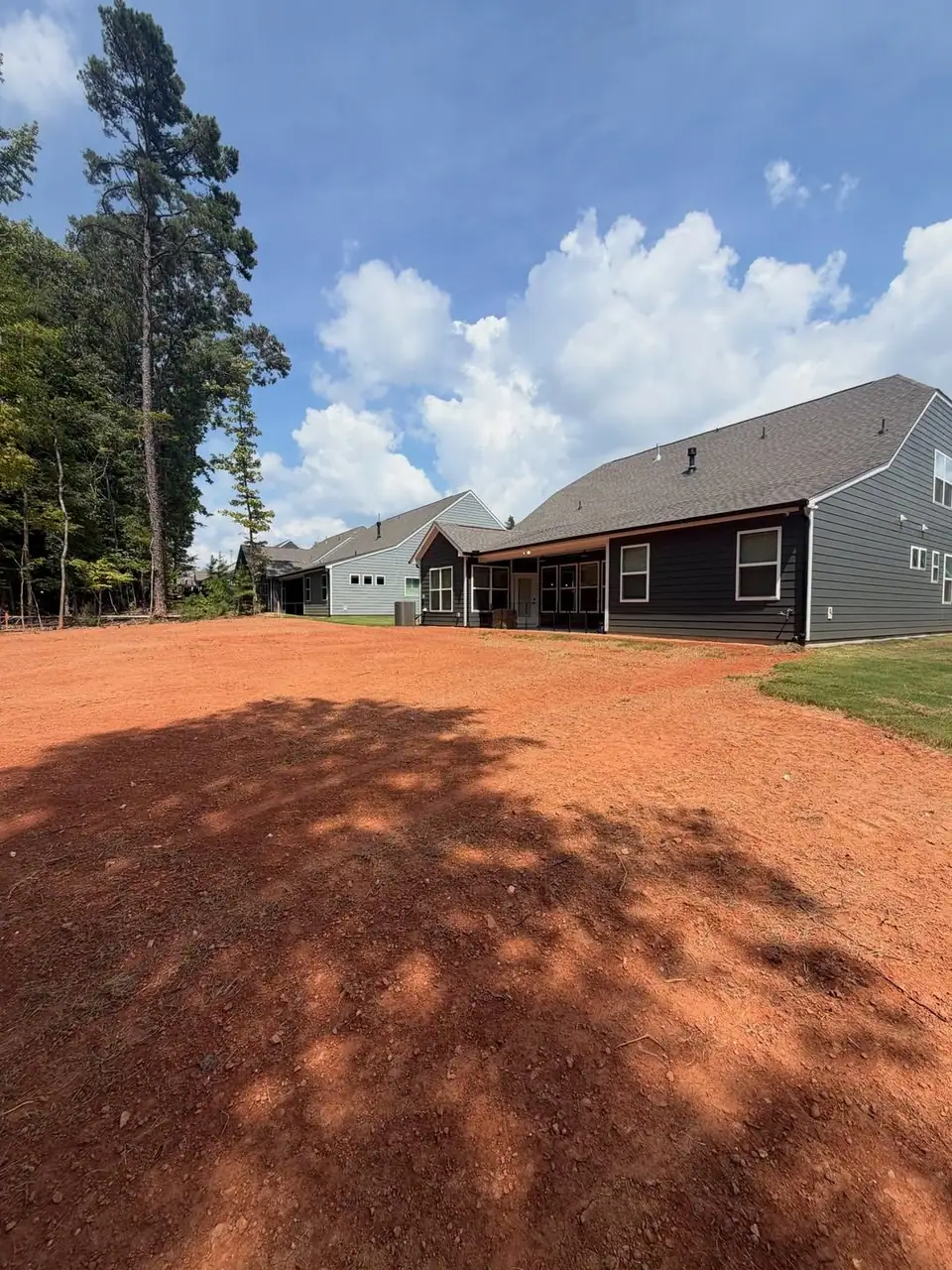
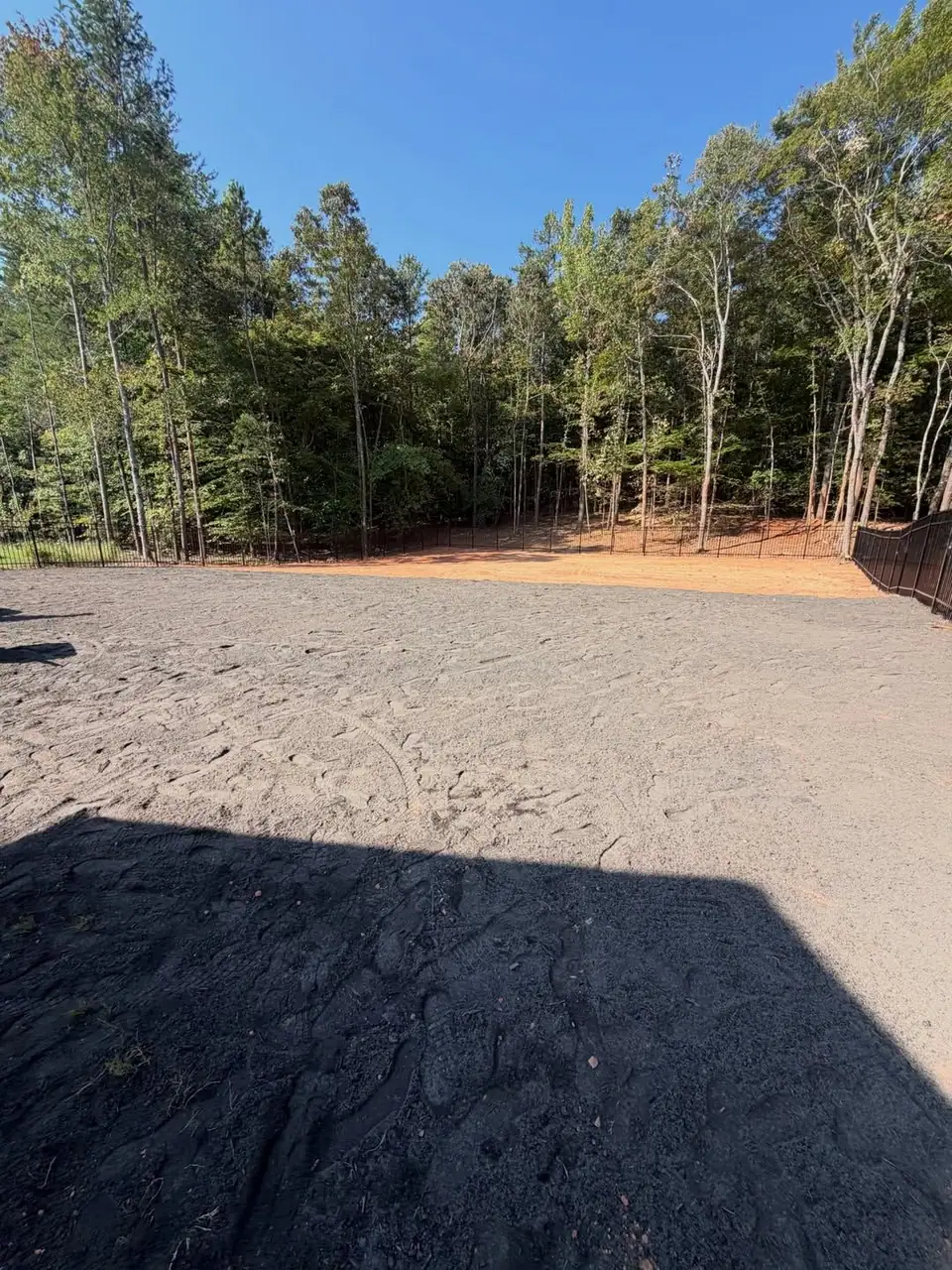
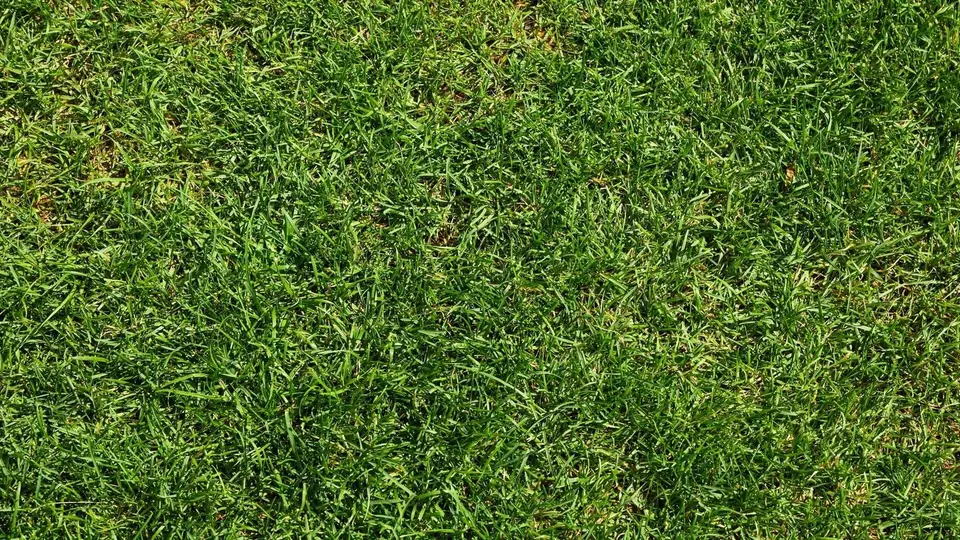
Recent work
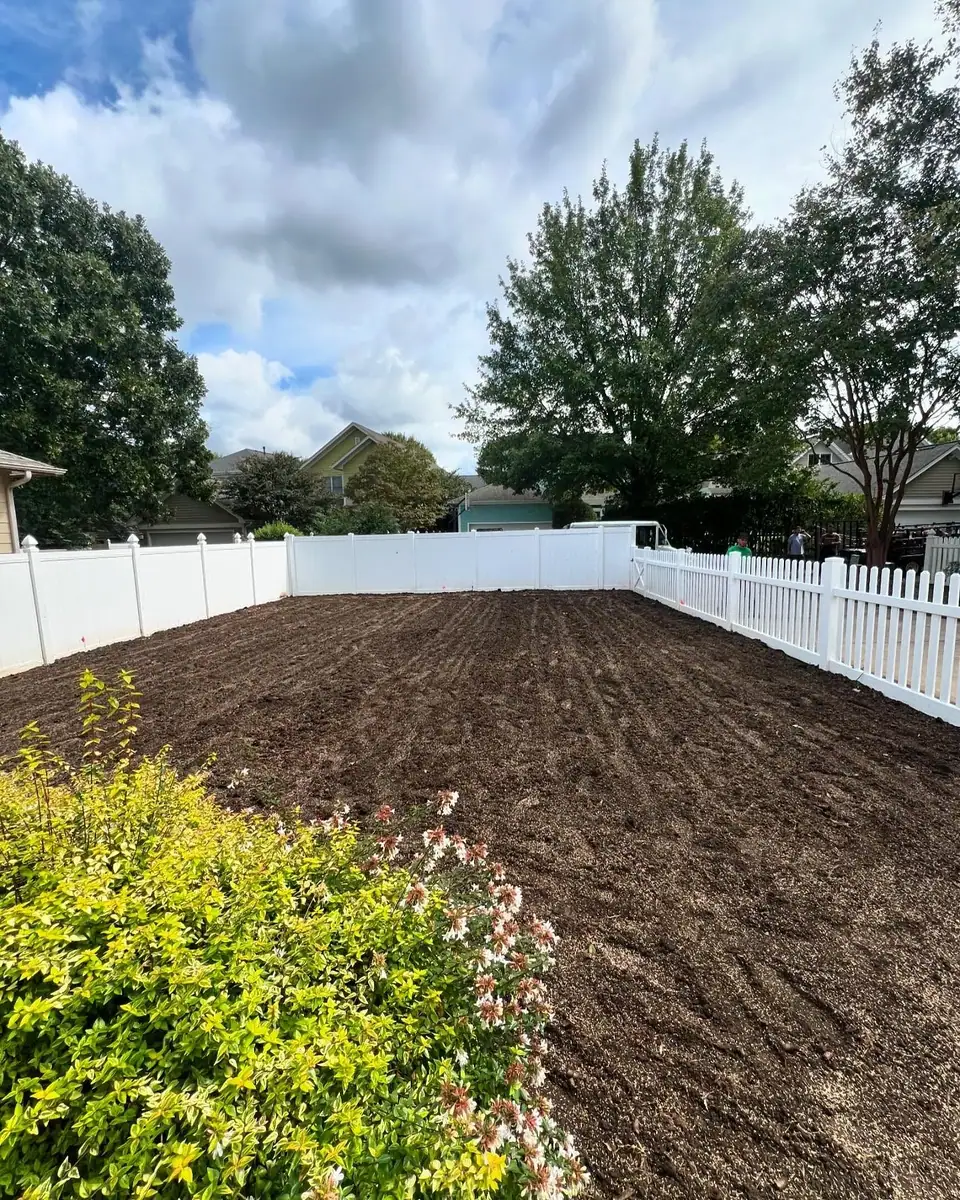
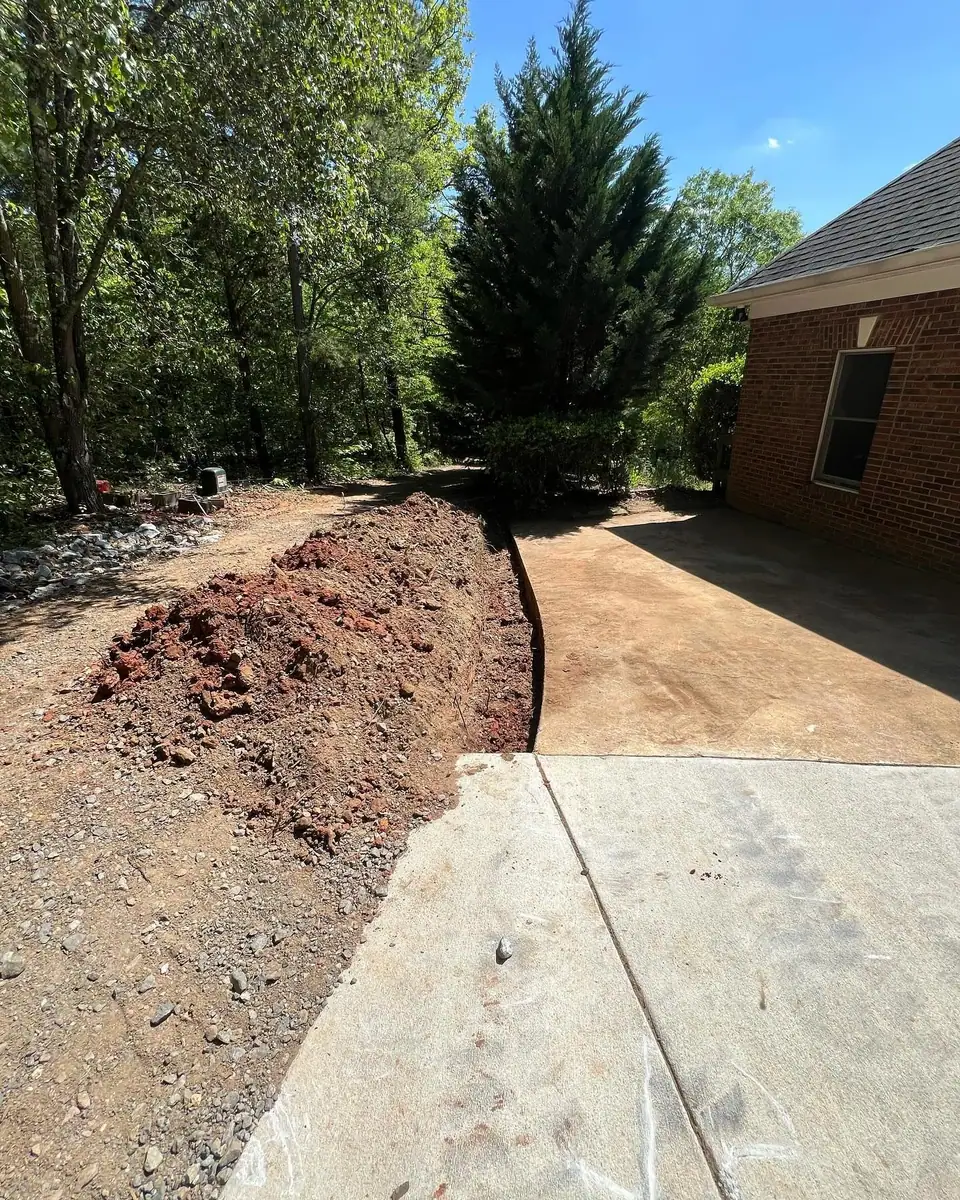
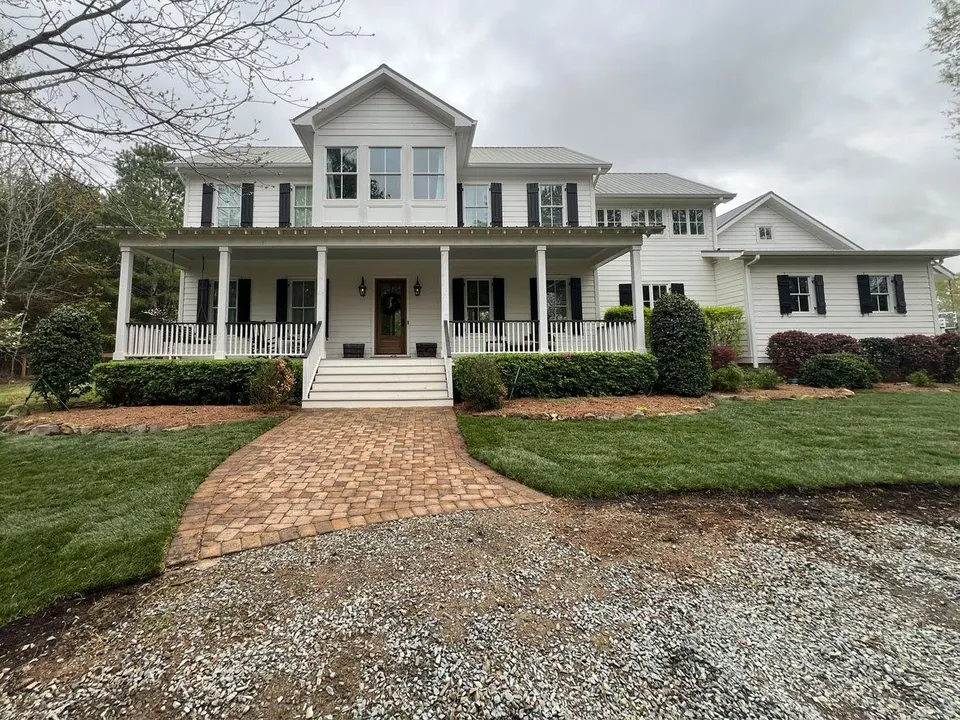
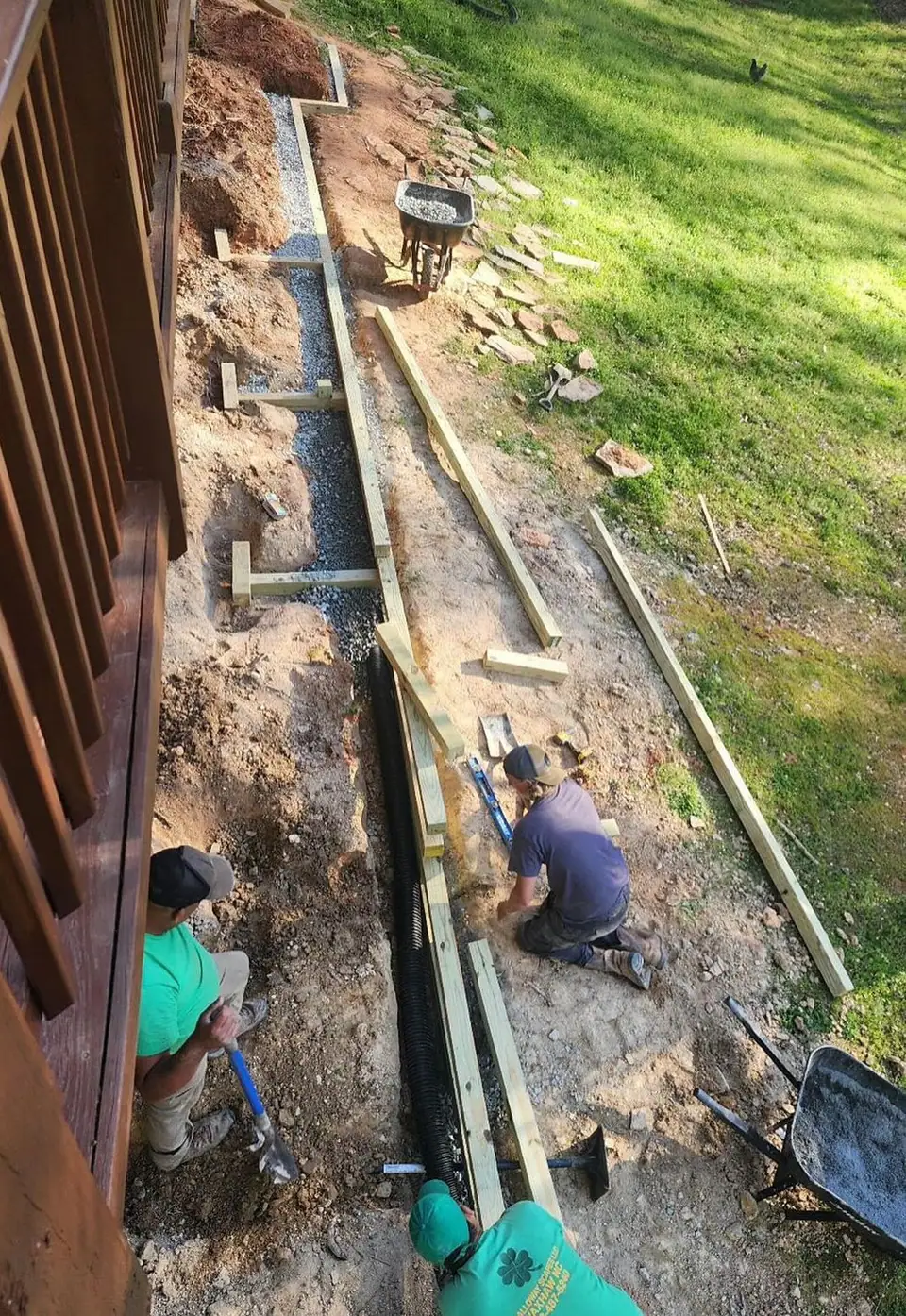
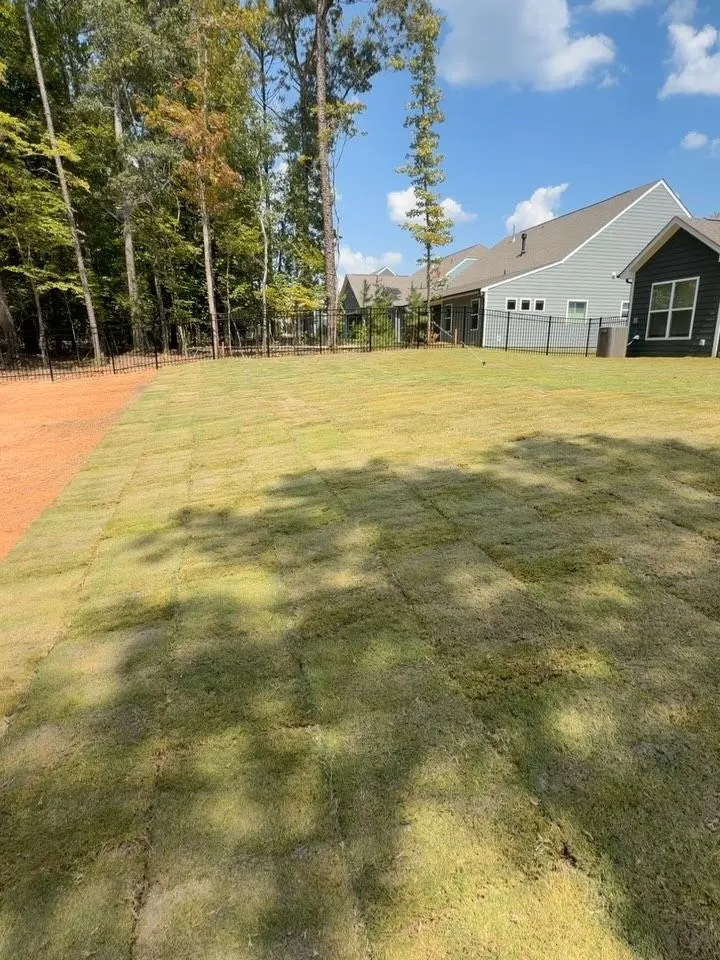
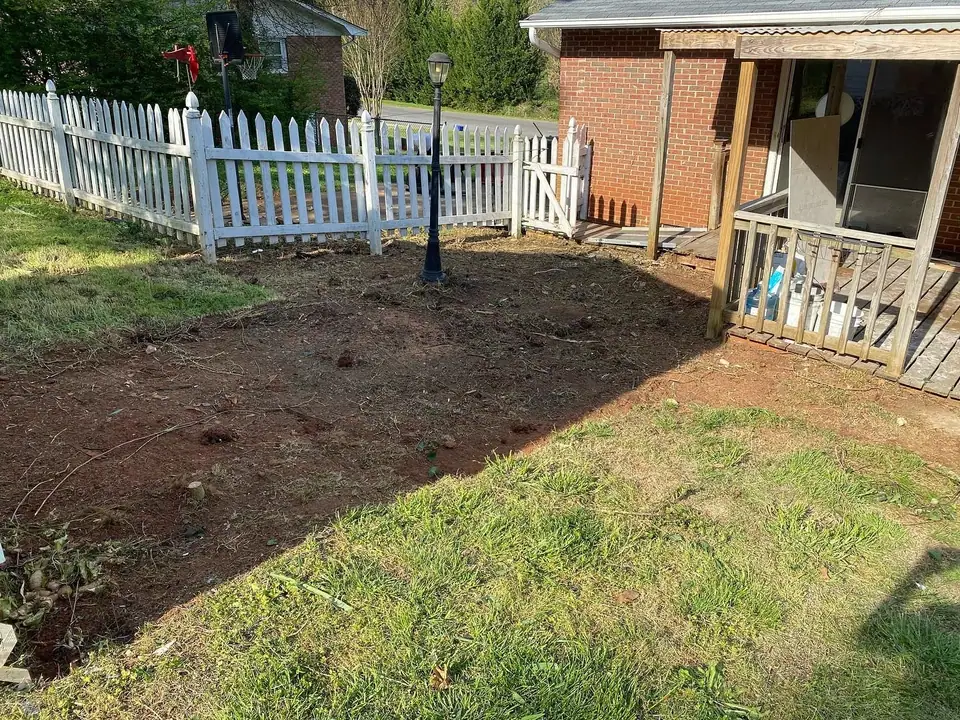
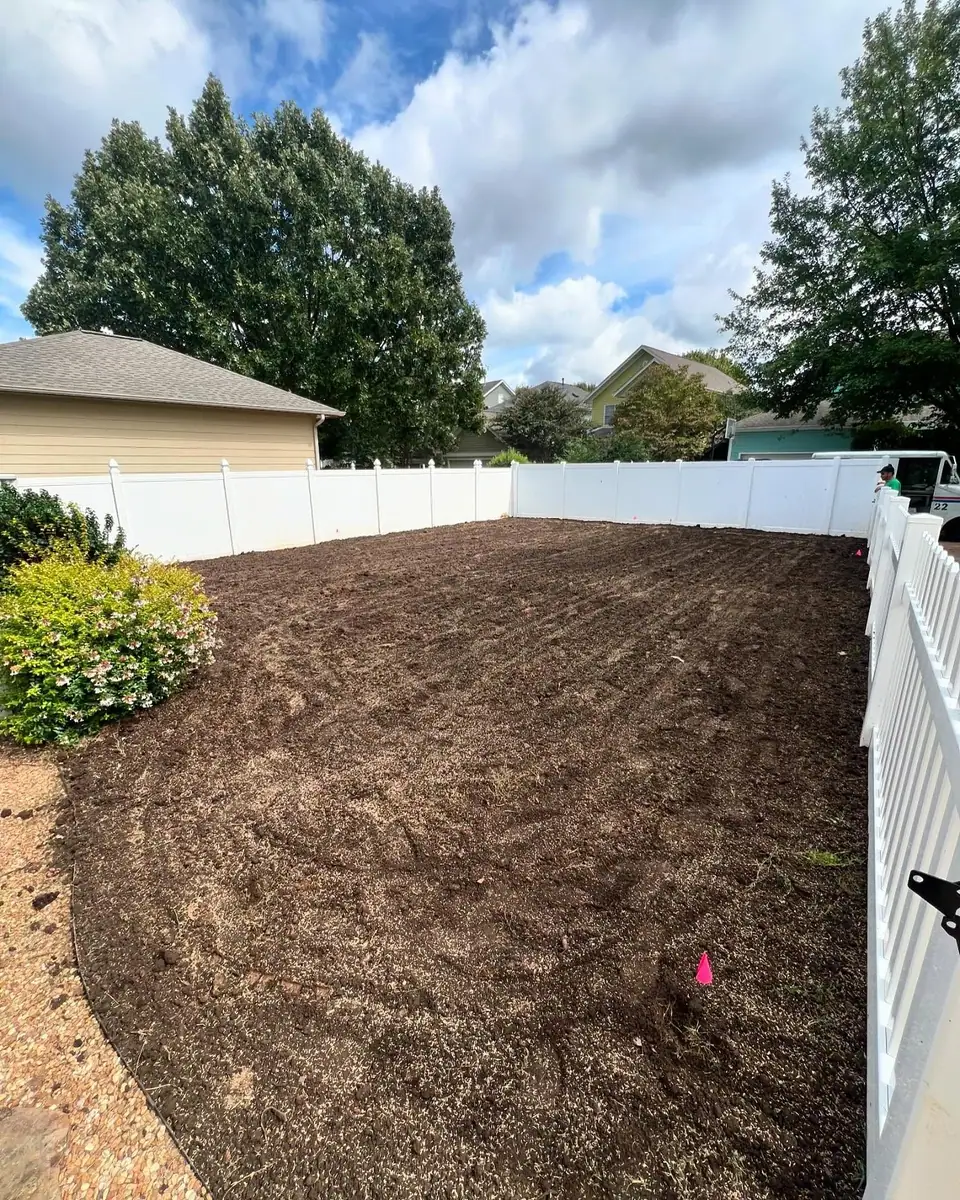
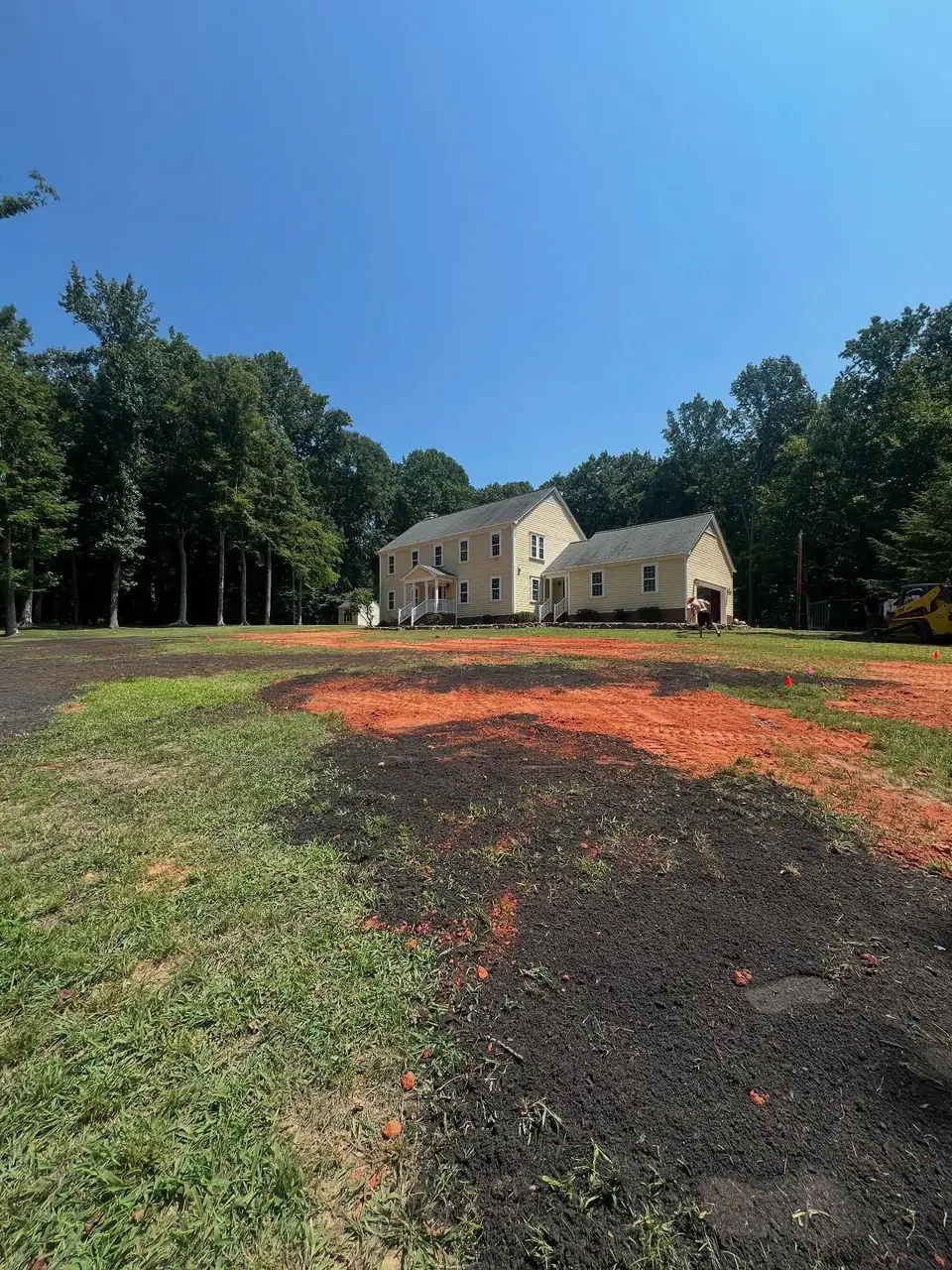
From our crew’s camera.
Related services
More grading services.
Yard Leveling
Smooth out bumpy, uneven lawns so they mow clean and drain properly.
Learn more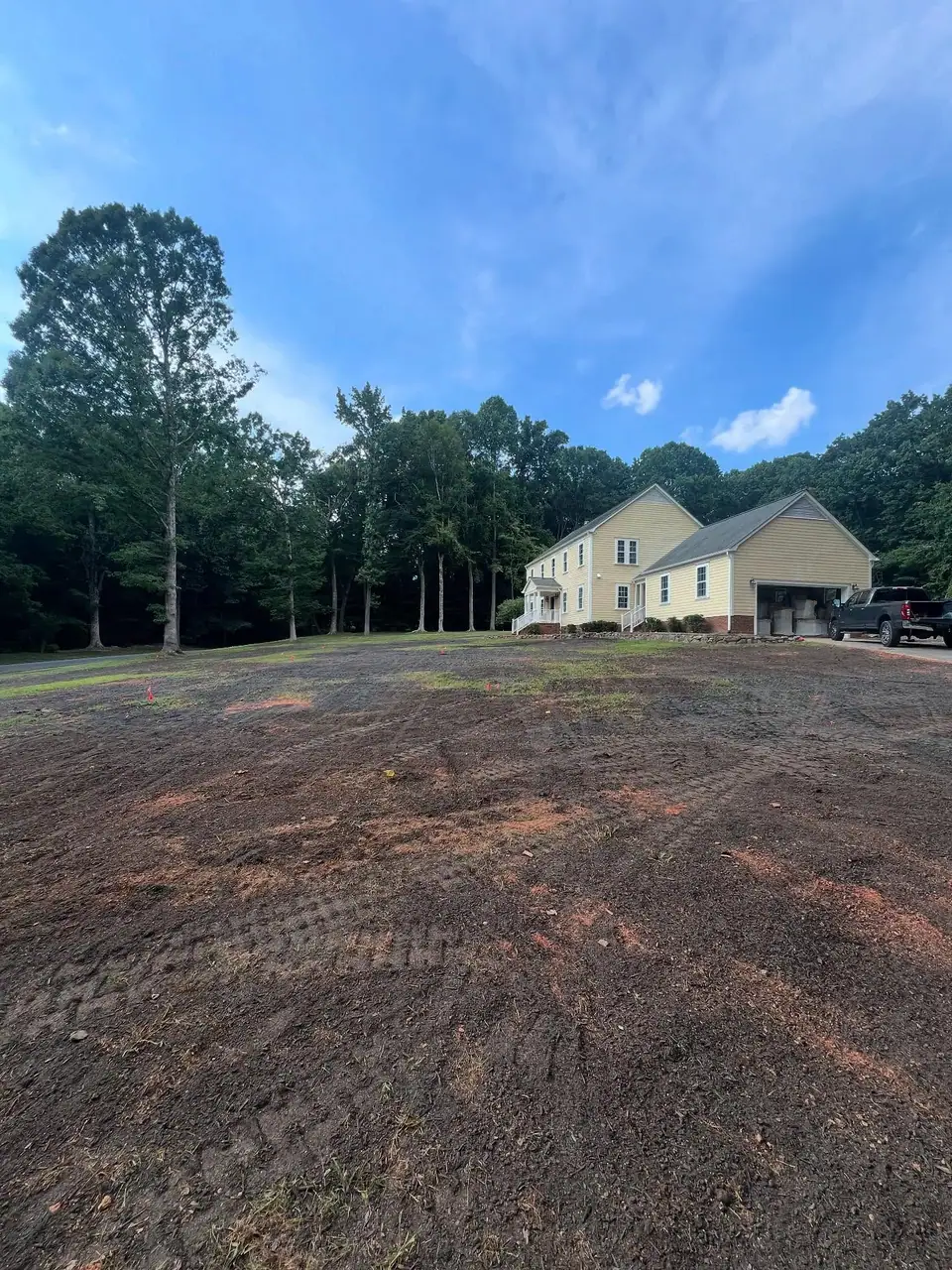
Land Clearing
Clear brush, small trees and debris to open up usable space.
Learn more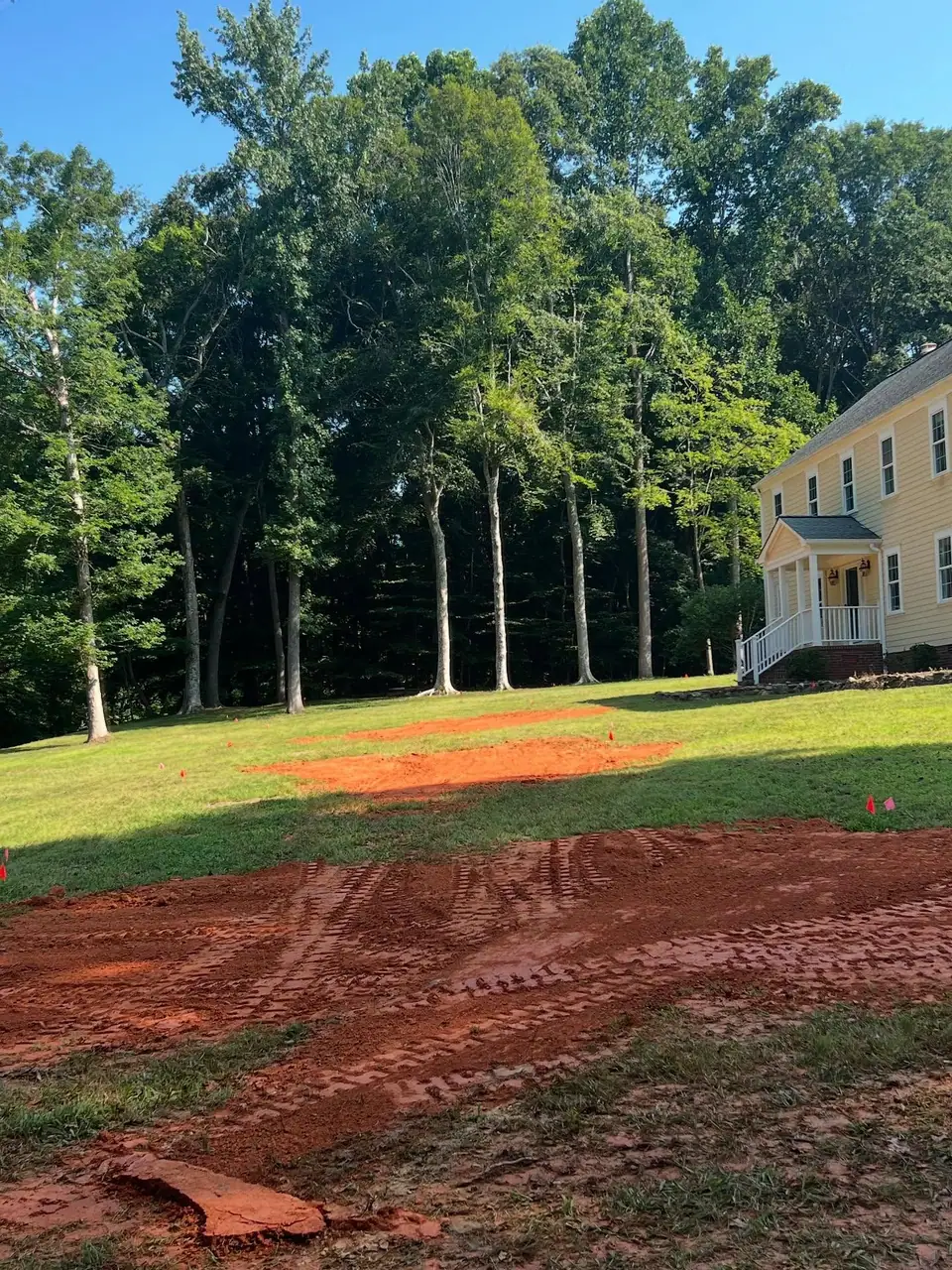
New Construction Grading
Final grade and site prep for new builds so the lawn and foundation start right.
Learn more
Foundation Prep & Soil Compaction
Compacted, level bases for patios, sheds and slabs that won’t settle.
Learn moreDrainage grading in Waxhaw, NC: shaping the ground so water moves away
The short answer
Drainage grading reshapes the surface of a yard so rainwater flows away from the house and toward a safe outlet. It typically means building positive slope away from the foundation, cutting shallow swales that carry water around the house and across the lot, filling low spots, and stabilizing the finished grade with sod or seed. On clay soil, the grade is often the most important drainage tool there is.
01What is positive grading?
Positive grading means the ground slopes down and away from the house on every side. A commonly cited guideline is a fall of about six inches over the first ten feet from the foundation, where the lot allows. That slope sends roof and surface water away before it can soak in beside the foundation.
Over time, grading around many houses goes negative. Soil settles along the foundation, beds are built up with mulch, and patios or walks are added that tilt toward the house. Restoring positive grade is one of the most effective protections against damp crawl spaces and foundation moisture.
- Foundation slope: ground falling away on every side
- Swales: shallow channels that guide water around the house
- Low spots: filled so water doesn't collect
- Outlets: water directed to a safe low point
- Stabilization: sod or seed to hold the new grade
02What is a swale and when is one needed?
A swale is a broad, shallow channel shaped into the lawn that carries surface water along a controlled path. Swales are common between houses in Waxhaw, Indian Trail and Fort Mill subdivisions, where lots are close together, and along property lines where water arrives from uphill neighbors. A good swale is gentle enough to mow over and covered in turf, so most people never notice it is there.
Swales fail when they fill in with sediment, get blocked by fences, beds or play sets, or were never shaped correctly to begin with.
03Grading or pipe: which is better?
Surface grading is often the simplest and most durable drainage solution because it has no pipes to clog. Where the lot is too flat for a swale, where water must cross a walk or driveway, or where it needs to travel underground to reach an outlet, grading is combined with catch basins, French drains and buried pipe. Most good drainage plans start with the grade and add pipe only where needed.
04How is drainage grading done?
Utilities are marked through 811. The existing grade is checked with levels or a laser to determine high and low points and the path water should take. Turf is stripped where needed. Soil is cut from high areas and moved to low ones, and topsoil is brought in where more fill is required. The surface is compacted in lifts and fine graded, checked again, and then stabilized with sod or seed and erosion control so the new grade holds through the first storms.
Because Galloway Scapes runs its own grading equipment and handles drainage and lawn restoration in-house, the same crew shapes the grade and finishes the turf.
05Do I need permission to change the grade?
Many HOA communities around Waxhaw, Weddington, Marvin, Fort Mill and Tega Cay require approval for grading changes, and you shouldn't redirect concentrated water onto a neighbor's lot. Drainage easements and swales shown on subdivision plats are often meant to stay in place. Galloway Scapes plans grading around legitimate outlets and will tell you if your project may need HOA approval.
06How long does drainage grading take?
Restoring positive slope along part of a house is often a one- or two-day project. Regrading a full backyard with new swales, drainage features and sod may take several days. Weather affects timing, because saturated clay can't be shaped or compacted properly, so work is scheduled when the ground is workable. Once the grade is finished, sod gives an immediate finished surface, while seed takes several weeks to fill in.
After the work, watch the first few storms. A well-graded yard will move water along the paths it was shaped for, and any minor adjustments can be made while the area is still fresh.
How it works
Four steps. No surprises.
From the first call to the final cleanup, you deal with the same owner-run crew.
Call or send the form
Tell us what’s bothering you about the yard. We get back to you within 24 hours.
Walk the property
We look at slope, soil, drainage paths, turf type and how you actually use the space. No guessing from a photo.
A written estimate
You get a plain-language scope and price. No surprise add-ons after the crew shows up.
Owner-led work and cleanup
Terry is on the job. Beds edged, debris hauled off and the driveway blown clean before we leave.
Drainage Grading near you
FAQ
Drainage Grading: questions, answered.
How much does drainage grading cost?
Drainage grading cost depends on the size of the area, how much the grade must change, the volume of soil to cut, move or bring in, access for equipment, whether catch basins, French drains or pipe are also needed, and how much lawn or landscape must be restored with sod or seed. Restoring positive slope along one side of a house is a modest project; regrading a whole backyard with new swales and sod is a larger one. Galloway Scapes provides a free written estimate after checking the existing grade and identifying where water should go.
How much should my yard slope away from the house?
A common guideline is for the ground to fall about six inches over the first ten feet away from the foundation, which is roughly a five percent slope, where the lot allows. Beyond that, a gentler slope of around one to two percent across the lawn generally keeps water moving toward a swale or outlet while remaining comfortable to mow. Local codes and lot conditions vary, and tight lots between houses may rely on swales to carry water. Galloway Scapes checks your existing grade and designs a slope that moves water away from the house effectively.
What is negative grading and why is it a problem?
Negative grading means the ground slopes toward the house instead of away from it, so rain and roof runoff flow back to the foundation. It often develops over time as backfilled soil settles along the foundation, mulch and soil build up in beds, or patios and walks shift. On clay soil, water collecting against the house can contribute to damp crawl spaces, basement seepage, wood rot and foundation stress as clay swells and shrinks. Restoring positive grade with properly compacted soil, sloped away from the house, is one of the most effective drainage fixes.
Can regrading fix a wet yard without installing drains?
Often, yes. Many wet-yard problems come from surface water collecting in low areas or flowing toward the house, and reshaping the ground with positive slope and gentle swales can carry that water away without any pipe at all. Surface grading has no pipes to clog, so it is low-maintenance and long-lasting. Where the lot is too flat, where water must cross a hard surface, or where the soil stays saturated below the surface, grading is combined with catch basins, French drains or buried pipe. Galloway Scapes recommends the simplest combination that will work.
Do you restore the lawn after grading?
Yes. Lawn restoration is part of every Galloway Scapes grading project. After the grade is shaped and compacted, topsoil is fine graded and the area is sodded or seeded, depending on your grass type, the season and how quickly you need a finished lawn. On slopes and in swales, sod or seed with erosion-control blankets stabilizes the new grade so the first heavy rain doesn't wash it out. Because grading, drainage and lawn work are done in-house, one crew is responsible from the first cut to the finished turf.
We had several landscaping projects completed at our property, including new sod installation, mulching, and drainage work, and I couldn’t be happier with how everything turned out. The sod installation completely transformed the appearance of our yard.
We contacted Galloway Scapes for lawn leveling and are very pleased with their service. Terry and his crew are incredible and did a great job on our lawn! They arrived on schedule and did a thorough job.
Terry and his crew are the best! He is attentive, professional, and knowledgeable. I have a fast growing weed in my lawn and he works diligently on keeping it under control.
Reliable, efficient, and professional, with great attention to detail. Everything looked clean, green, and well cared for.
Very good, consistent service. They are responsive when asked about things and address concerns as they arise.
Reliable, punctual, creative, clean, and professional throughout the process. I really appreciated how easy they made everything.
Knowledgeable and skilled approach to lawn maintenance and yard landscaping, with meticulous attention to detail. Fair pricing combined with outstanding results.
Free estimate
Tell us about your drainage grading project.
A few quick details. We reply within 24 hours, usually sooner, and we walk the property before we price anything.
(803) 487-5240Mon–Sat, 7 AM–7 PM · call or text
- Free, written estimates with no obligation
- Owner Terry Galloway on every project
- Licensed, bonded & insured · NC & SC Pesticide License