★★★★★ 4.9 on Google · 16 reviewsLicensed, bonded & insuredOwner on every jobFree written estimates
Our approach
How we approach drainage.
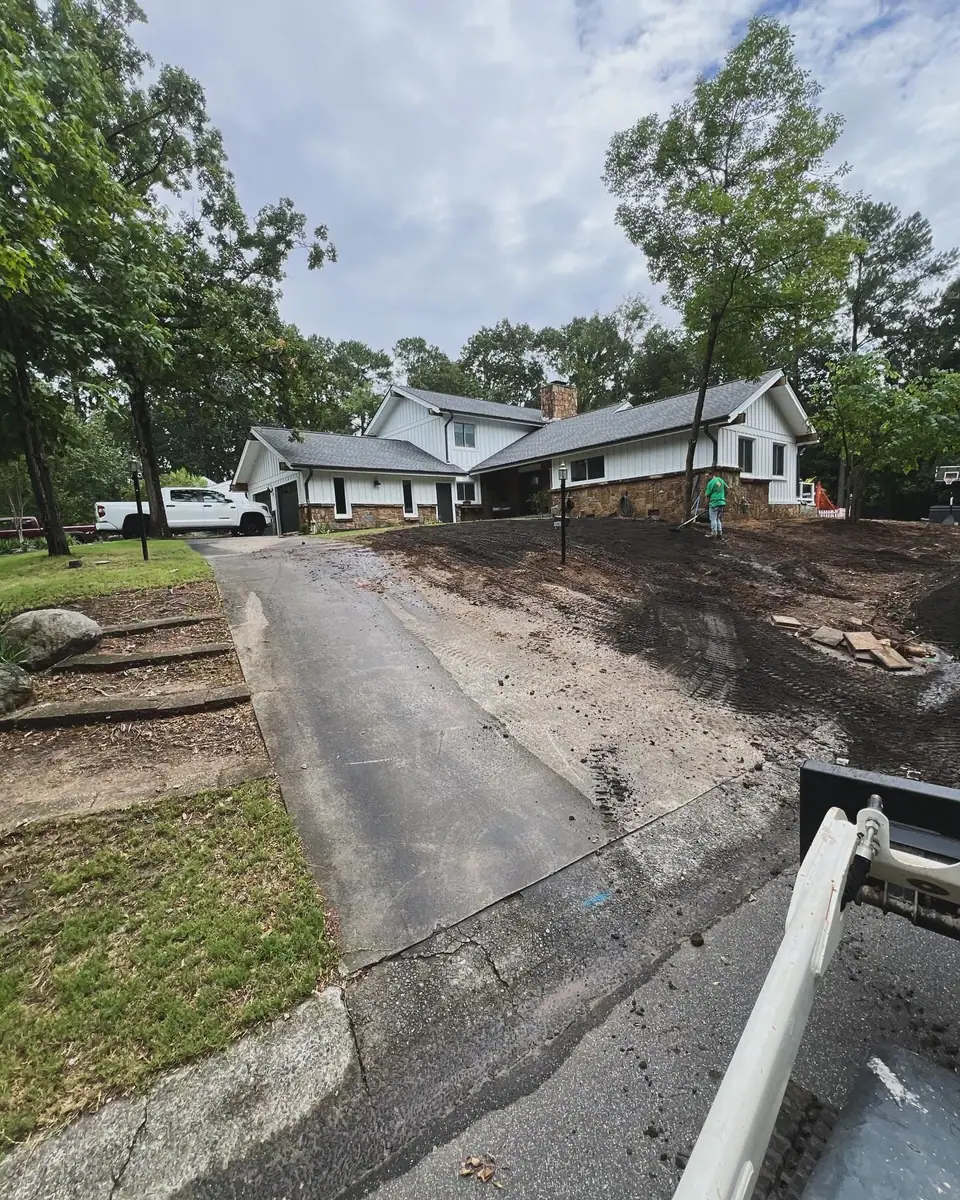
Before we sell anyone a drain, we watch where the water actually goes. Water that sheets across the surface toward the house is a grading problem. Ground that stays soggy for days is a subsurface problem. Gutters that dump at the foundation are a downspout problem. Each has a different fix — and many yards have more than one.
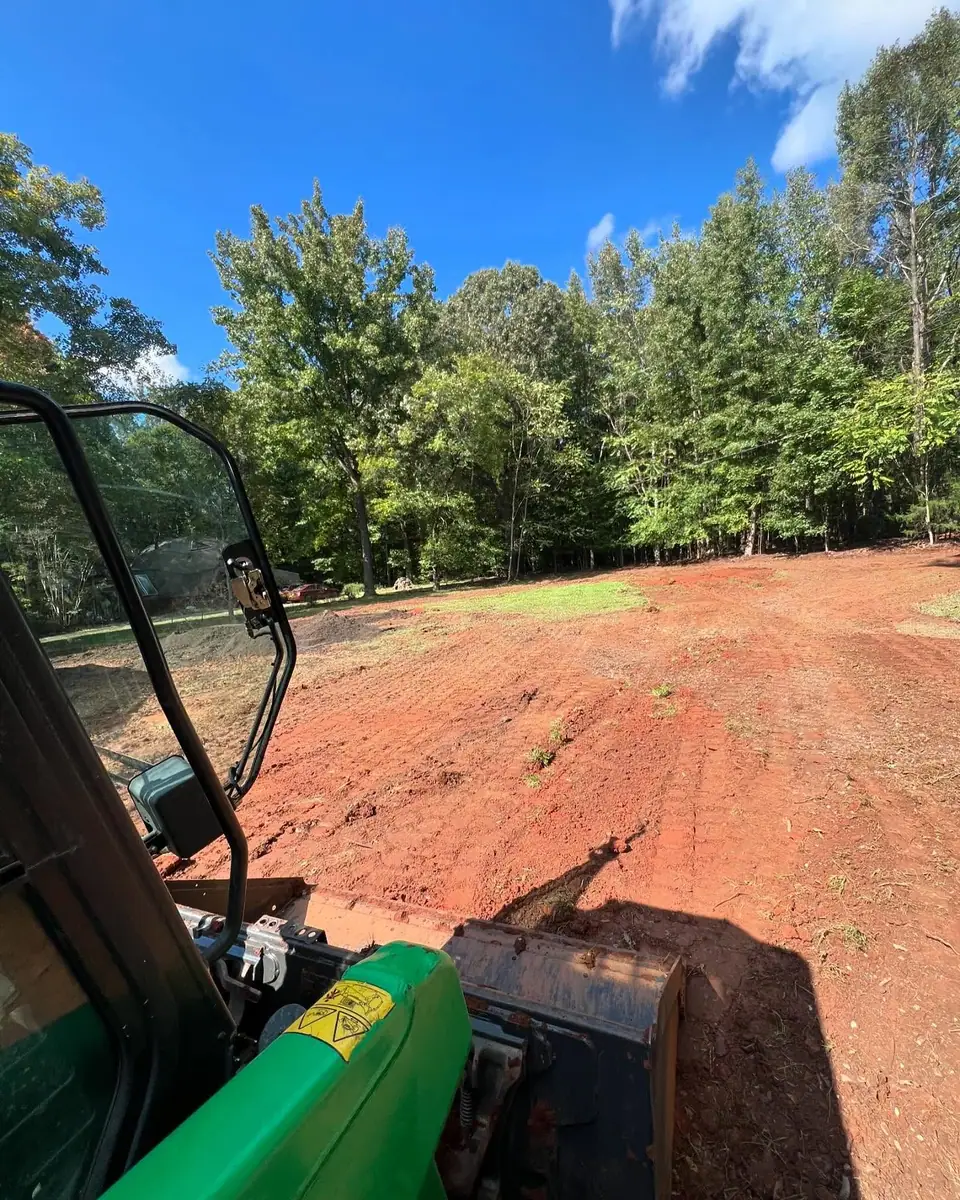
Union County and York County clay doesn’t absorb water quickly, so small grading mistakes turn into big puddles. We combine regrading, swales, underground downspout lines and French drains to move water to a safe outlet, then restore the lawn or beds over the top.
Yard drainage in Waxhaw and the Charlotte region: the complete guide
The short answer
Most yard drainage problems around Waxhaw come from dense red clay, flat or reversed grading, and roof water dumped at the foundation. The fix is usually a combination of regrading so the ground slopes away from the house, swales to carry surface water, underground downspout lines, and French drains where groundwater collects, all ending at a safe outlet.
01Why do so many yards around Waxhaw have drainage problems?
The soil is the starting point. Union County and the neighboring York and Lancaster Counties sit on heavy red clay that absorbs water slowly. During a typical summer thunderstorm, rain falls far faster than clay can soak it up, so water runs across the surface looking for the lowest point. If that low point is a flat backyard, a side yard between two houses or the foundation itself, that is where it ends up.
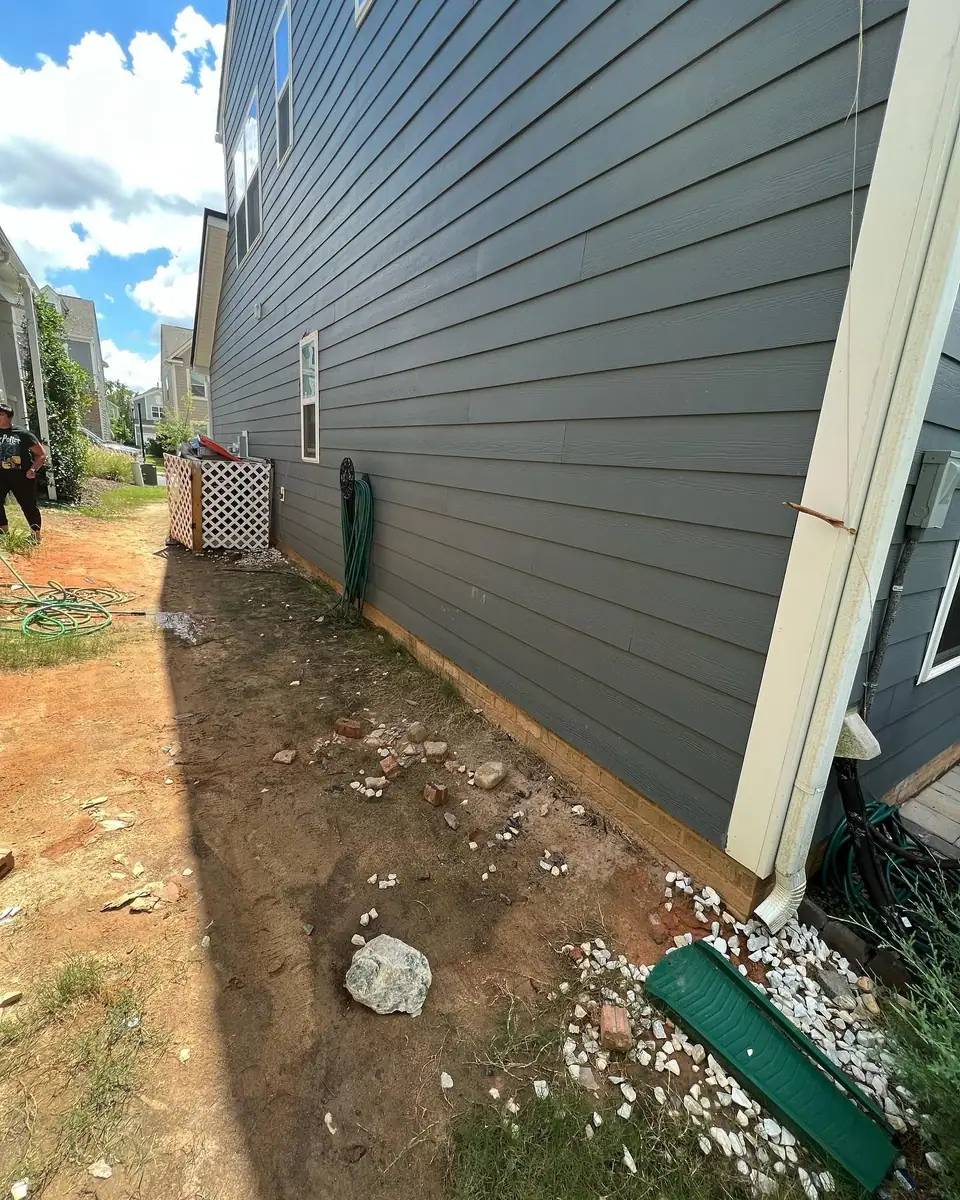
Construction makes it worse. On many newer lots, topsoil was stripped, the ground was compacted by equipment, and final grading was done quickly. Over a few years, backfill around the foundation settles, which can reverse the slope so water runs toward the house instead of away. Add downspouts that empty right at the corners, and a single storm can put a surprising amount of water exactly where you don't want it.
02What are the warning signs of a drainage problem?
Some signs are obvious, like puddles that are still there a day or two after rain. Others are easy to miss until they cause damage. Walk the property during or right after a heavy rain; it is the best free diagnostic tool there is.
Standing water: puddles that last more than a day or two after rain
Soggy turf: spongy ground, moss, or grass that thins and dies in one area
Erosion: bare soil, washed-out mulch or small gullies along slopes and beds
Foundation clues: damp crawlspace, efflorescence on block, or water at the slab
Gutter overflow: water sheeting over gutters or pooling at downspout outlets
Neighbor runoff: water entering your yard from an uphill lot
03Which drainage solution is right for my yard?
Drainage work is a set of tools, not a single product. Surface water, which is rain running across the ground, is usually best handled by reshaping the ground itself: regrading for positive slope away from the house, and swales, which are shallow, gently sloped channels that carry water around the house and off the property. Grading is often the most durable fix because there is nothing to clog.
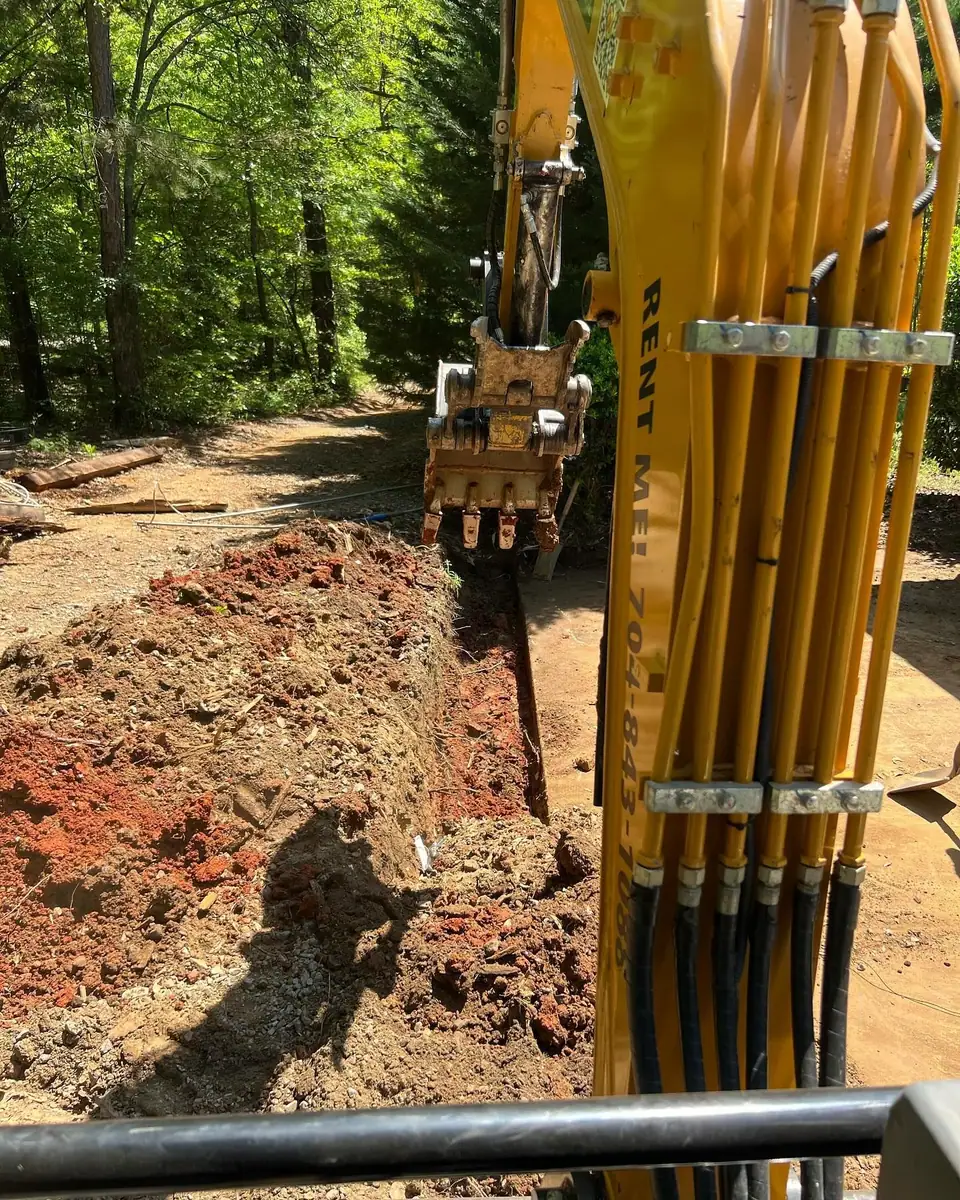
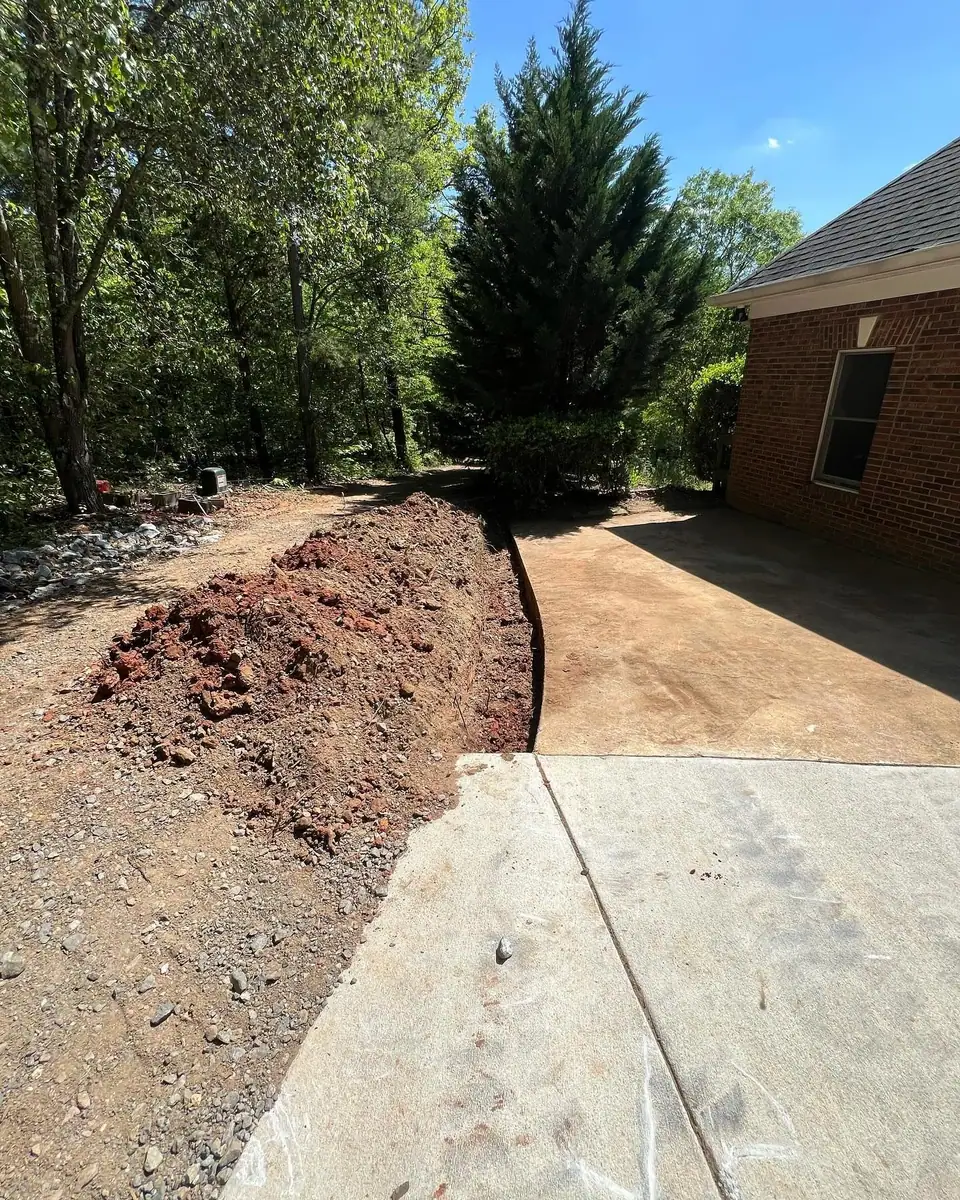
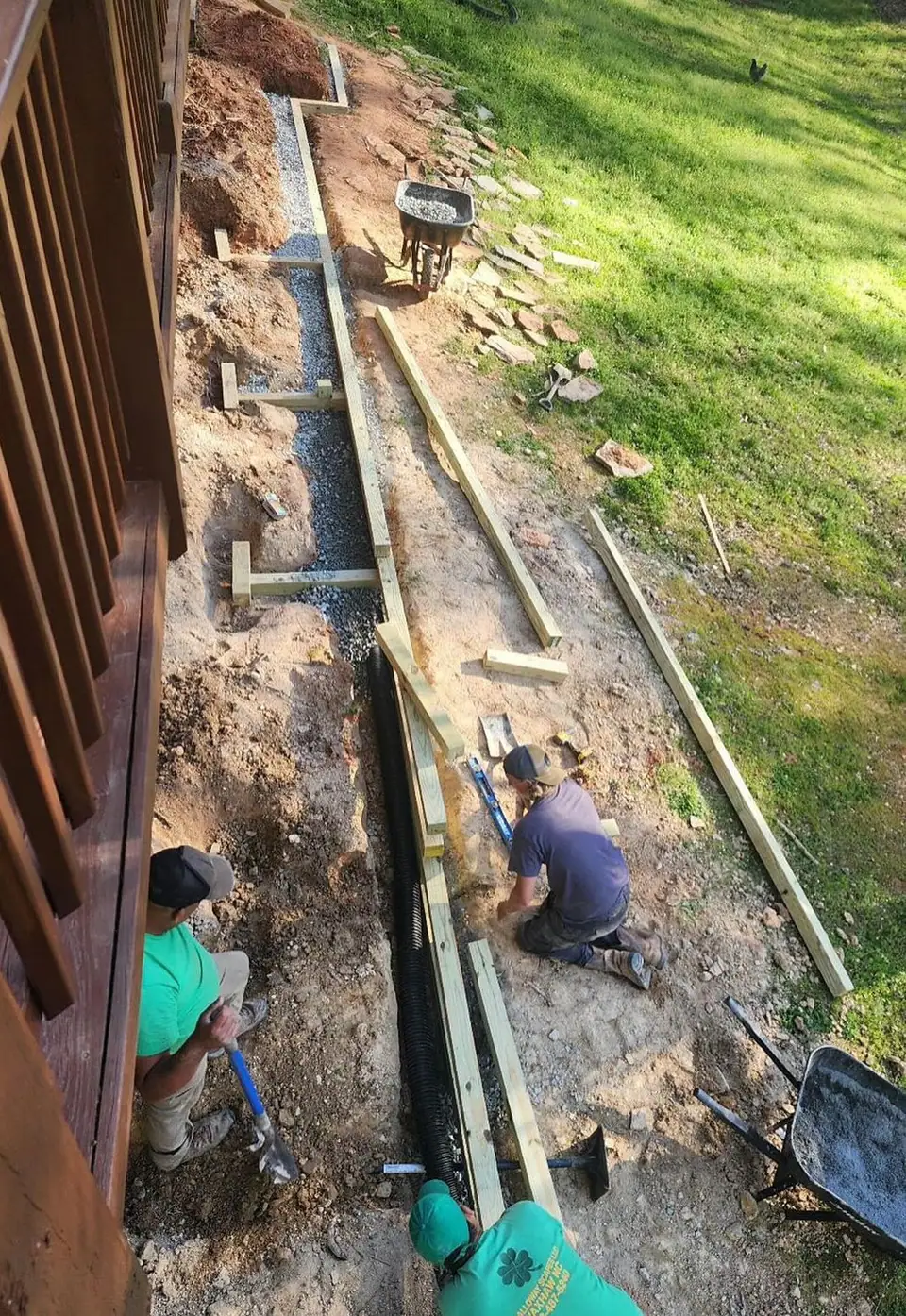
Roof water is handled by tying downspouts into solid underground pipe that carries it well away from the foundation to a pop-up emitter or a daylight outlet. Groundwater and saturated soil that won't dry out are where French drains come in: a trench lined with filter fabric, filled with washed gravel around a perforated pipe, sloped to an outlet. Many properties need two or three of these working together, built in the right order.
Regrading: corrects slope so water moves away from the foundation
Swales: shallow channels that move surface runoff between and around houses
Downspout lines: solid pipe that carries roof water to a safe outlet
French drains: perforated pipe in gravel for saturated ground
Erosion control: slope shaping, stone and deep-rooted plantings
04How much slope does a yard need to drain?
Building codes commonly call for the ground to fall at least six inches within the first ten feet away from a foundation, which works out to about a five percent slope. Beyond the house, lawns generally need a gentle, continuous fall so water never sits in a dish. Underground pipes need slope too, typically at least an eighth of an inch per foot, so water keeps moving instead of settling and leaving sediment behind.
Getting those numbers right is why drainage work starts with measurement, not digging. We trace the water path, check the existing grade and pick an outlet before we price anything, so the system works the first time it rains.
05Where does the water go?
Every drainage system needs a legal, safe outlet. That might be a pop-up emitter in the lawn well away from the house, a daylight outlet at a lower part of the property, a stable area at the street, or an existing drainage easement. Moving water onto a neighbor's lot is not a solution, and in many neighborhoods it violates HOA rules or local ordinances.
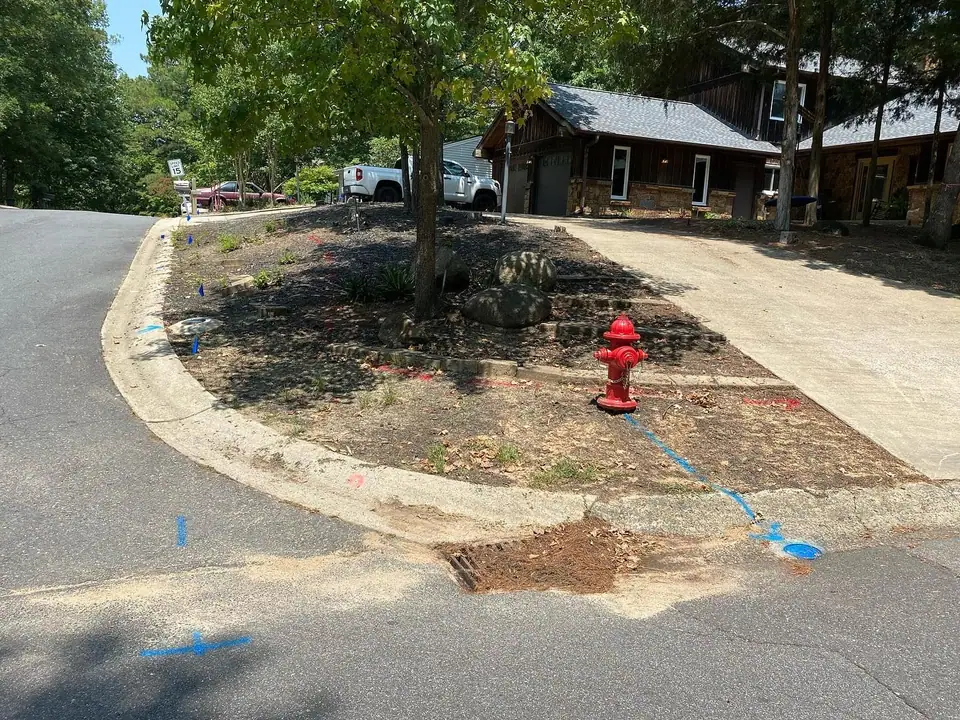
Before any trenching, North Carolina and South Carolina both require a call to the state 811 utility-locate service, so buried gas, power, water and communication lines are marked. That step is part of every Galloway Scapes drainage job.
06What does a drainage project look like from start to finish?
It starts with a site walk. Terry looks at the roof lines, downspouts, grade, soil and the low spots, and asks where you have seen water. You get a written plan and estimate that explains what will be built and why. On install day, utilities are already marked, trenches are cut at measured slope, pipe and gravel go in, outlets are set, and the ground is regraded as needed.
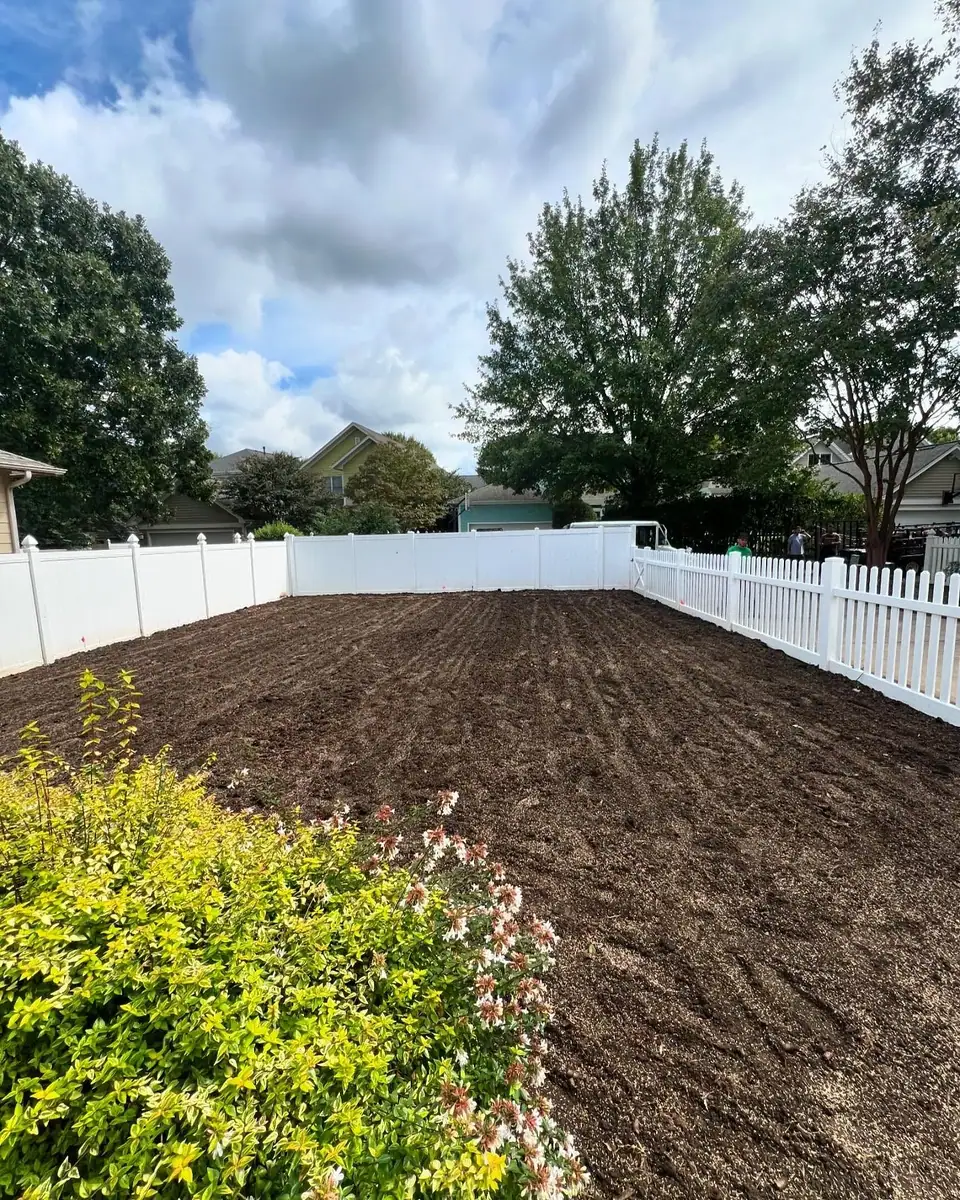
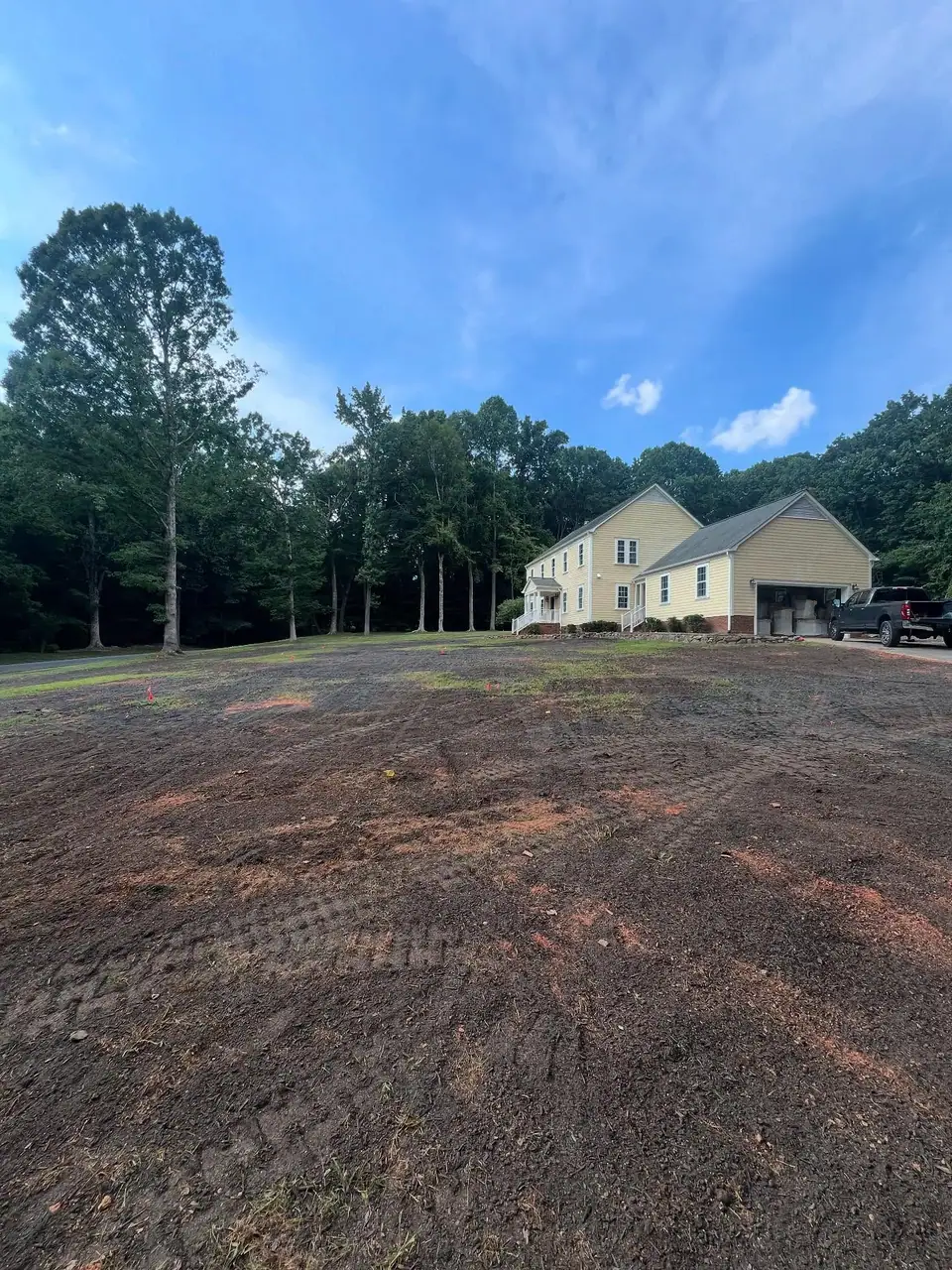
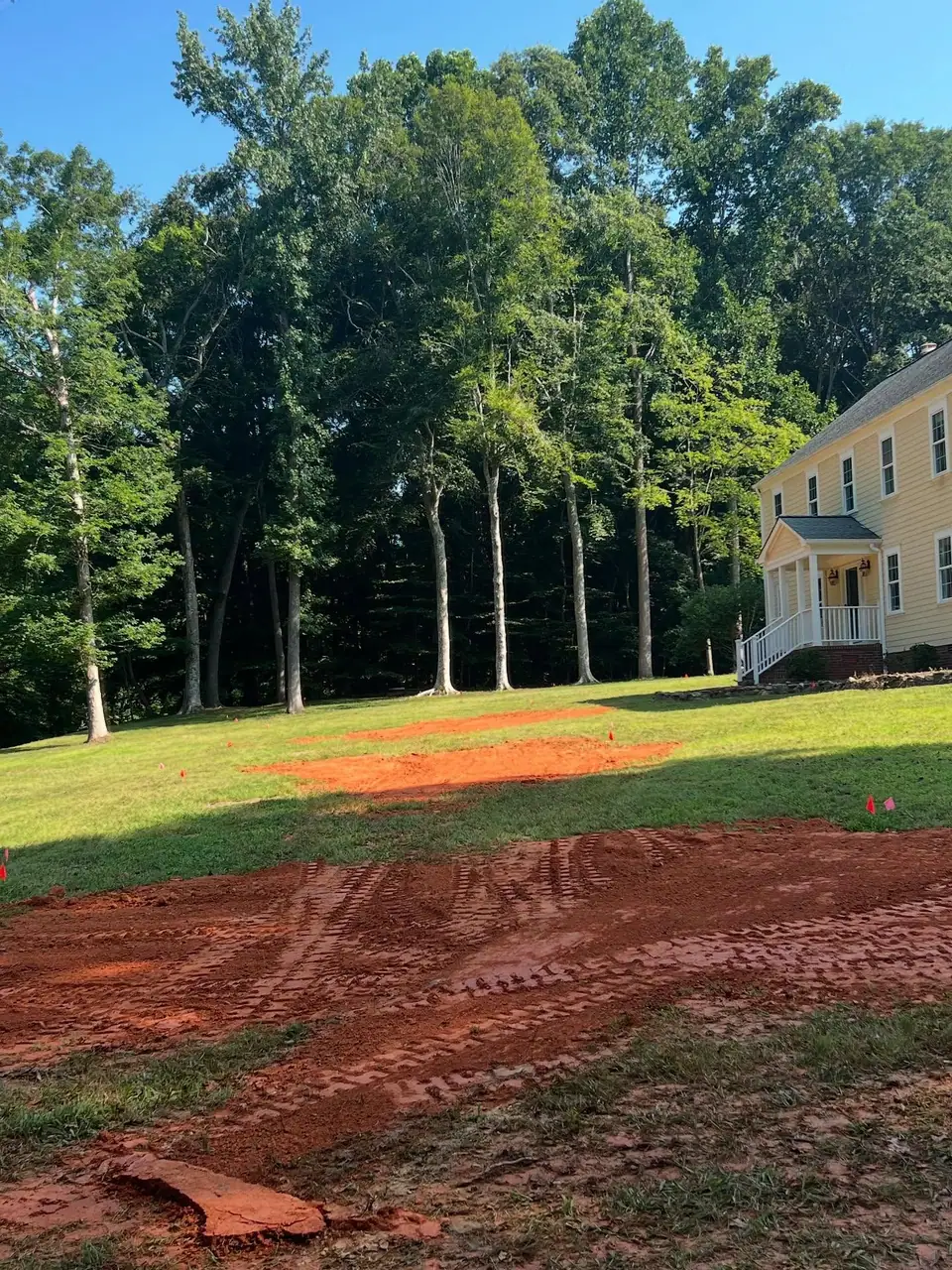
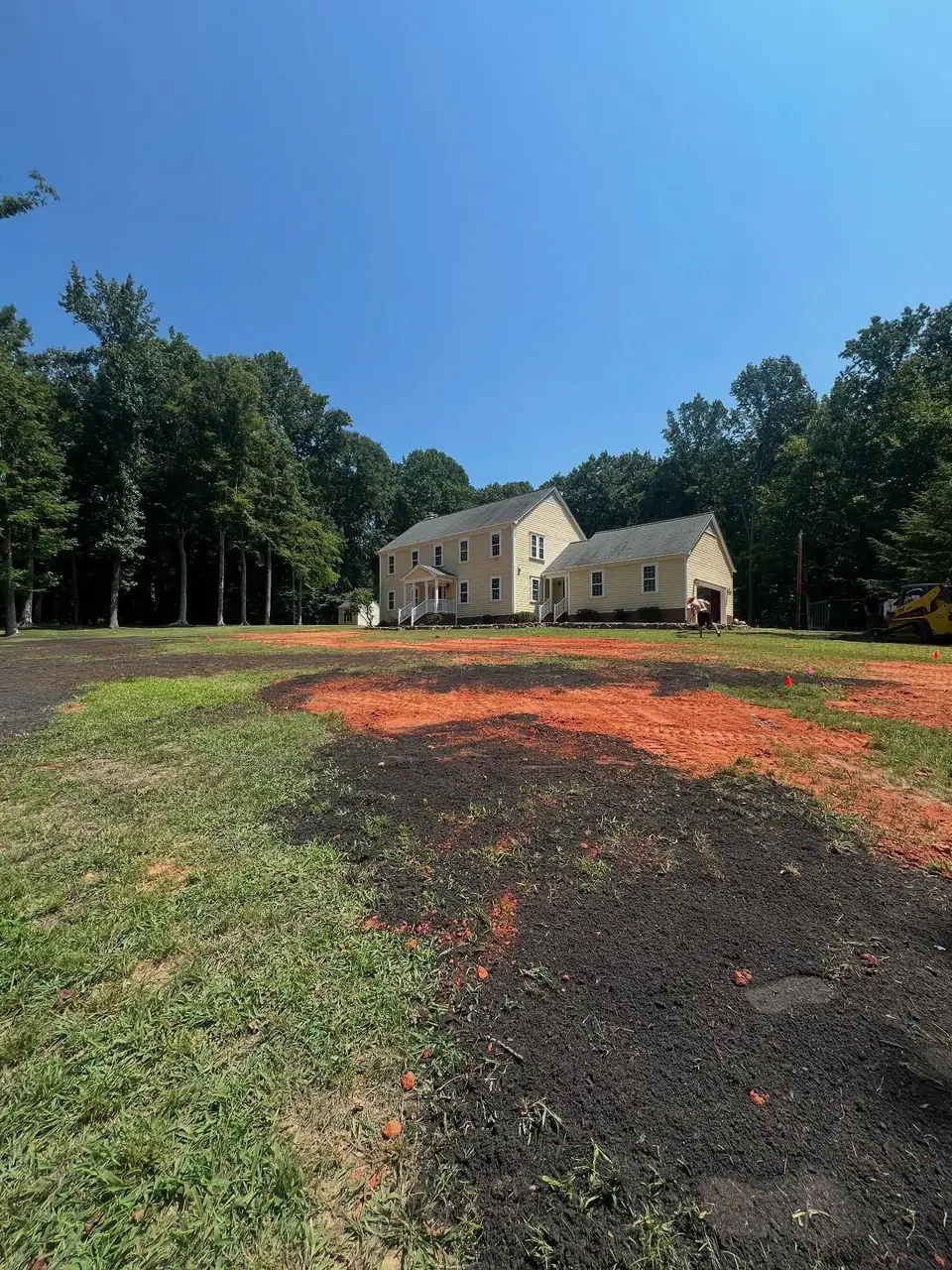
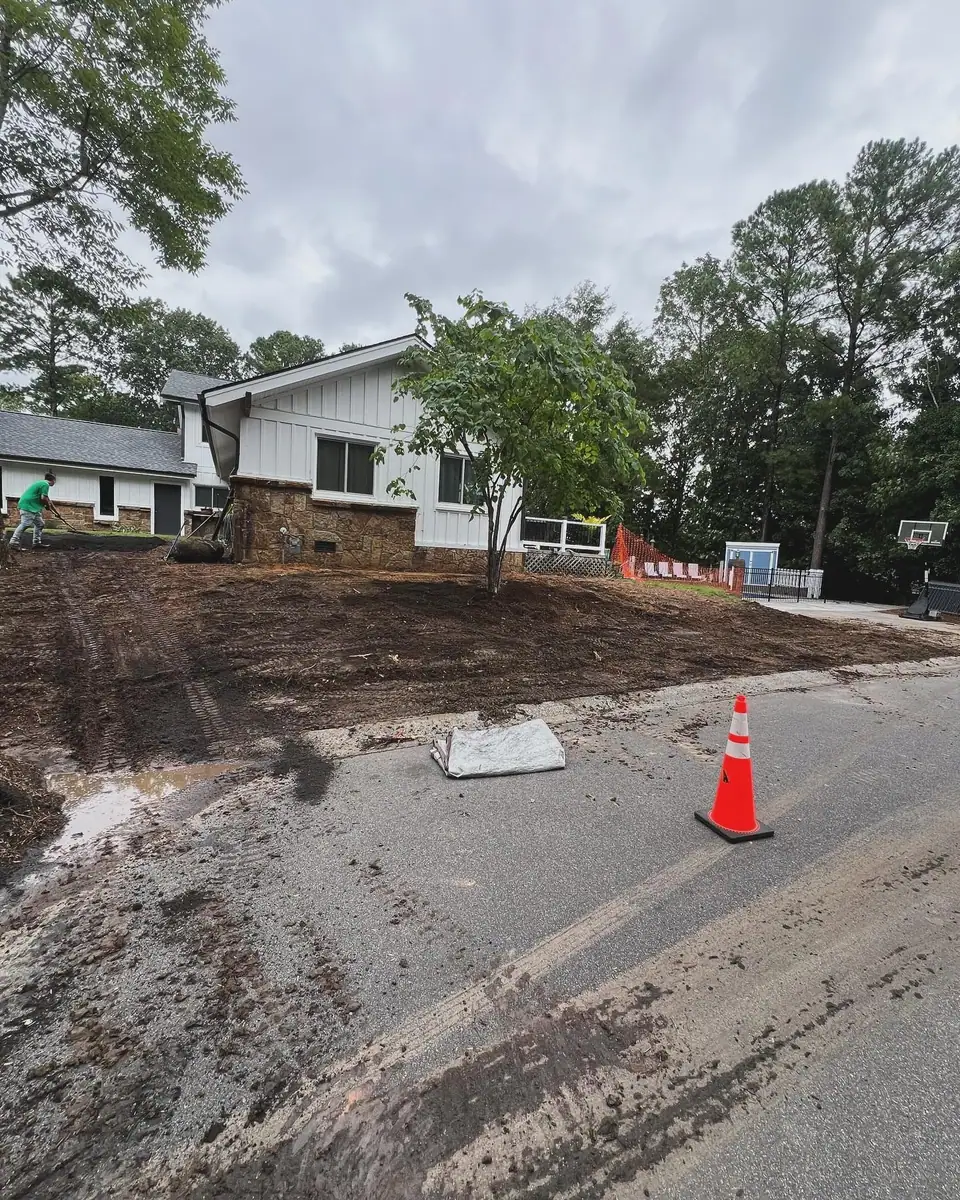
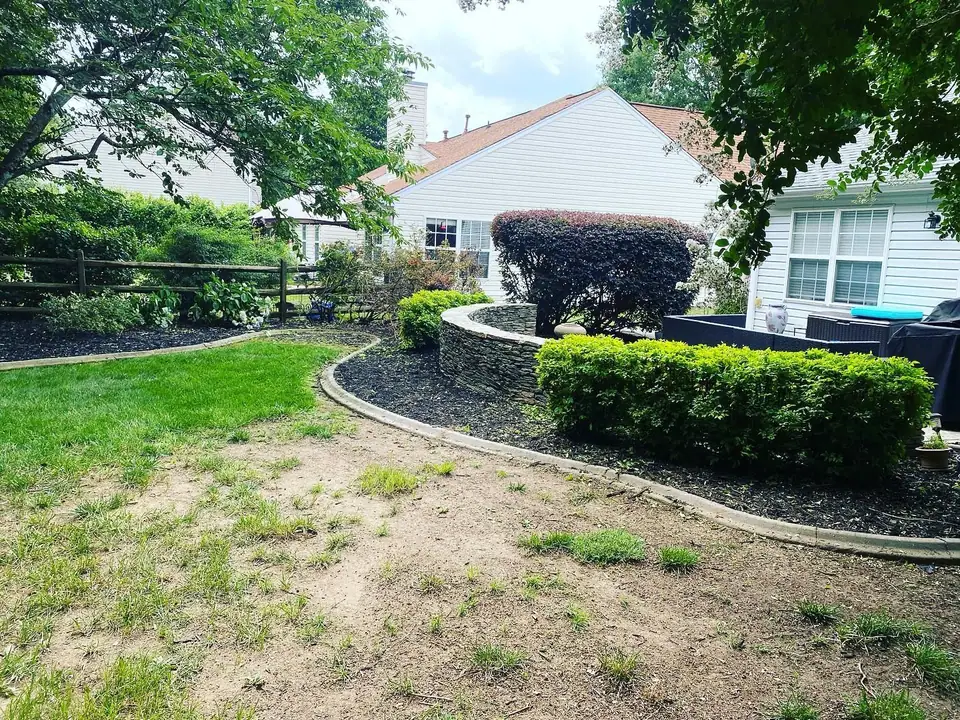
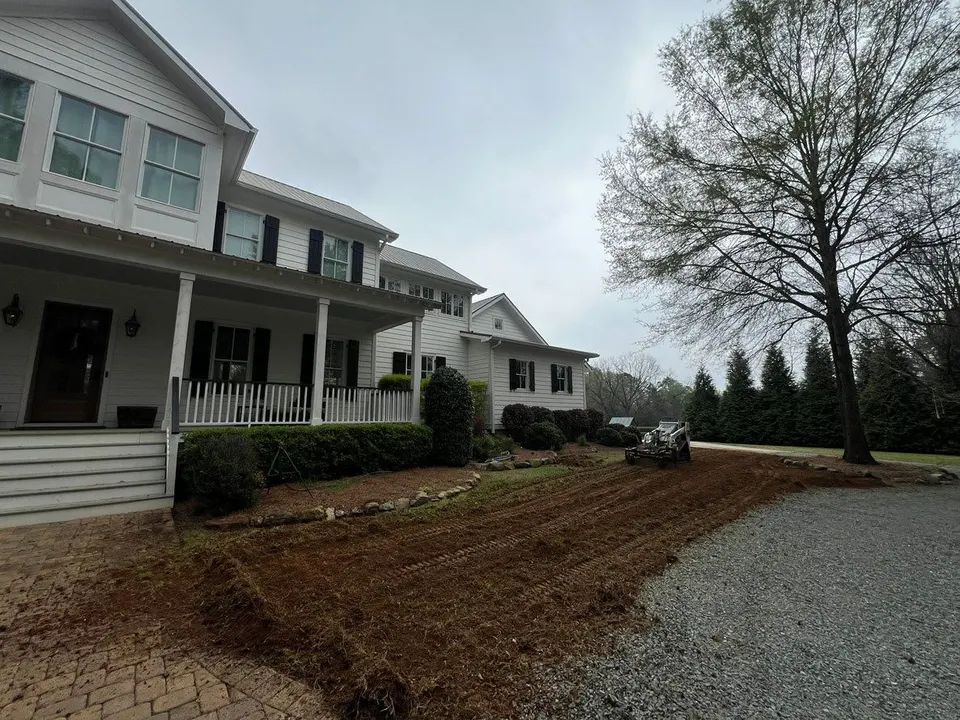
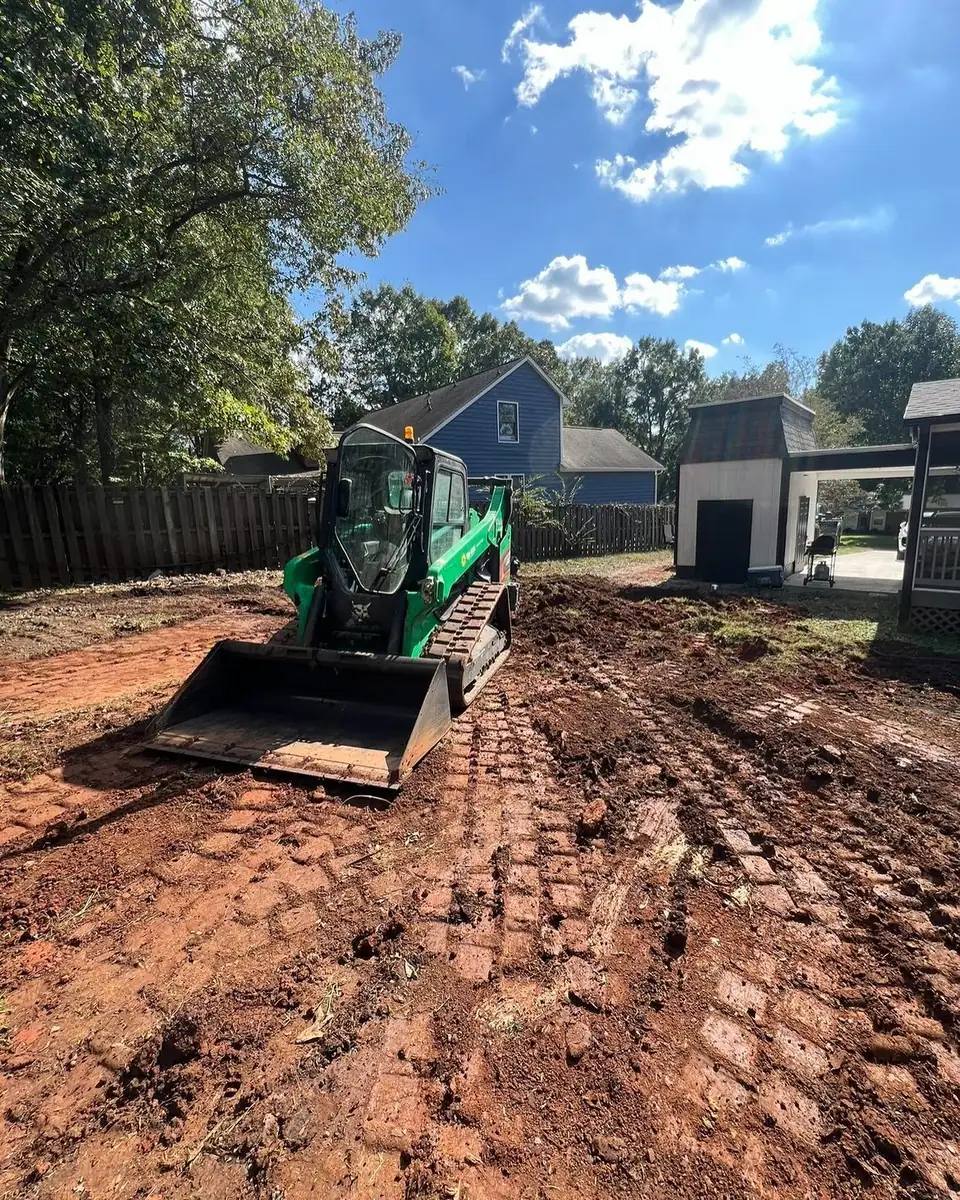
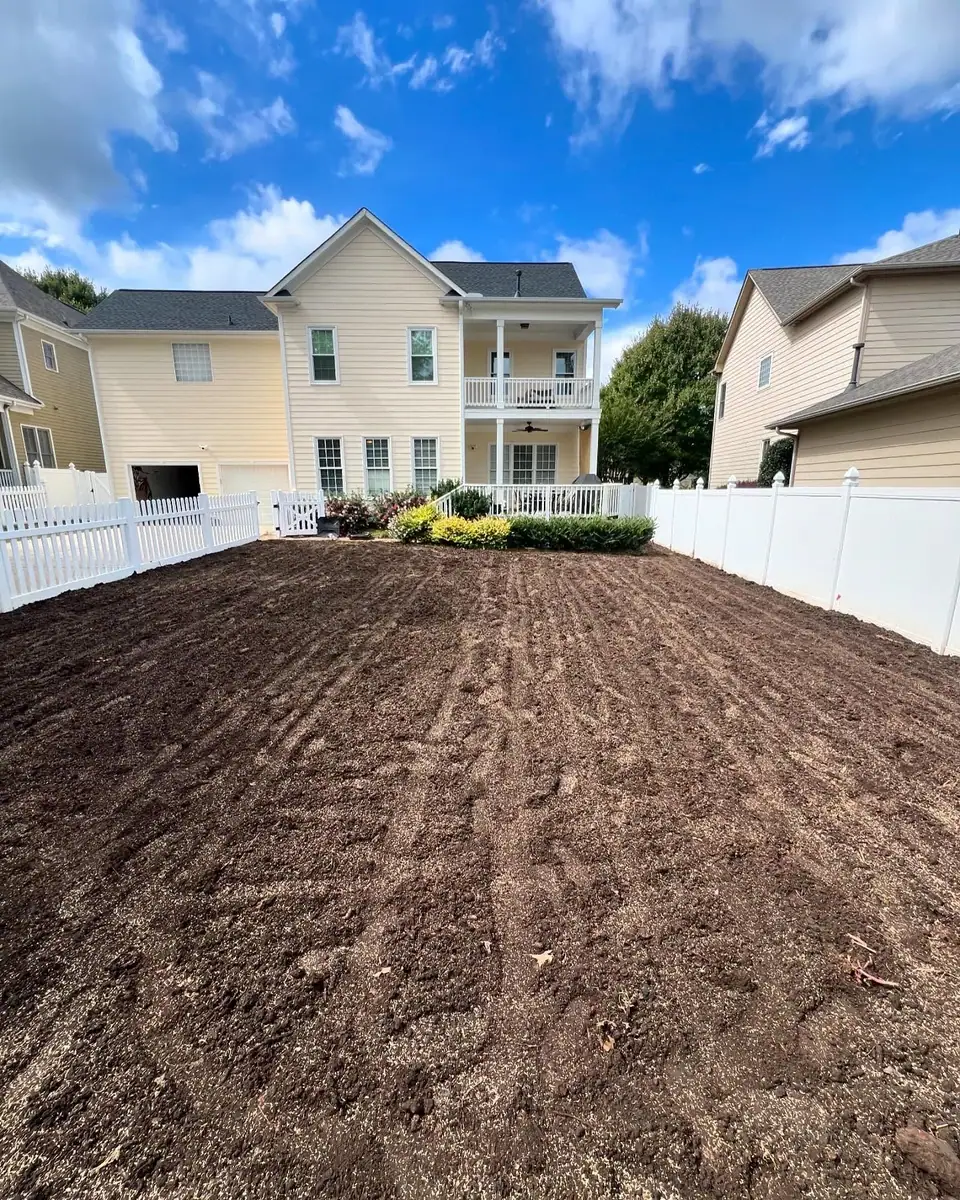
The last part is restoration: backfilling, raking, seeding or sodding disturbed turf, and putting beds back together. A drainage job should leave the yard looking better than before, not like a construction site.
How it works
Four steps. No surprises.
From the first call to the final cleanup, you deal with the same owner-run crew.
01
Call or send the form
Tell us what’s bothering you about the yard. We get back to you within 24 hours.
02
Walk the property
We look at slope, soil, drainage paths, turf type and how you actually use the space. No guessing from a photo.
03
A written estimate
You get a plain-language scope and price. No surprise add-ons after the crew shows up.
04
Owner-led work and cleanup
Terry is on the job. Beds edged, debris hauled off and the driveway blown clean before we leave.
How do I know whether I need a French drain or regrading?
It depends on where the water comes from. If water runs across the surface during storms and collects in low spots or against the house, the cause is usually grading, and the most durable fix is to reshape the ground so it slopes away and to add swales that carry runoff off the property. If the ground stays saturated long after the rain stops, or water seeps up from below, a French drain is often the right tool because it gives groundwater an underground path out. Many yards in Waxhaw and the surrounding towns need both, plus underground downspout lines. That is why Galloway Scapes starts with a site walk to trace the water path before recommending anything, and the written estimate explains which method we chose and why.
How much does yard drainage work cost?
Drainage costs vary widely because every system is designed around the property. The main factors are how many linear feet of trench and pipe are needed, how deep it has to go, how far the water must travel to a safe outlet, whether regrading or fill is required, access for equipment, and how much lawn and bed restoration follows. A pair of downspout extensions is a very different project from a whole-yard plan with swales and a French drain. Galloway Scapes gives free written estimates after Terry walks the property, so the price reflects what your yard actually needs rather than a generic per-foot number, and you can see each part of the scope before you decide.
Can poor drainage damage my home's foundation?
Yes. Water that collects against a foundation repeatedly is one of the most common causes of damp crawlspaces, musty smells, wood rot, and settling or cracking over time. Clay soil makes this worse because it swells when it is wet and shrinks when it dries, which puts stress on footings and slabs. Downspouts that dump right at the corners of the house concentrate thousands of gallons of roof water in a few spots during a storm. The basic protection is positive grading that slopes away from the house and roof water carried well away in solid pipe. Galloway Scapes handles the exterior side of that work; if you already see structural cracks, you should also have a foundation specialist evaluate the house.
Do I need a permit for drainage work in Union County or York County?
Most residential yard drainage work, such as regrading a lawn, installing downspout lines or adding a French drain on your own lot, does not typically need a building permit, but rules vary by town, HOA and the size of the disturbed area. Larger land-disturbing projects can trigger erosion and sediment control requirements, and work in drainage easements, near streams or near stormwater infrastructure may need approval. Many HOAs in Waxhaw, Weddington, Indian Land and Fort Mill also want to review exterior changes. Every job also starts with an 811 utility-locate call. On the walkthrough we will flag anything that may need HOA or municipal sign-off so you can get it handled before work begins.
How long does a drainage installation take?
Many residential drainage projects, such as downspout lines or a single French drain run, are completed in one to two days once utilities are marked. Larger whole-yard projects with regrading, swales and multiple drain lines can take several days, and timing also depends on weather, since trenching saturated clay right after heavy rain makes a mess and can compromise compaction. The written estimate gives you an expected timeline, and the 811 locate request is usually placed a few business days before the start date. Lawn restoration is part of the job: disturbed areas are backfilled, raked smooth and seeded or sodded, so the yard is usable again as soon as possible.
We had several landscaping projects completed at our property, including new sod installation, mulching, and drainage work, and I couldn’t be happier with how everything turned out. The sod installation completely transformed the appearance of our yard.Cameron JonesSod, mulch & drainage
★★★★★
We contacted Galloway Scapes for lawn leveling and are very pleased with their service. Terry and his crew are incredible and did a great job on our lawn! They arrived on schedule and did a thorough job.Marianne NietoLawn leveling
★★★★★
Terry and his crew are the best! He is attentive, professional, and knowledgeable. I have a fast growing weed in my lawn and he works diligently on keeping it under control.Debbie HeilemannLawn care
★★★★★
Reliable, efficient, and professional, with great attention to detail. Everything looked clean, green, and well cared for.Blake TrewLandscaping
★★★★★
Very good, consistent service. They are responsive when asked about things and address concerns as they arise.David DeaconLawn maintenance
★★★★★
Reliable, punctual, creative, clean, and professional throughout the process. I really appreciated how easy they made everything.Ryan BrzyckiLandscaping
★★★★★
Knowledgeable and skilled approach to lawn maintenance and yard landscaping, with meticulous attention to detail. Fair pricing combined with outstanding results.Noelle IsheeLawn & yard landscaping
Free estimate
Tell us about your drainage project.
A few quick details. We reply within 24 hours, usually sooner, and we walk the property before we price anything.