★★★★★ 4.9 on Google · 16 reviewsLicensed, bonded & insuredOwner on every jobFree written estimates
Our approach
How we approach yard drainage solutions.
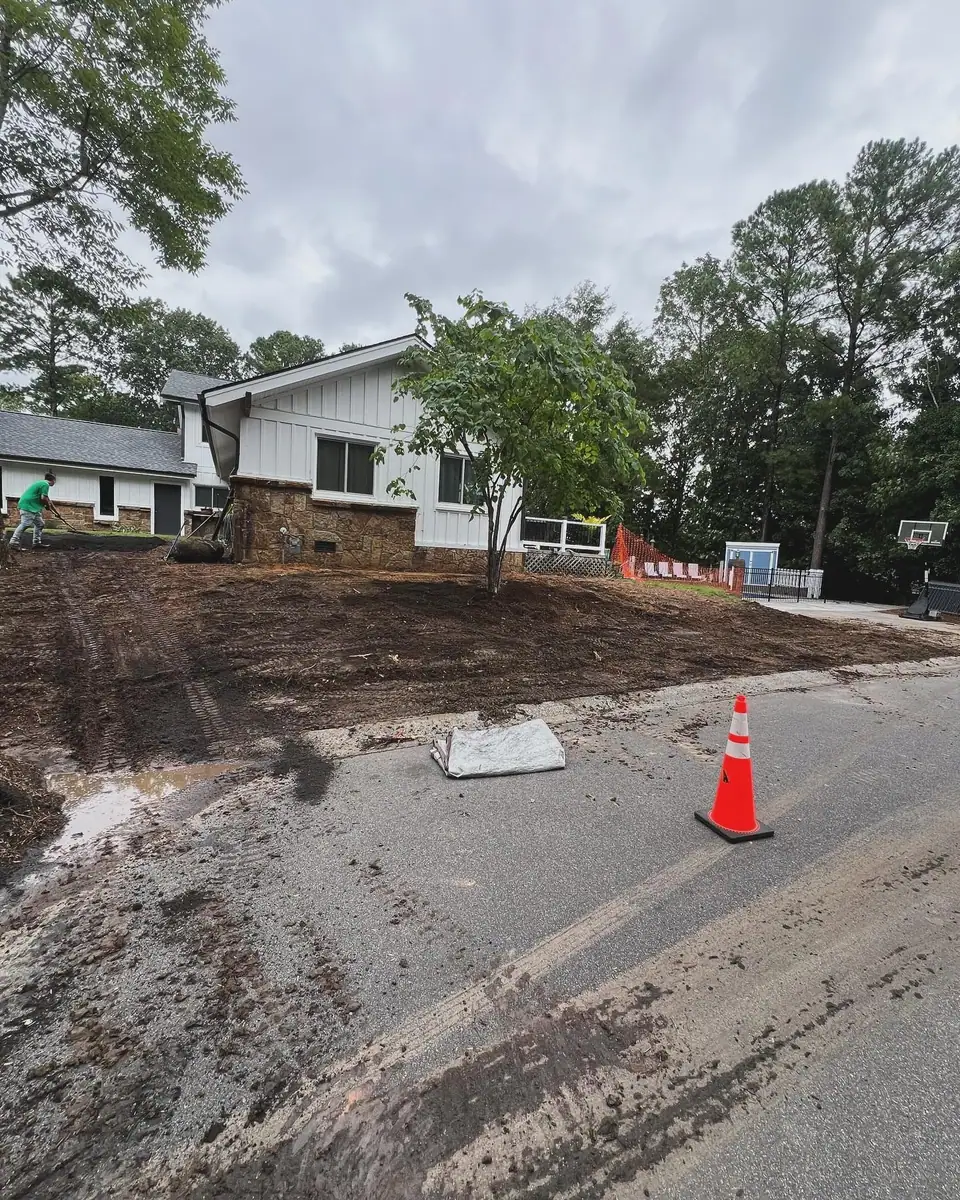
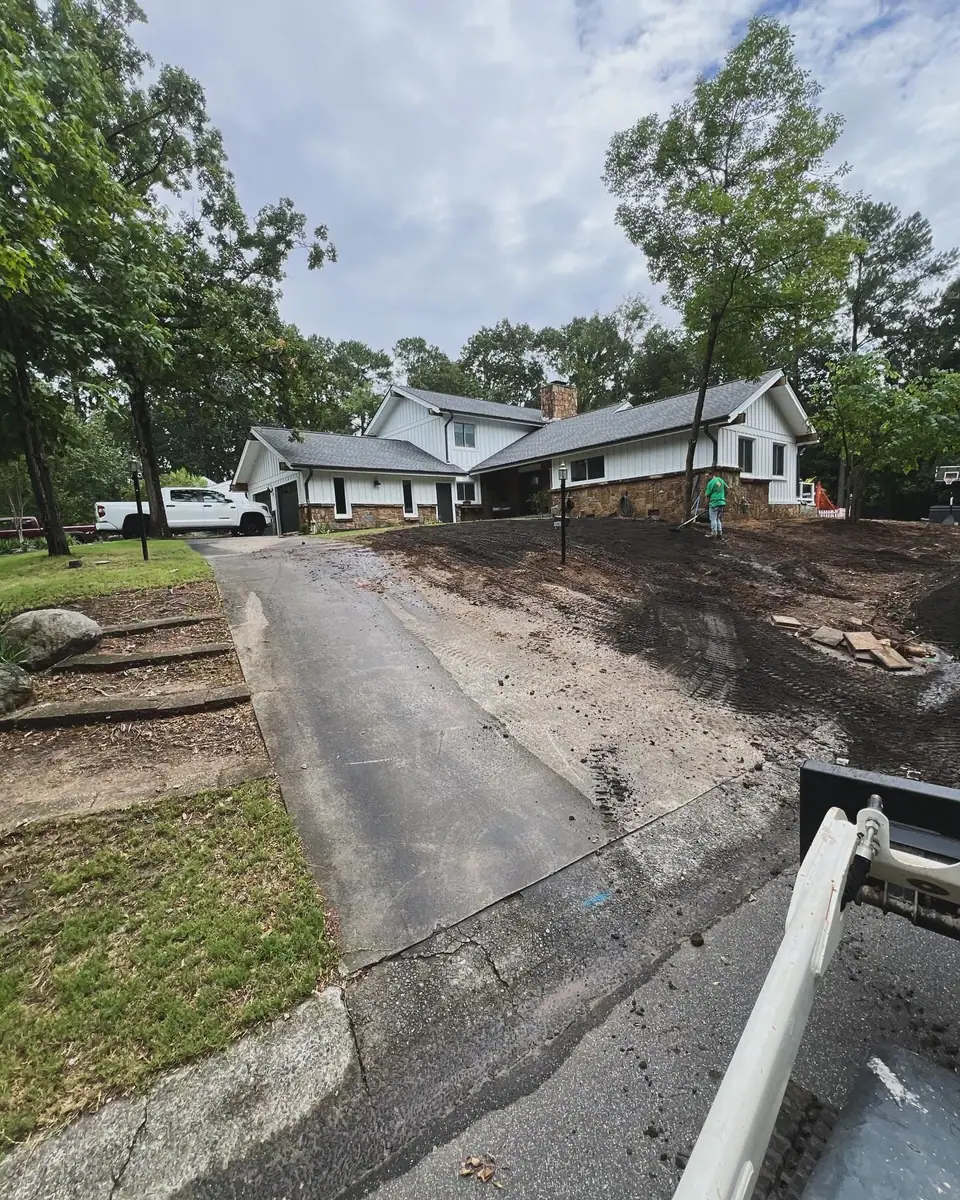
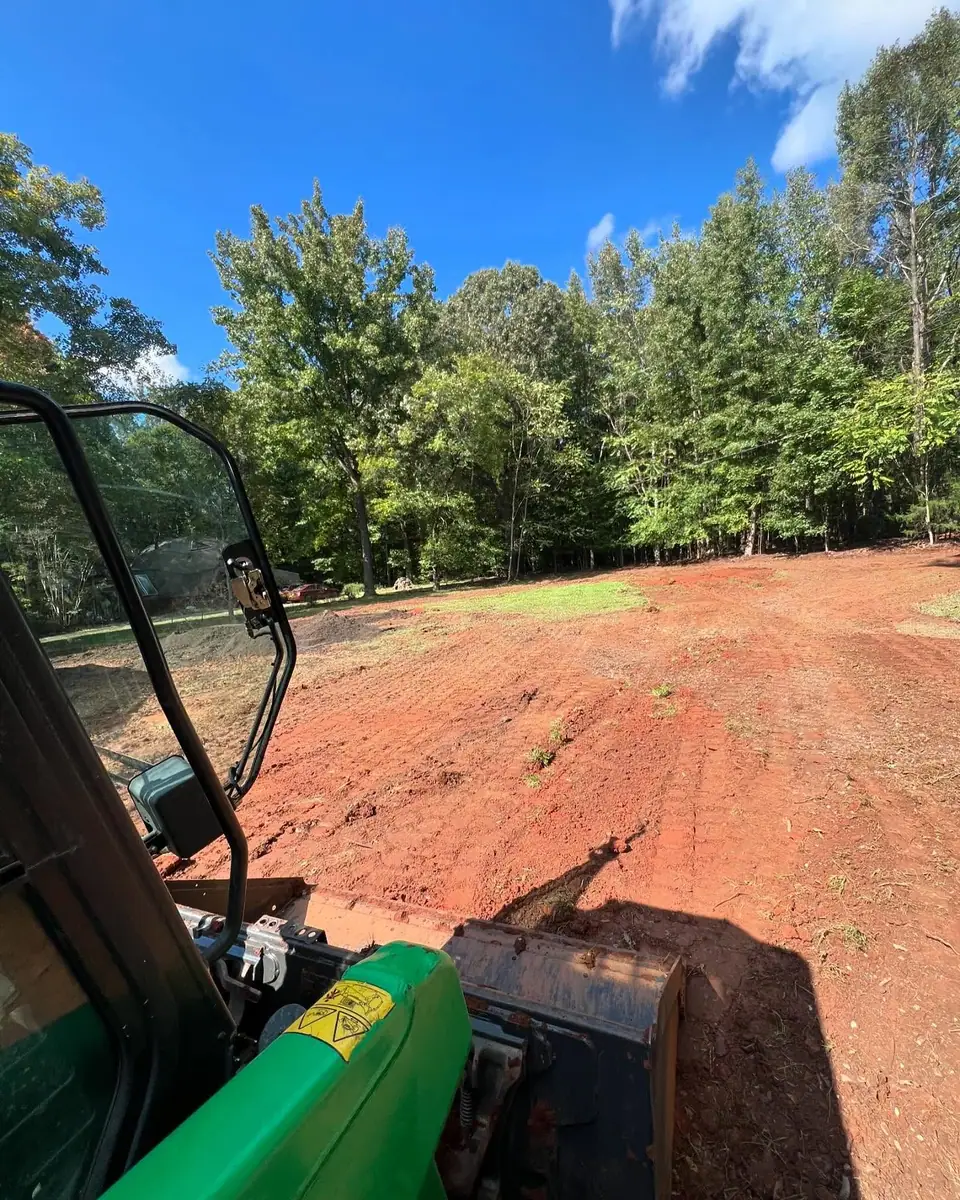
Yard drainage is rarely one pipe. It’s usually a combination: a low spot that needs fill and regrading, a swale to carry surface runoff between houses, downspouts tied underground, and maybe a French drain where groundwater collects. We map it all, then build it in the right order.
Yard drainage solutions in Waxhaw, NC: diagnosing and fixing wet yards
The short answer
Yard drainage solutions start with finding where the water comes from and where it can legally and safely go. The fix may be regrading, a French drain, buried downspout lines, catch basins, a dry creek bed or a combination. On the dense red clay of Union and York Counties, water rarely soaks in fast, so it has to be collected and moved deliberately.
01Why do yards in Waxhaw stay wet?
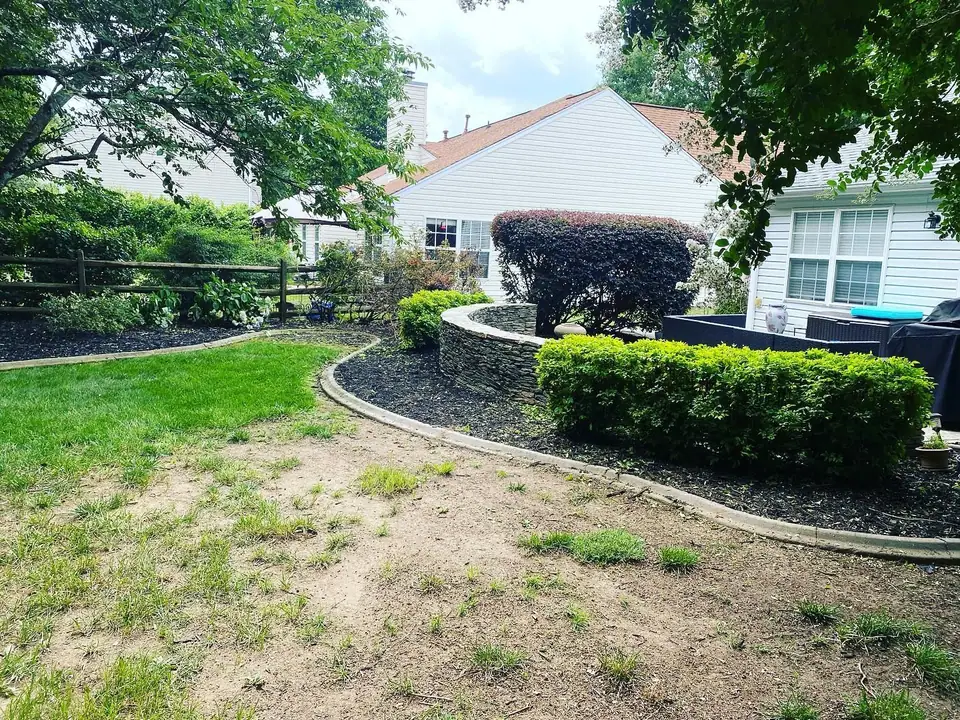
Most of the Charlotte region sits on red clay. Clay particles are tiny and pack tightly, so rain soaks in slowly and runs off quickly. When lots are graded flat or toward the house, when downspouts dump roof water at the foundation, or when a neighbor's yard sheds water onto yours, the water has nowhere to go and sits for days.
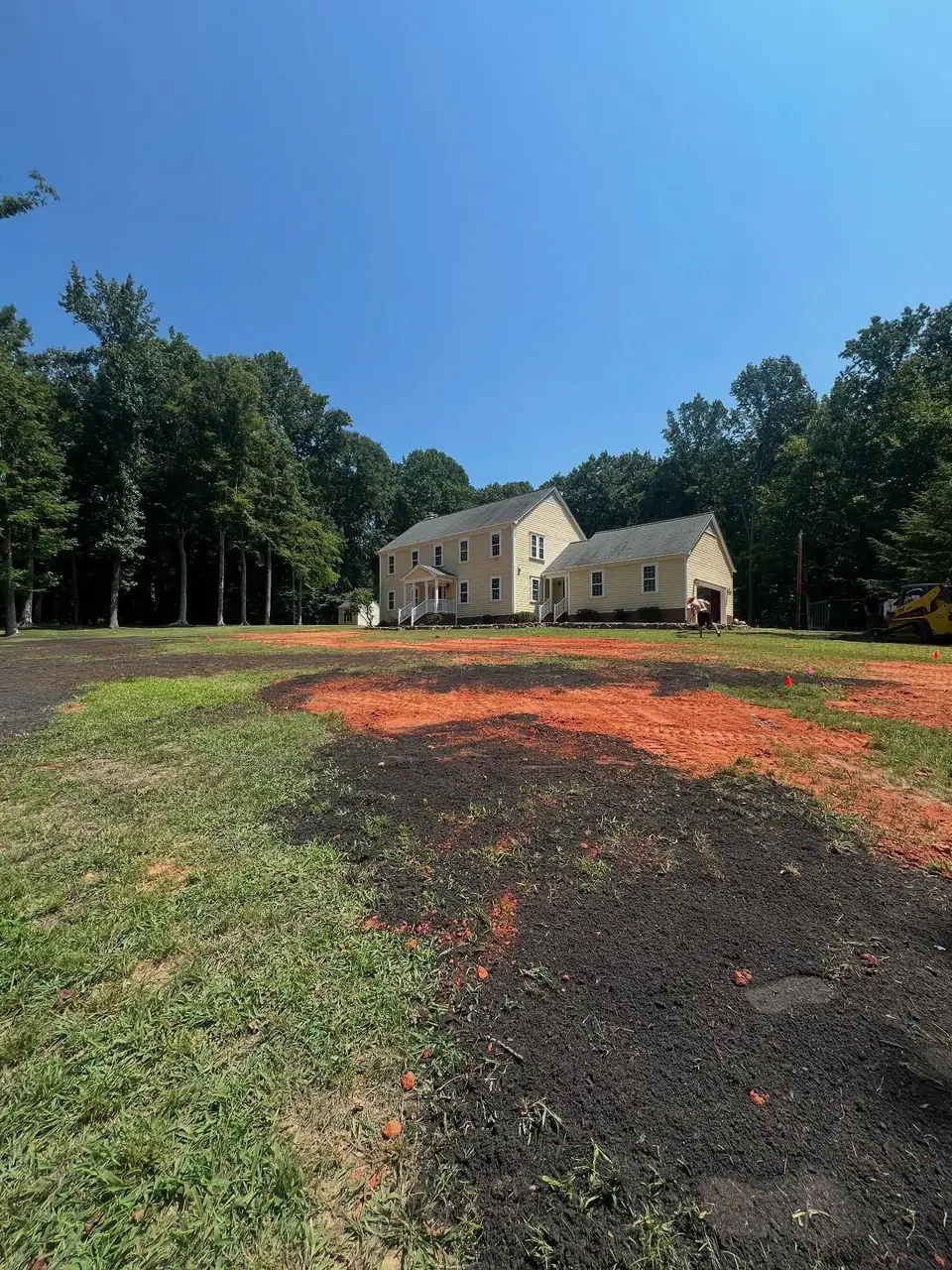
New-construction neighborhoods add another layer. Topsoil is often stripped, the remaining clay is compacted by equipment, and final grading can leave subtle low spots that only reveal themselves in the first heavy storm.
Clay soil: slow infiltration and fast runoff
Grading: lawns that are flat or slope toward the house
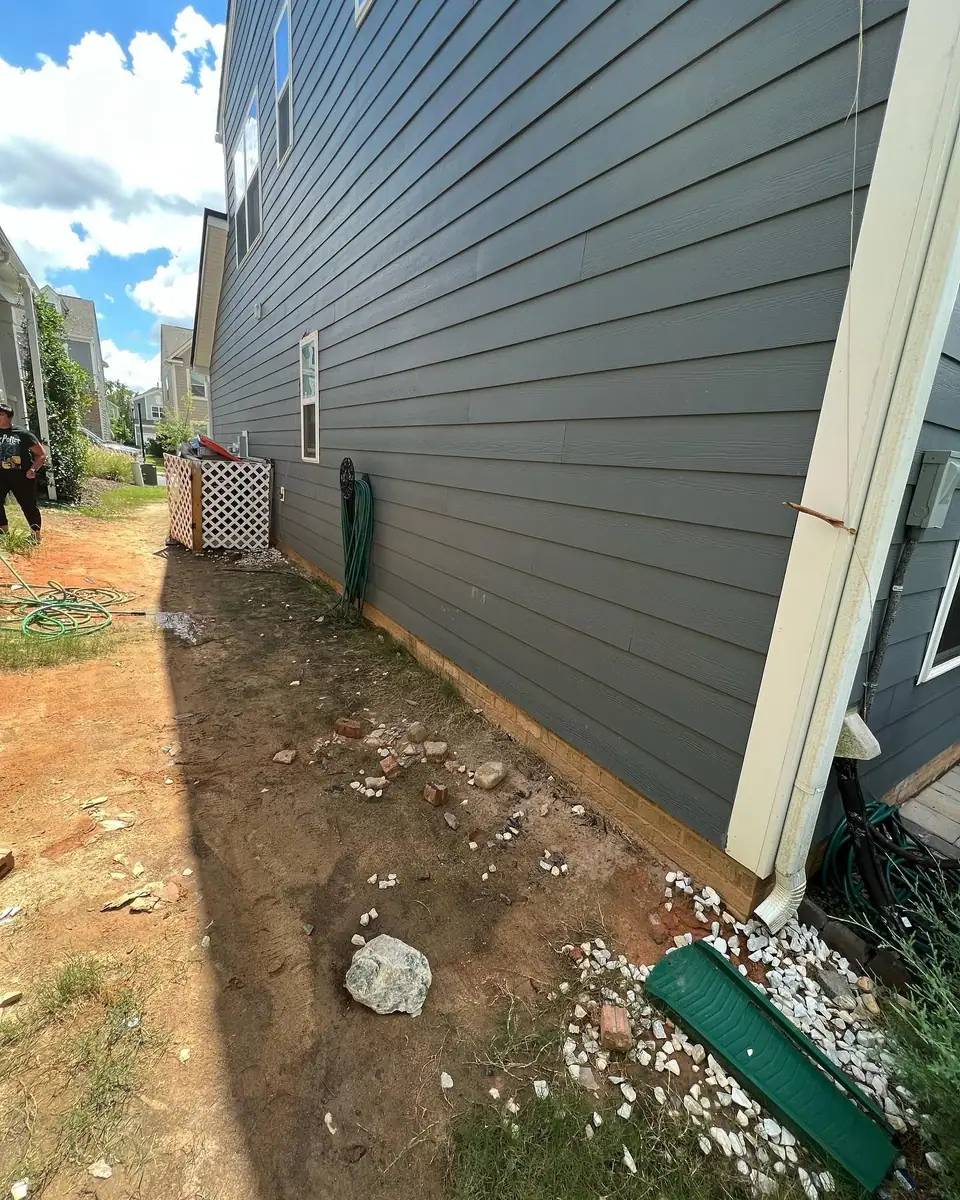
Roof water: downspouts discharging at the foundation
Neighboring runoff: water arriving from uphill lots
Compaction: construction equipment sealing the surface
02How do you diagnose a drainage problem?
The best diagnosis happens with water moving. If you can, take photos or video during and after a heavy rain: where water enters the property, where it pools, how long it stays and where it eventually goes. On the walkthrough, Terry checks the grade with the eye and with levels, traces downspouts, looks at soil, notes where turf is thin or moss is growing, and identifies a safe outlet such as a street, a swale or a natural low area at the back of the lot.
The outlet is the critical question. Every drainage system needs somewhere to send water that doesn't create a problem for you or your neighbor.
03Which drainage solution is right for my yard?
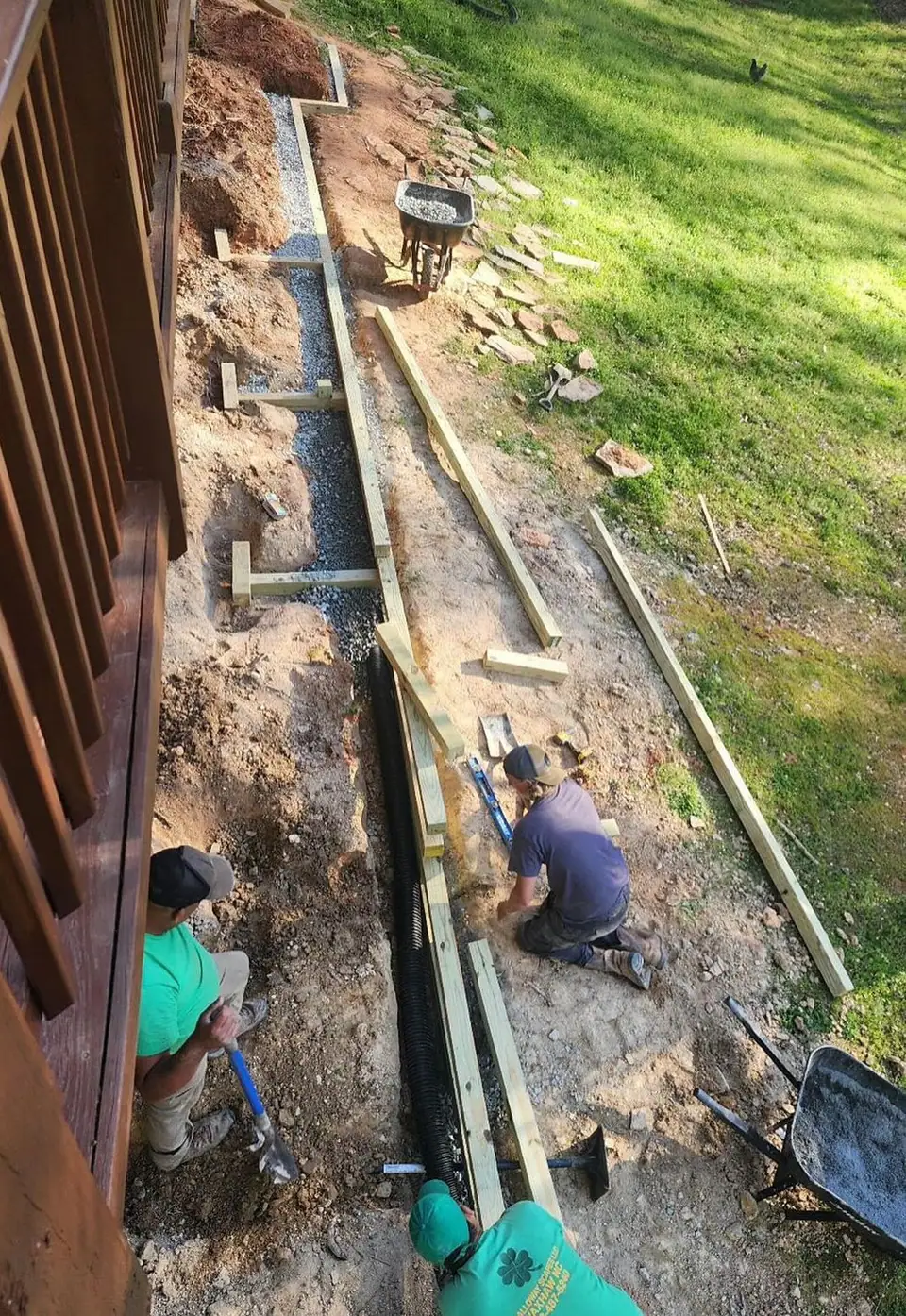
Surface water problems, where sheets of water cross the lawn or pool in a low spot, are often solved by regrading to create a gentle swale that carries water away, sometimes with a catch basin and solid pipe at the low point. Subsurface problems, where the ground stays soggy long after the rain stops, call for a French drain that collects groundwater through perforated pipe in washed gravel.
Roof water is handled with buried downspout extensions to a pop-up emitter or daylight outlet. Dry creek beds of stone can carry water through a landscape attractively. Most real-world fixes combine two or three of these.
04Why does water near the foundation matter?
Water that pools against the house soaks the clay around the foundation. Clay swells when wet and shrinks when dry, which puts repeated pressure on foundation walls and slabs. It also contributes to damp crawl spaces, musty basements, wood rot on sills and trim, and insect problems. Grading the soil to slope away from the house and moving roof water well away are two of the most cost-effective protections for a home.
05How is a drainage project built?
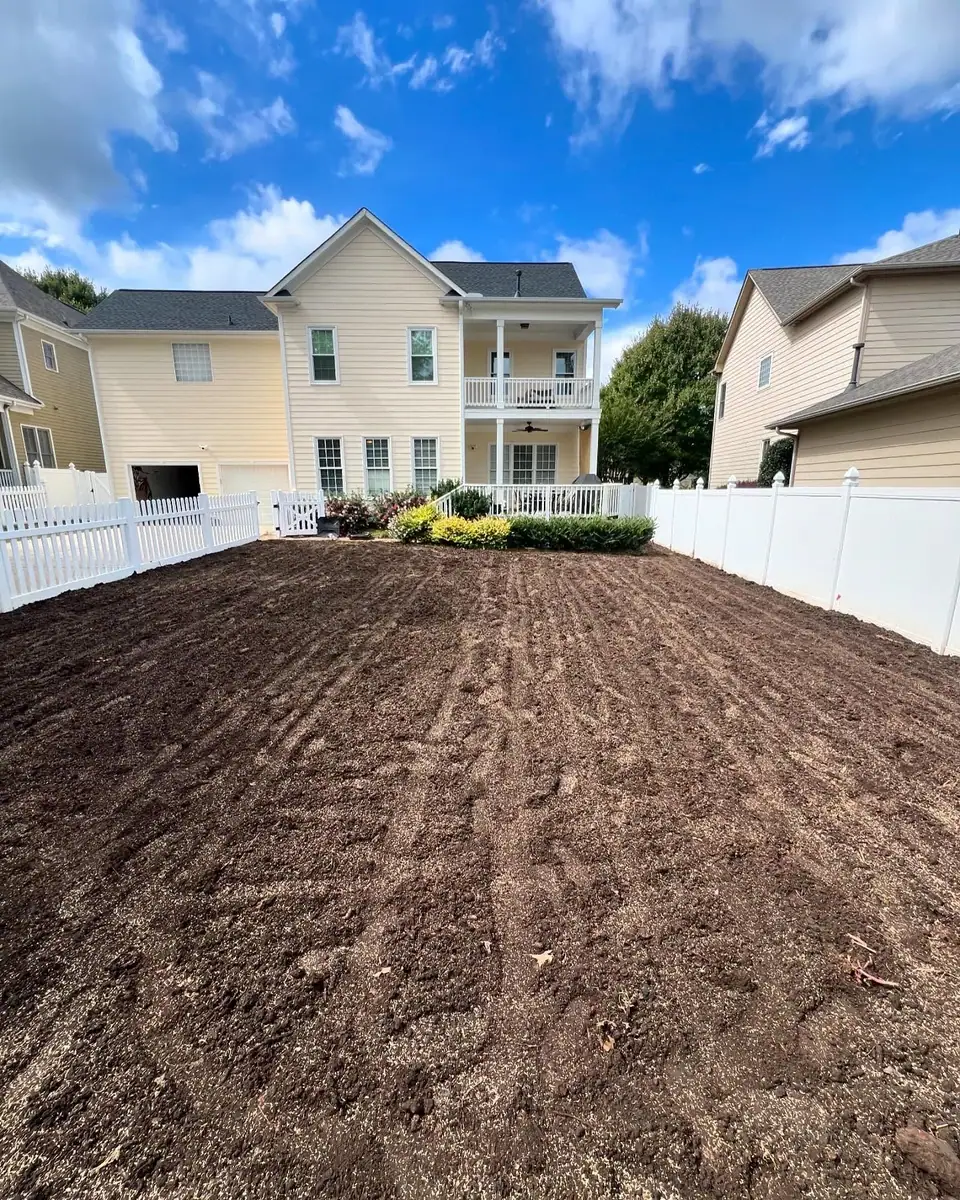
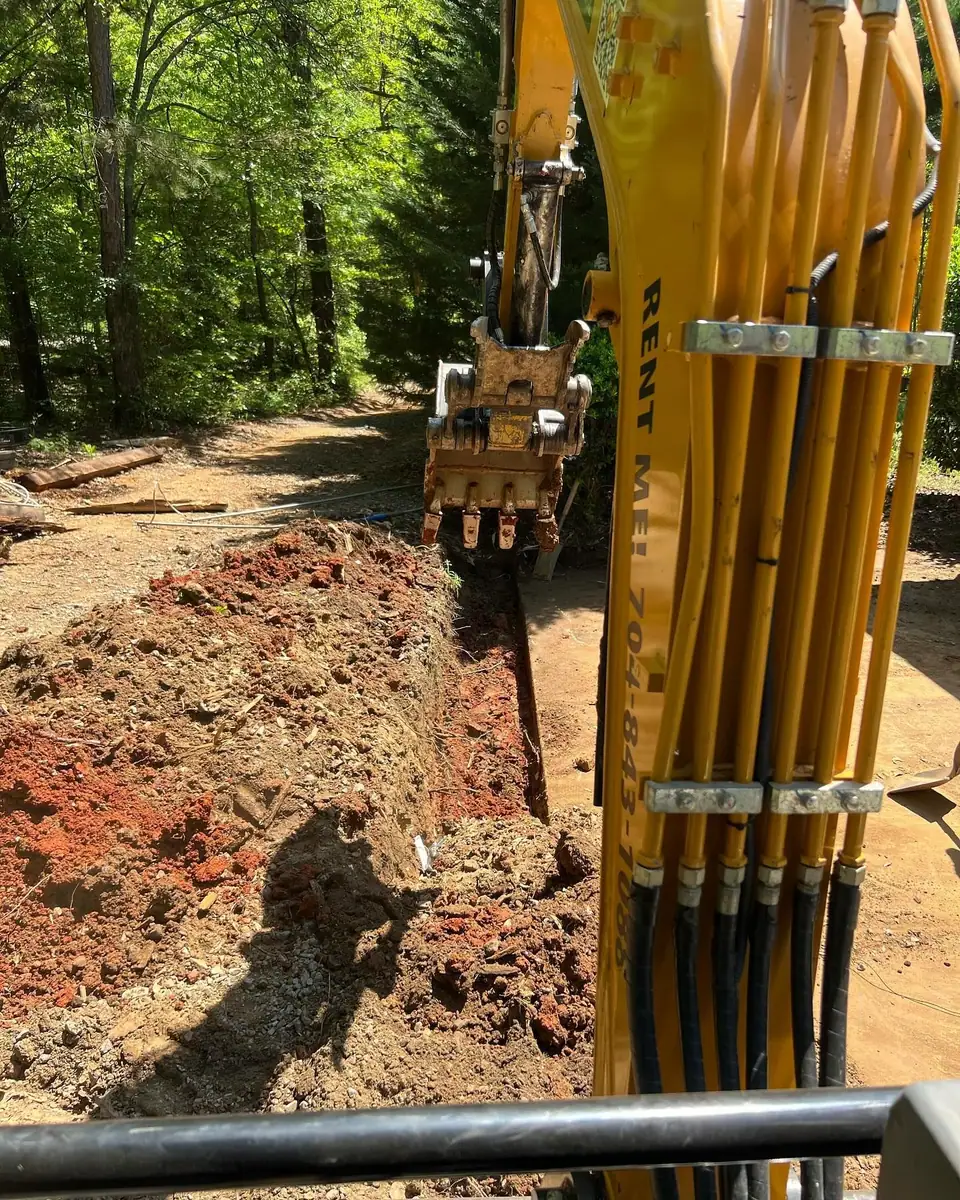
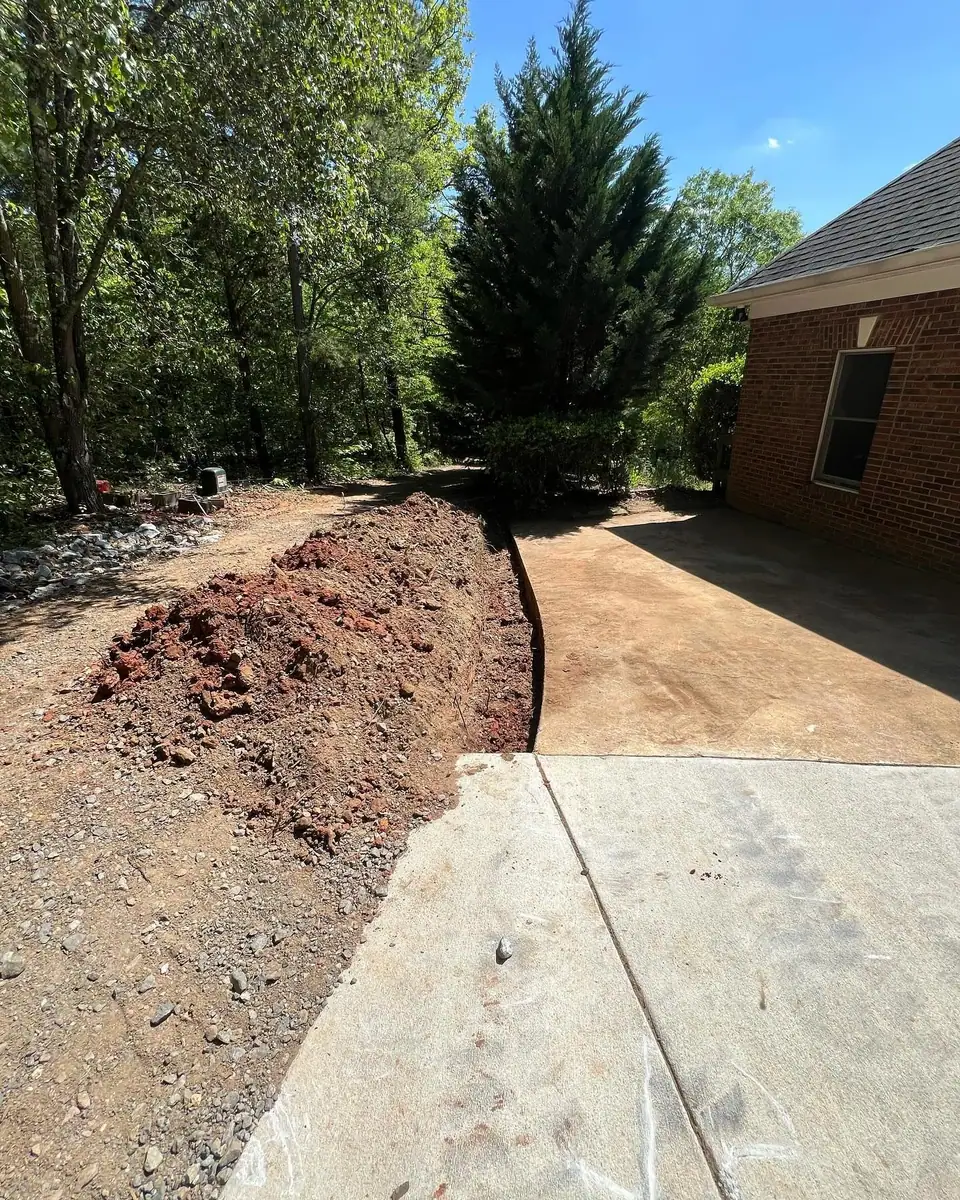
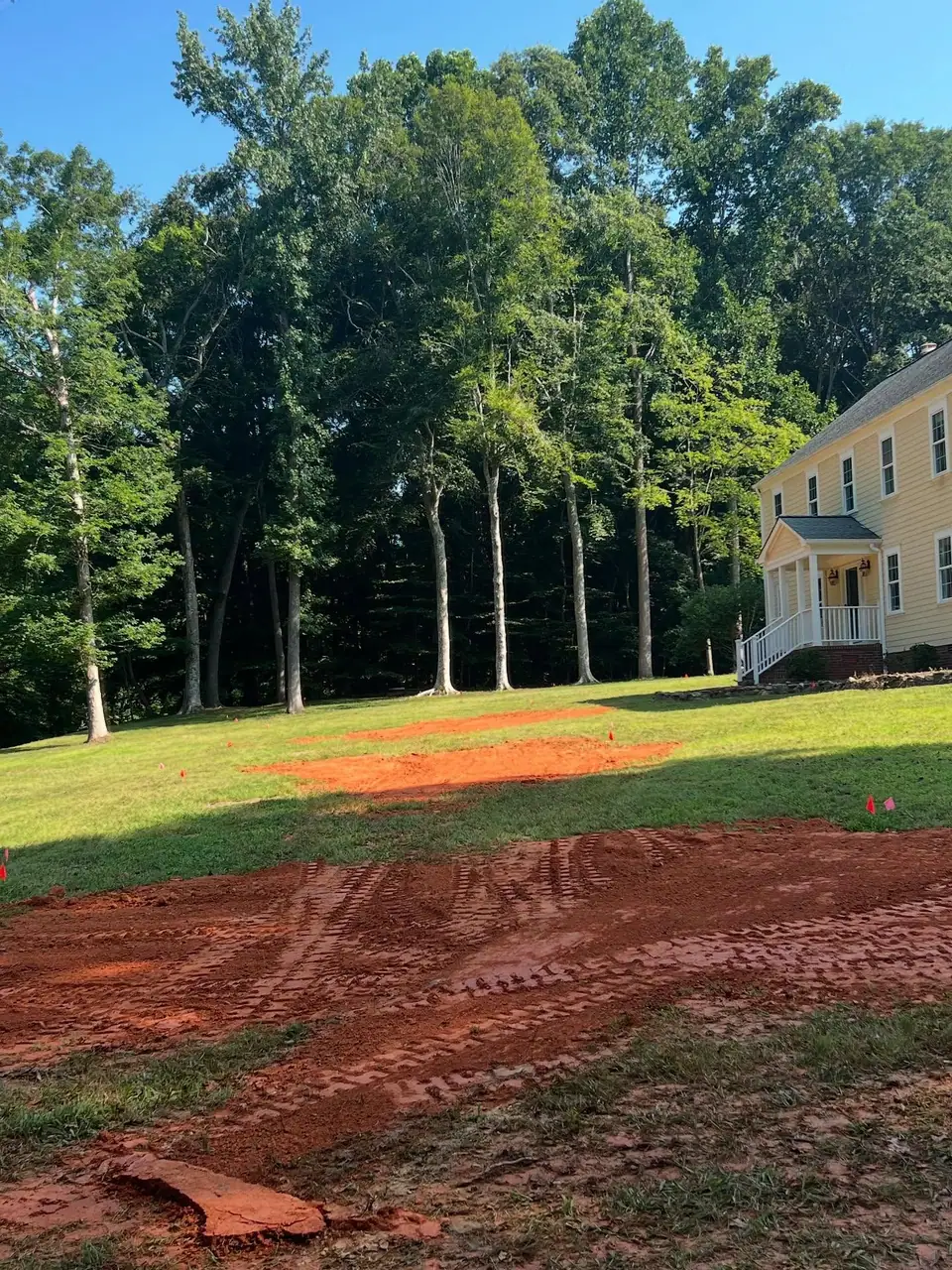
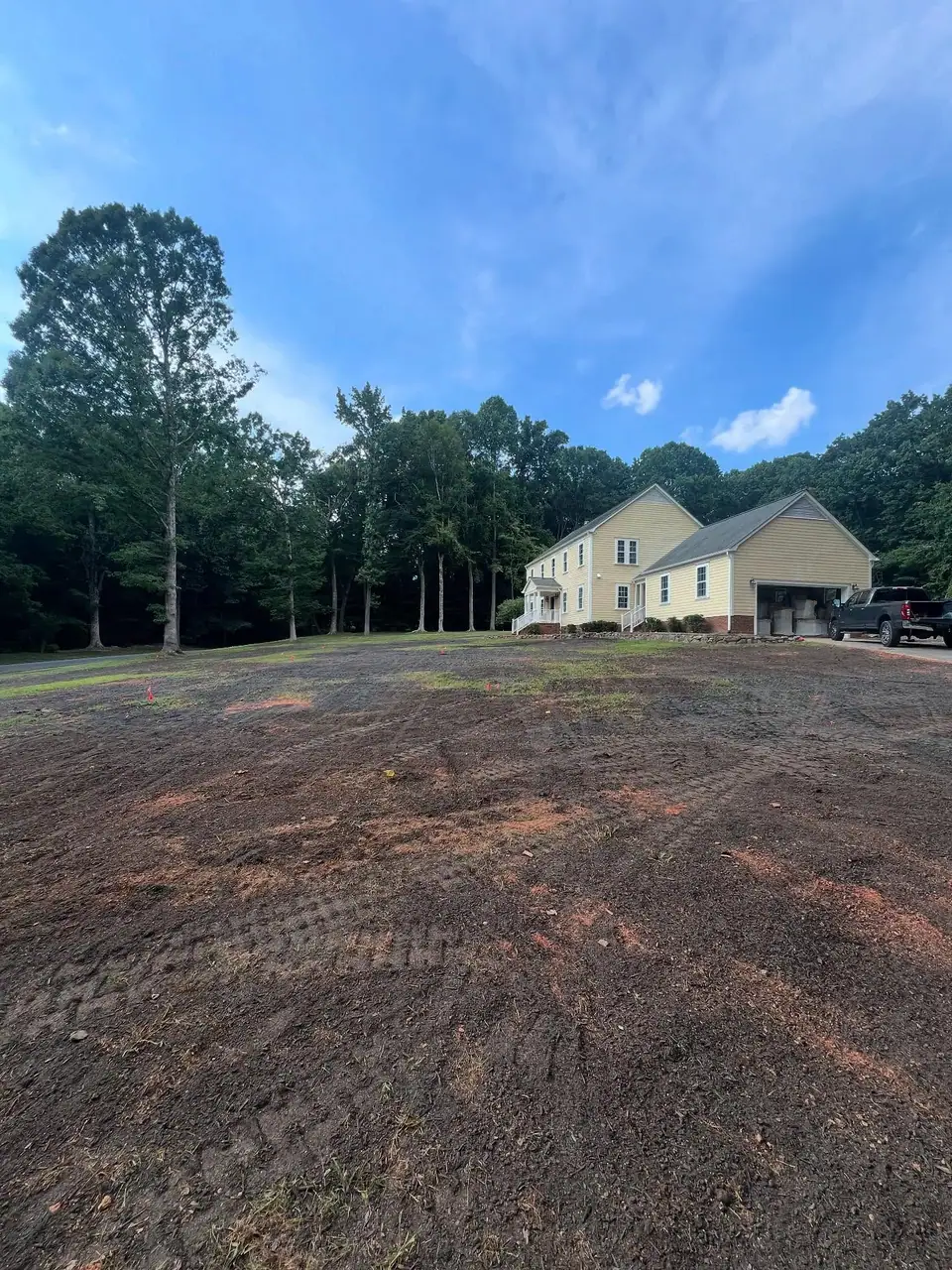
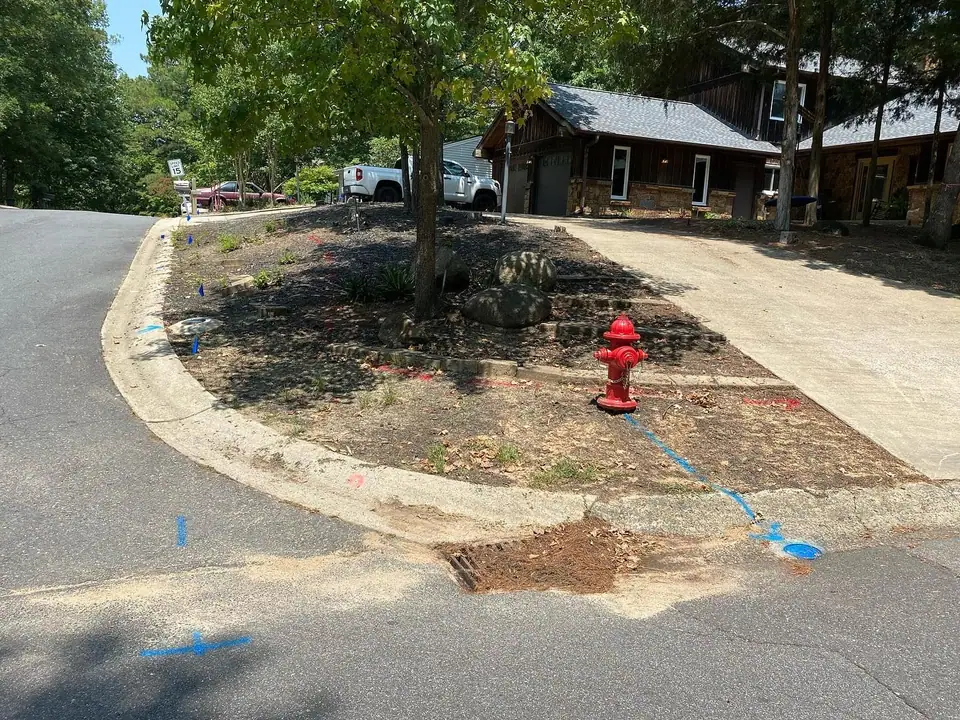
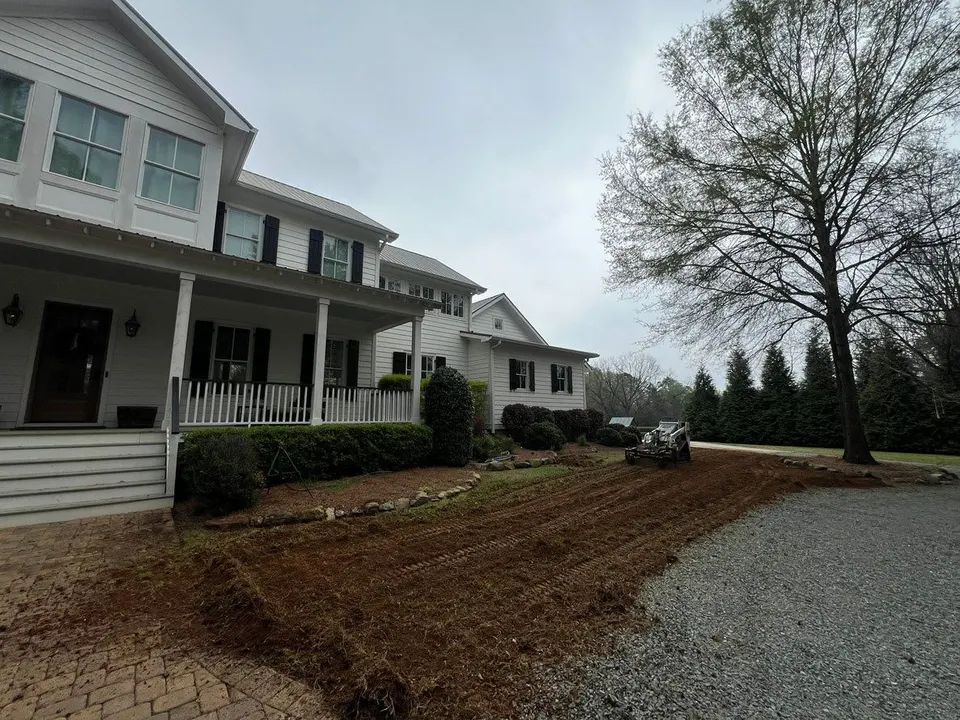
Utilities are located through NC 811 or SC 811 before any digging. The route is laid out with paint or flags, then trenches are excavated with our own equipment at the correct slope so water flows by gravity. Pipe is set, stone is placed where needed, connections are tested with water, and the trench is backfilled and compacted. The disturbed lawn is restored with topsoil and seed or sod.
Because Galloway Scapes handles drainage, grading and lawn restoration in-house, one crew is responsible for the whole job from the first trench to the finished turf.
How it works
Four steps. No surprises.
From the first call to the final cleanup, you deal with the same owner-run crew.
01
Call or send the form
Tell us what’s bothering you about the yard. We get back to you within 24 hours.
02
Walk the property
We look at slope, soil, drainage paths, turf type and how you actually use the space. No guessing from a photo.
03
A written estimate
You get a plain-language scope and price. No surprise add-ons after the crew shows up.
04
Owner-led work and cleanup
Terry is on the job. Beds edged, debris hauled off and the driveway blown clean before we leave.
How much does it cost to fix yard drainage in Waxhaw, NC?
Drainage cost depends on the size and cause of the problem, the solution required, the length of pipe or trench, how far water must travel to a safe outlet, soil and rock conditions, access for equipment, and the amount of lawn or landscape to restore afterward. A single downspout extension is a small project; a combination of regrading, French drains and catch basins across a large backyard is a much larger one. Because every property drains differently, Galloway Scapes doesn't price drainage from a chart. Terry walks the property, explains the cause and the recommended fix, and provides a free written estimate.
What is the best drainage solution for clay soil?
On clay soil, the best solution is usually to collect water and move it away by gravity rather than expecting it to soak in. For surface water and pooling, that often means regrading the lawn into a gentle swale, sometimes with a catch basin and solid pipe at the low point. For ground that stays soggy, a French drain with perforated pipe in washed gravel, wrapped in fabric to keep clay out, collects subsurface water and carries it to an outlet. Roof water should be piped away in buried downspout lines. Dry wells generally perform poorly in dense clay because water can't soak out of them quickly. Most clay-soil fixes combine two or more approaches.
Can I drain water onto my neighbor's property?
You generally should not redirect or concentrate water onto a neighbor's property in a way that increases the problem for them. Drainage systems need a safe outlet, typically a street or curb where local rules allow, an existing swale or drainage easement, or a natural low area on your own lot. Many HOA communities around Waxhaw, Weddington, Marvin and Fort Mill also have rules about drainage changes and easements. Galloway Scapes plans every system around a legitimate outlet and will tell you if a project needs HOA approval or coordination with a neighbor. If water is arriving from a neighbor's lot, we design the fix to intercept and carry it through your property properly.
How do I know if I need a French drain or regrading?
Watch what the water does. If water flows across the surface during storms or collects in a visible low spot and then drains within a day or so, the problem is mostly surface water, and regrading or a swale with a catch basin is often the better fix. If the ground stays soggy and spongy for days after rain, moss grows, or water seeps up from below, the problem is subsurface water, and a French drain is usually needed. Water collecting against the foundation may need both, along with downspout extensions. On the walkthrough, Terry looks at grade, soil, roof water and outlets and recommends the most effective combination.
Do you repair the lawn after drainage work?
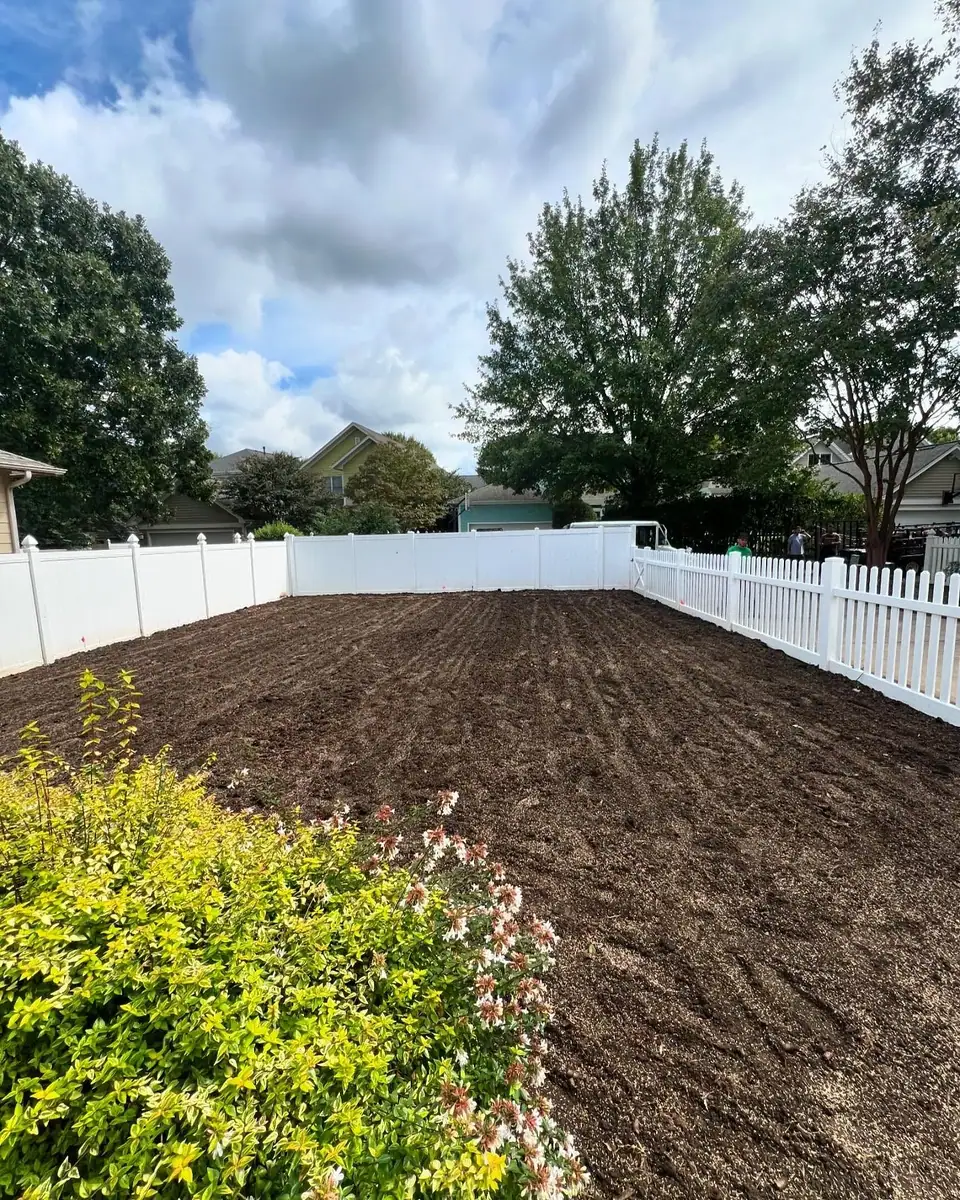
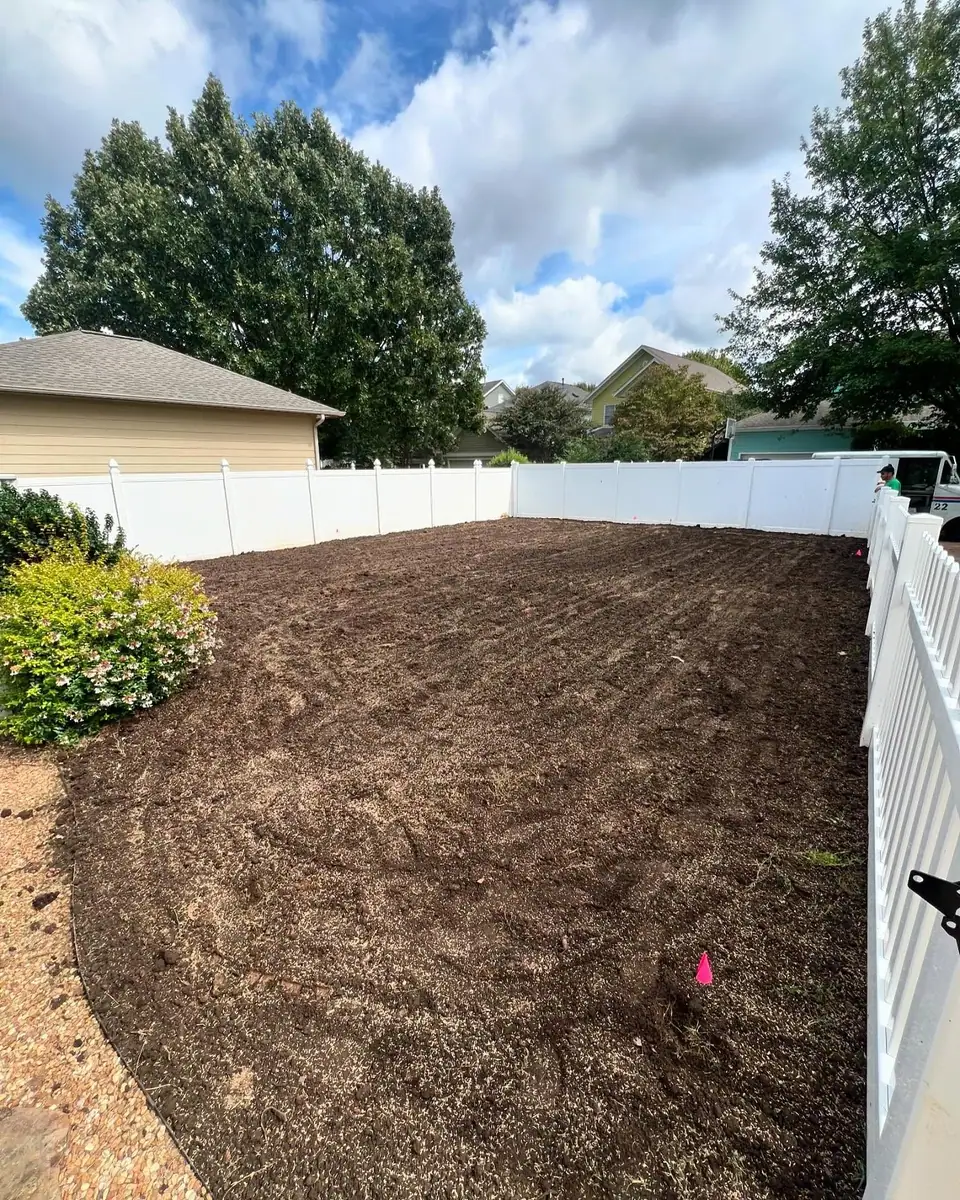
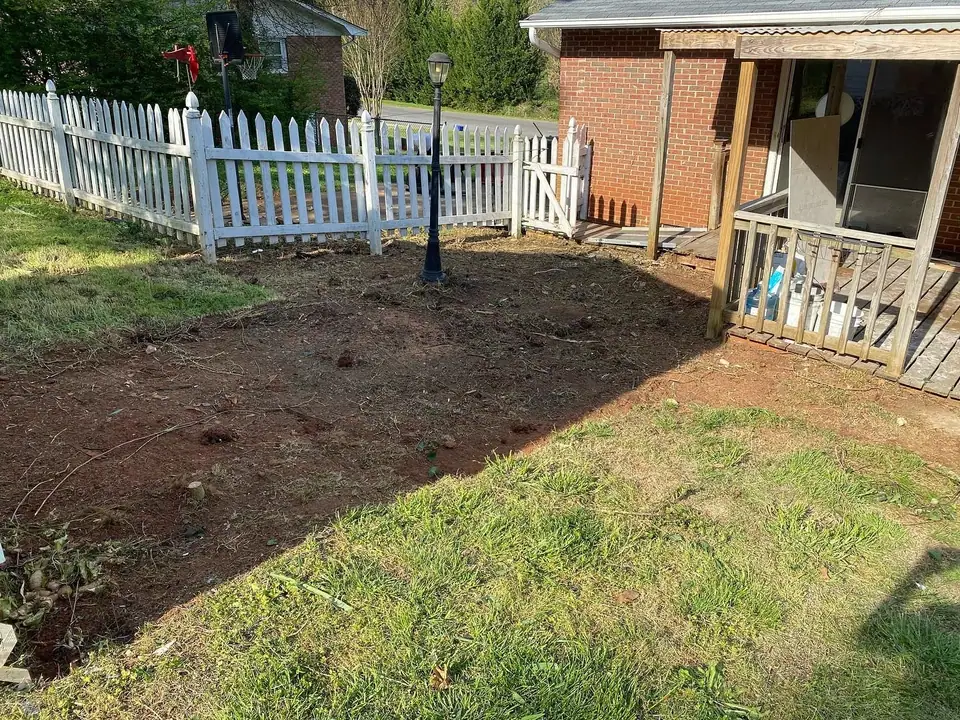
Yes. Lawn and landscape restoration is part of every Galloway Scapes drainage project. After pipe and stone are installed and tested, trenches are backfilled and compacted so they won't settle into grooves, topsoil is added and graded to match the surrounding lawn, and the area is seeded or sodded depending on your grass type and season. Disturbed beds are replanted or remulched. Because drainage, grading and lawn work are all done in-house, the same crew that digs the trench restores the surface, and you get one accountable team instead of coordinating separate contractors.
We had several landscaping projects completed at our property, including new sod installation, mulching, and drainage work, and I couldn’t be happier with how everything turned out. The sod installation completely transformed the appearance of our yard.Cameron JonesSod, mulch & drainage
★★★★★
We contacted Galloway Scapes for lawn leveling and are very pleased with their service. Terry and his crew are incredible and did a great job on our lawn! They arrived on schedule and did a thorough job.Marianne NietoLawn leveling
★★★★★
Terry and his crew are the best! He is attentive, professional, and knowledgeable. I have a fast growing weed in my lawn and he works diligently on keeping it under control.Debbie HeilemannLawn care
★★★★★
Reliable, efficient, and professional, with great attention to detail. Everything looked clean, green, and well cared for.Blake TrewLandscaping
★★★★★
Very good, consistent service. They are responsive when asked about things and address concerns as they arise.David DeaconLawn maintenance
★★★★★
Reliable, punctual, creative, clean, and professional throughout the process. I really appreciated how easy they made everything.Ryan BrzyckiLandscaping
★★★★★
Knowledgeable and skilled approach to lawn maintenance and yard landscaping, with meticulous attention to detail. Fair pricing combined with outstanding results.Noelle IsheeLawn & yard landscaping
Free estimate
Tell us about your yard drainage solutions project.
A few quick details. We reply within 24 hours, usually sooner, and we walk the property before we price anything.