★★★★★ 4.9 on Google · 16 reviewsLicensed, bonded & insuredOwner on every jobFree written estimates
Our approach
How we approach erosion control.
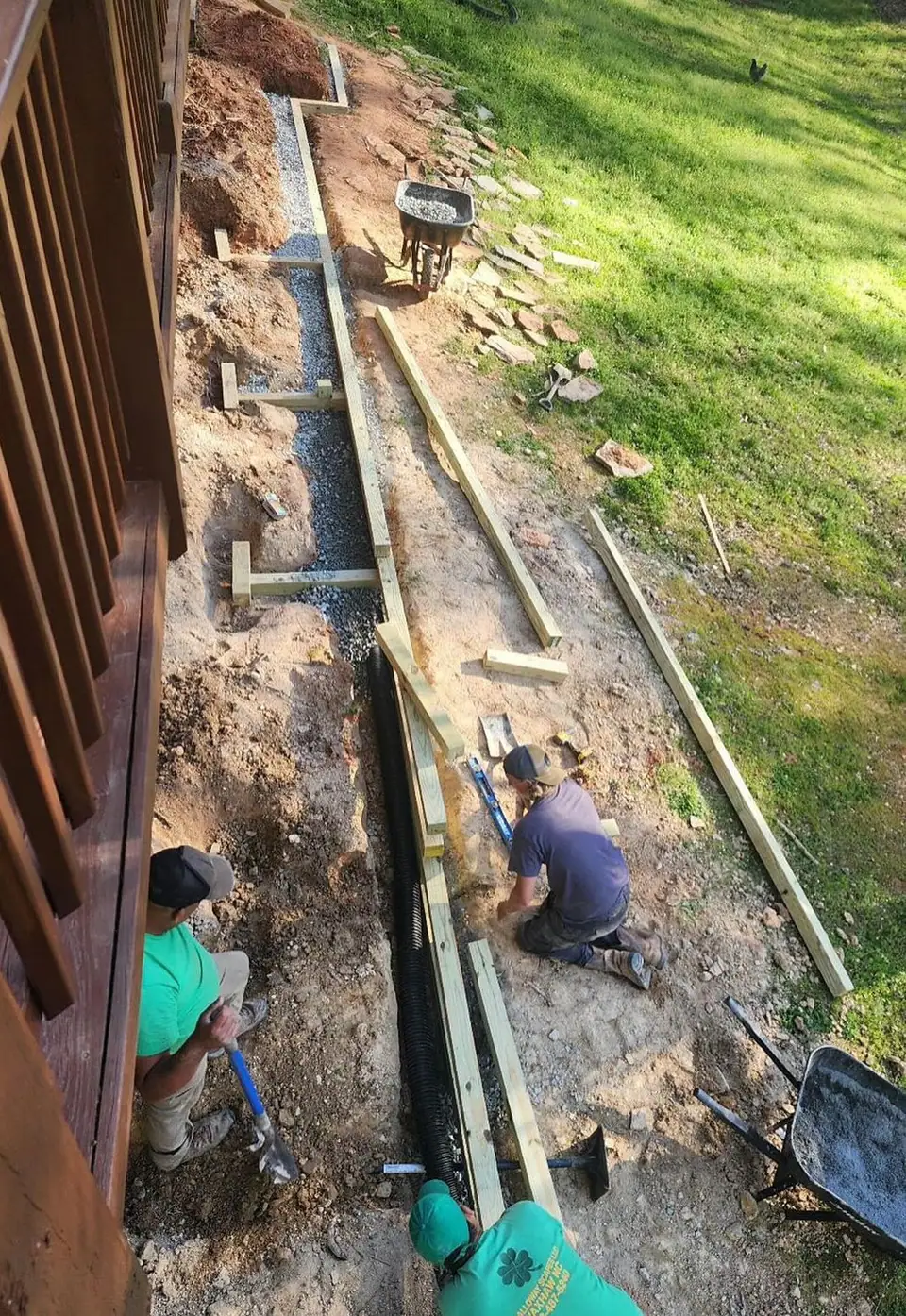
We slow water down and hold the ground. That can mean regrading to spread runoff, swales to redirect it, deep-rooted plantings, mulch or stone in areas turf won’t hold, and drains where concentrated flow keeps cutting channels.
Erosion control in Waxhaw, NC: stabilizing slopes and washed-out soil
The short answer
Erosion control protects soil from being carried away by water. It combines slowing and redirecting runoff with grading, swales and drainage, then covering bare soil with sod, seed and erosion-control blankets, plantings, mulch, or stone in channels where water concentrates. On steep or problem slopes, retaining walls or terraces may be needed. The goal is a stable surface that holds through Carolina downpours.
01What causes erosion in Carolina yards?
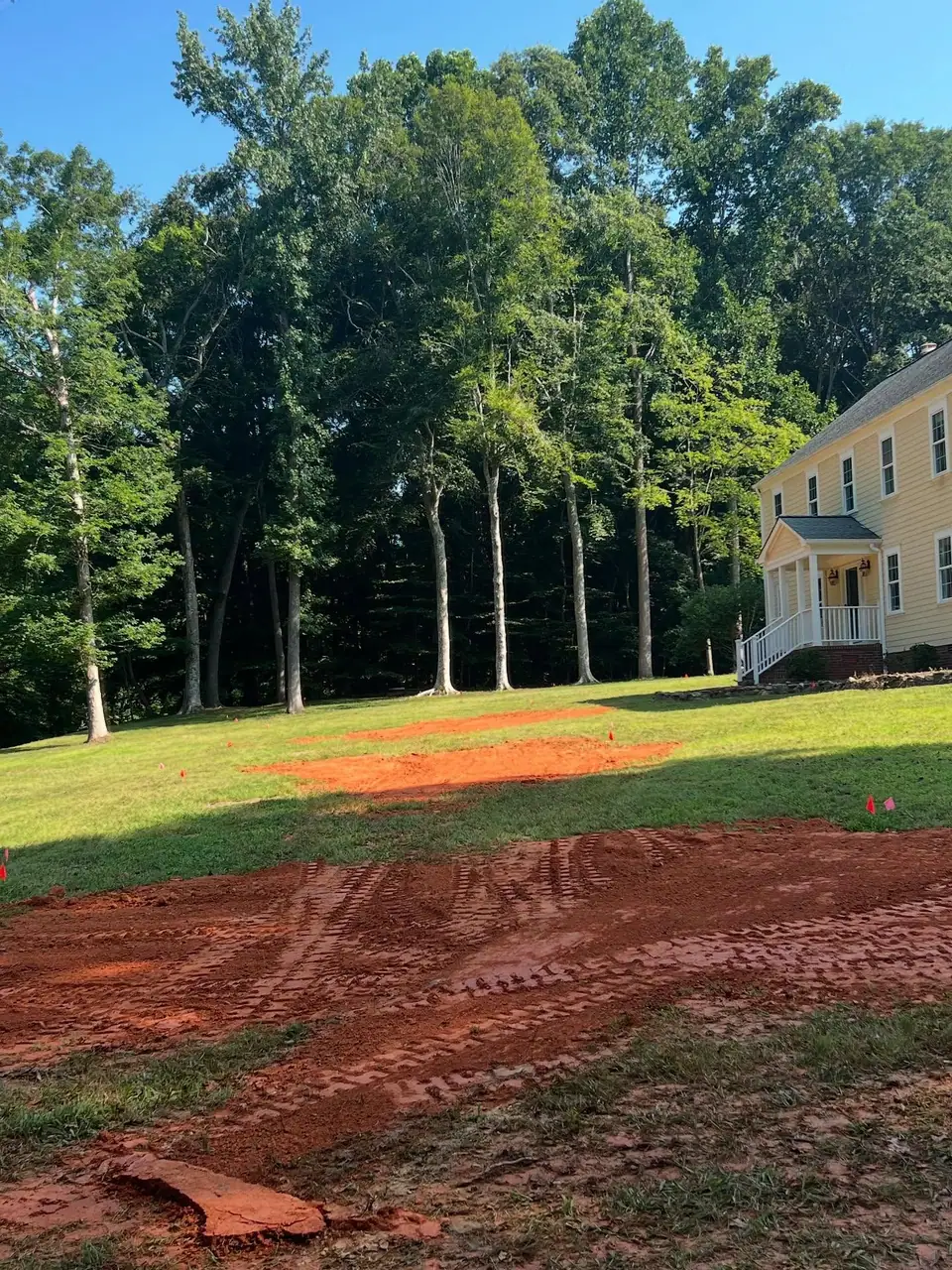
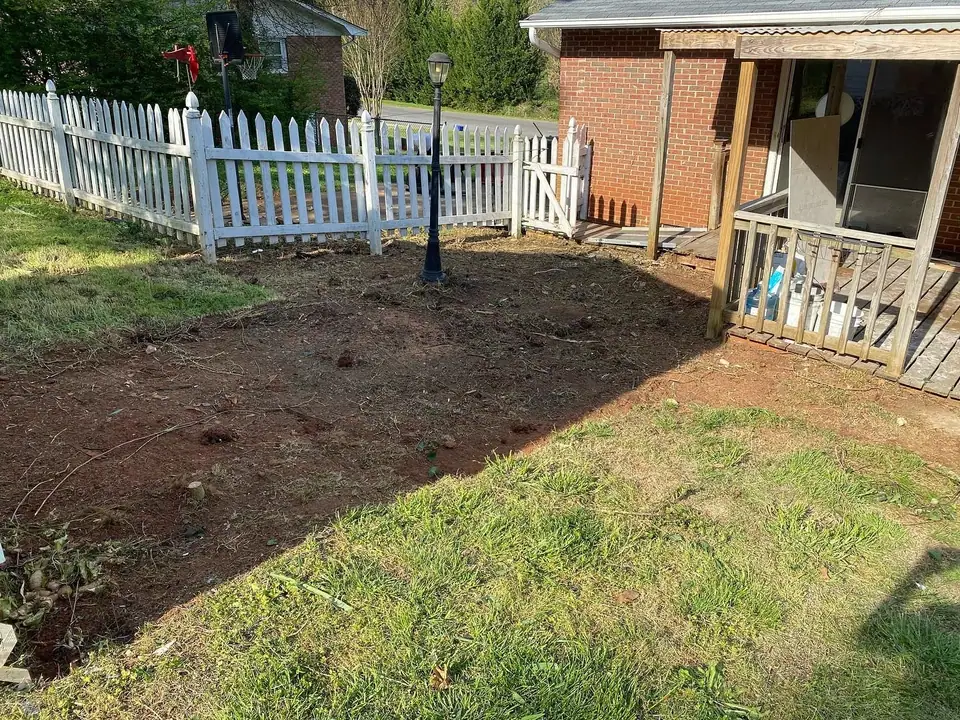
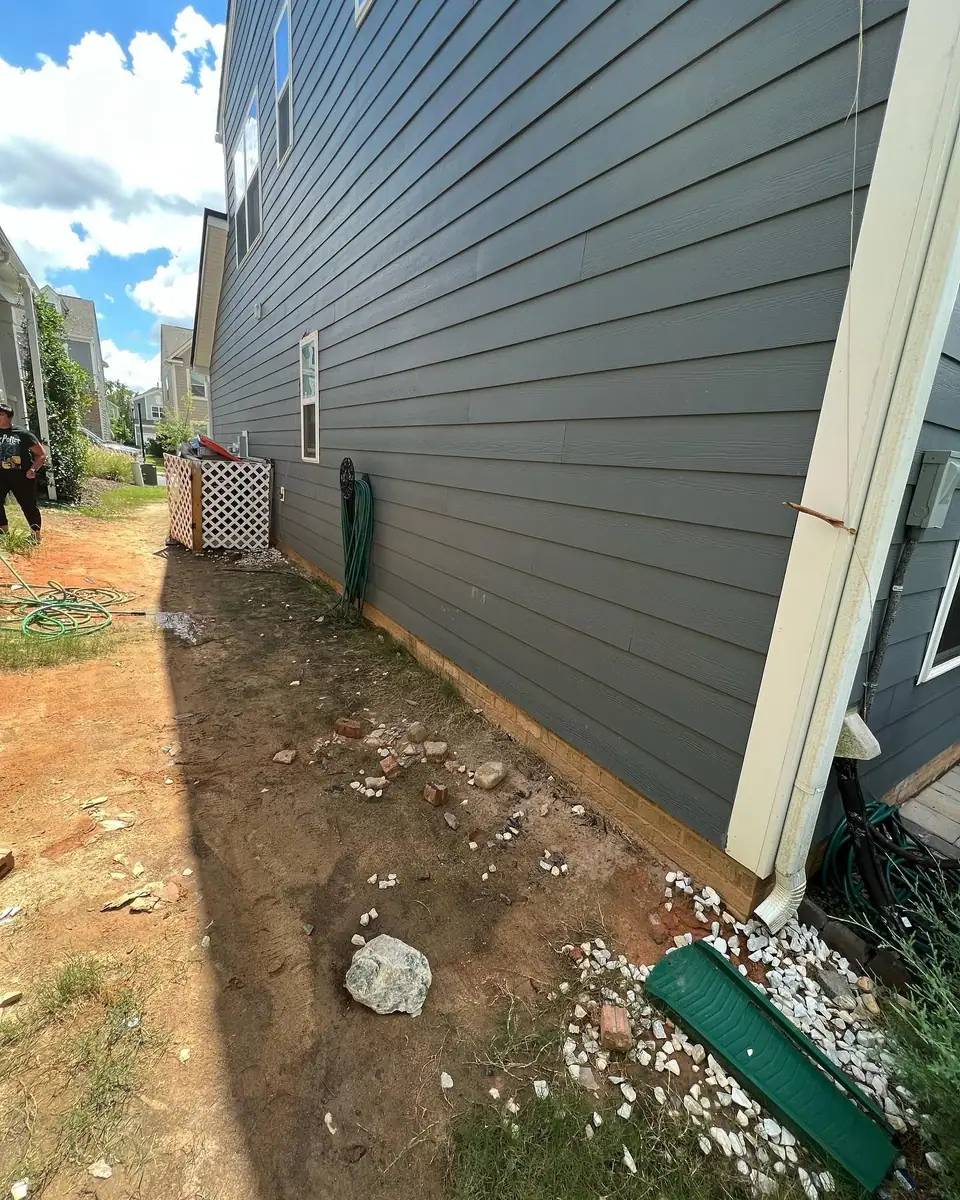
Erosion happens when water moves faster than the ground can hold together. Red clay sheds water quickly, so intense summer thunderstorms create fast-moving runoff. Bare soil, from construction, thin turf, shade or recent landscaping, gives that water something to carry away. Concentrated flows from downspouts, driveways and neighboring lots cut channels and gullies.
Sloped lots in Waxhaw, Marvin and the hillier parts of Rock Hill and Fort Mill are especially prone, as are creek banks and the back edges of lots that drop toward wooded areas.
Bare soil: thin turf, shade or recent construction
Concentrated flow: downspouts, driveways and street runoff
Steep slopes: water gains speed and cuts into soil
Uphill runoff: water arriving from neighboring properties
Clay surface: fast runoff instead of absorption
02What are the signs of erosion?
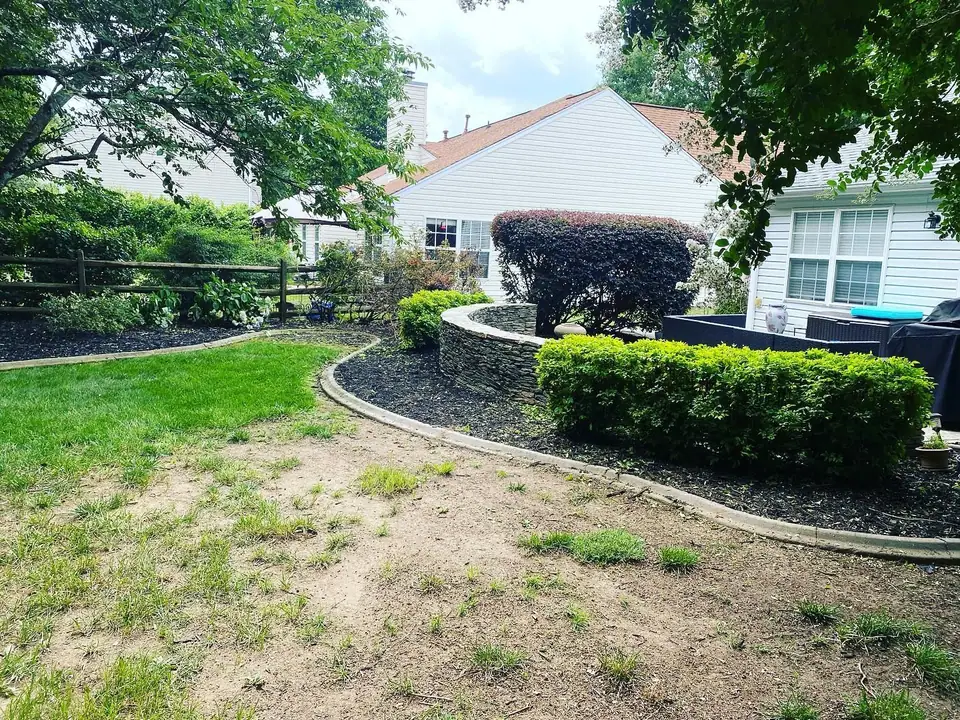
Look for small channels or rills in the lawn, exposed tree roots, mulch washing out of beds onto walks and driveways, red mud on concrete after storms, soil pulling away from the edge of patios and walls, sediment collecting in low spots, and gullies forming along fences or at the bottom of slopes.
Caught early, erosion is usually inexpensive to correct. Left alone, small rills become gullies that undermine walks, fences and even foundations.
03How is erosion controlled?
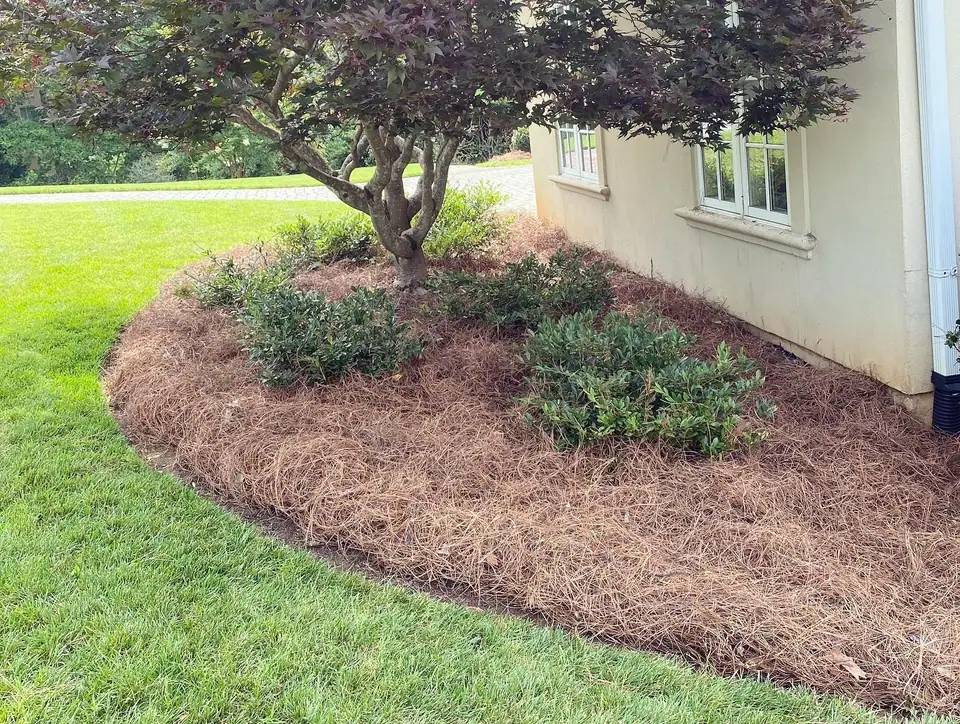
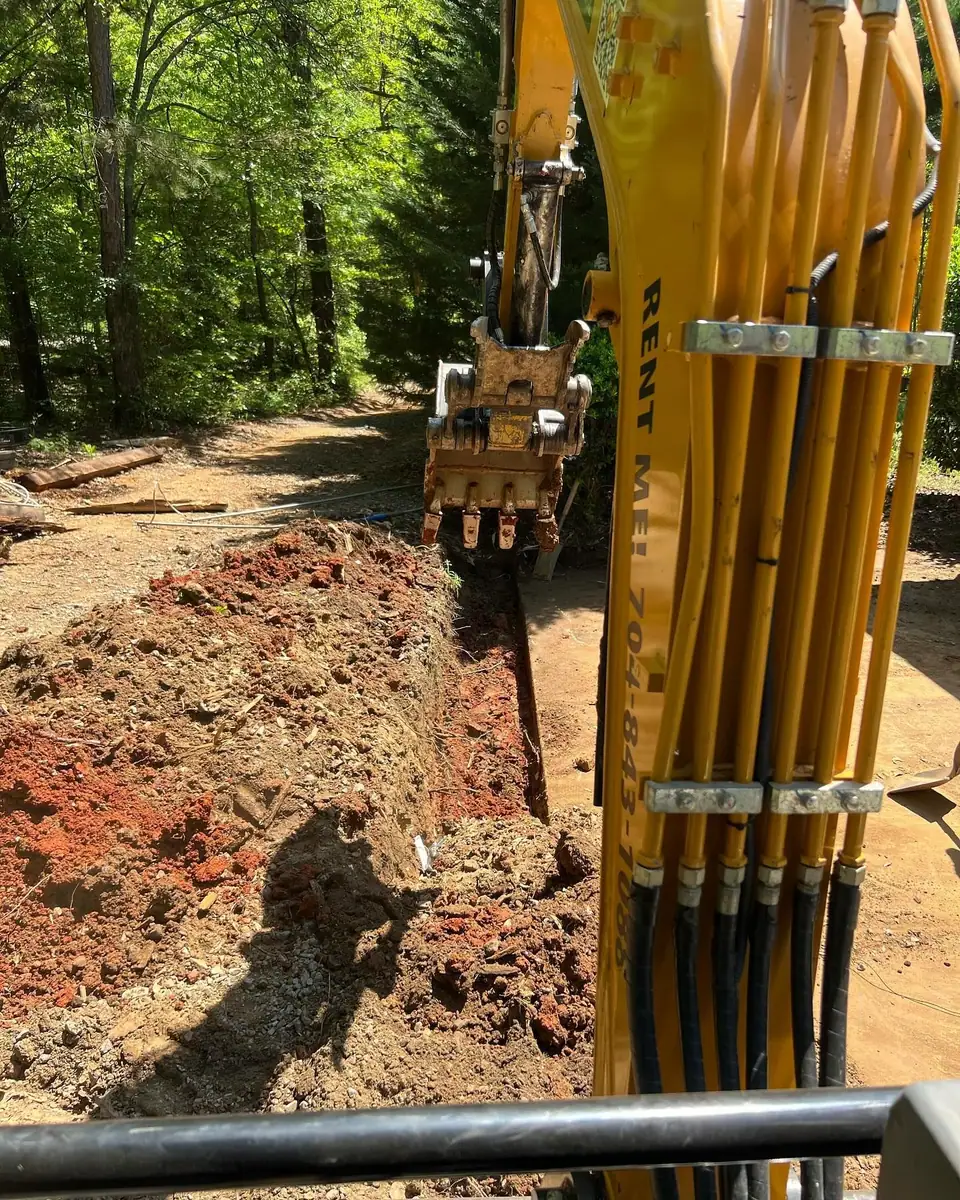
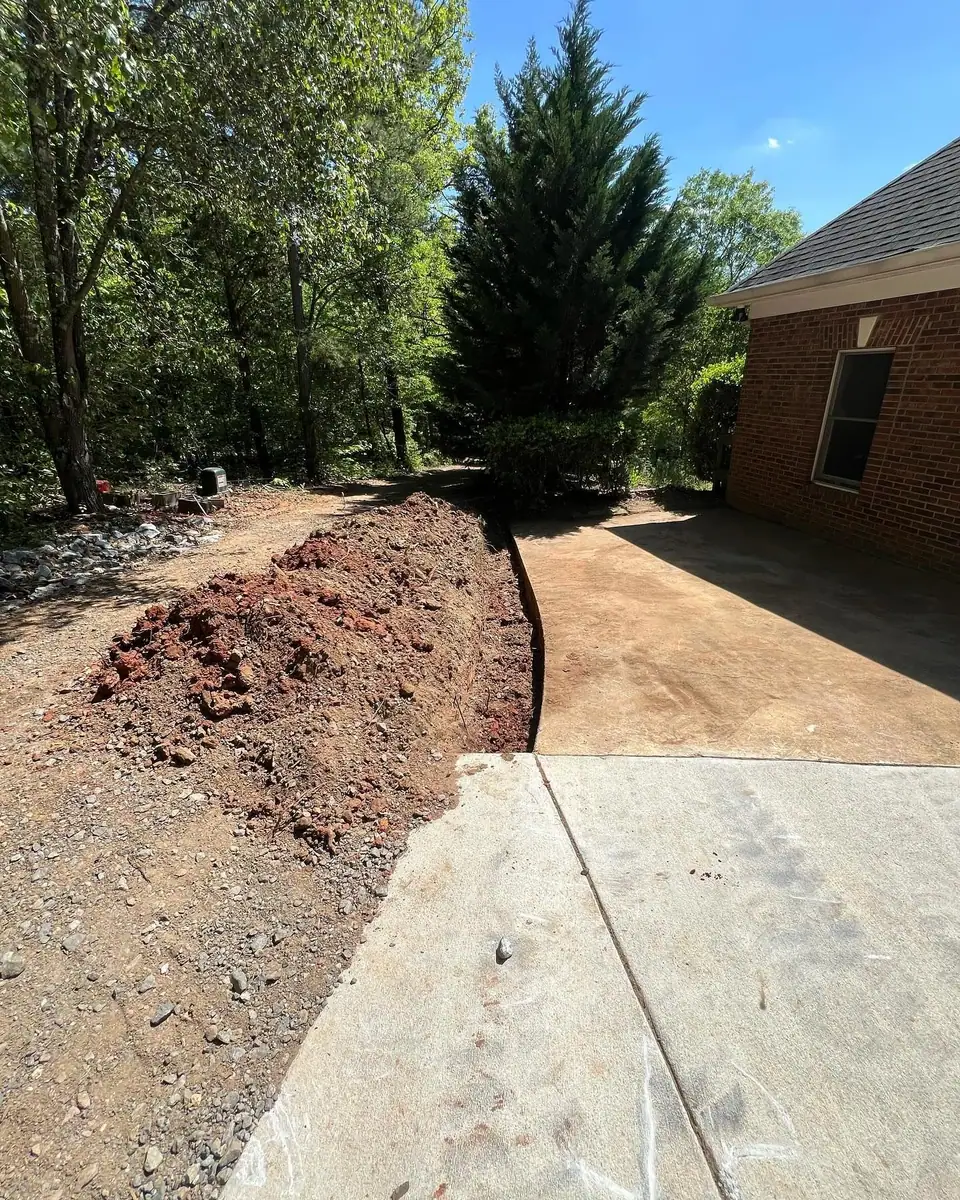
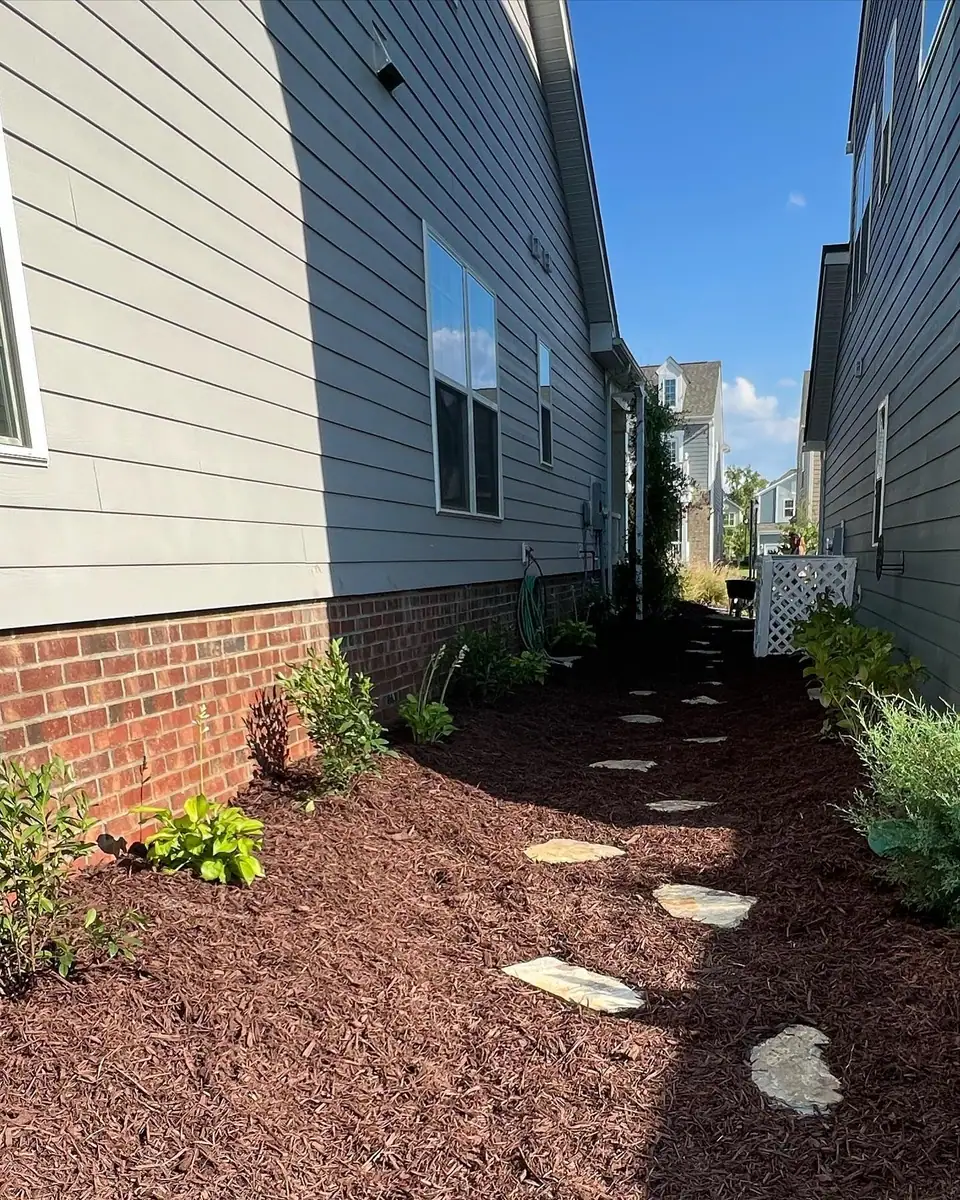
Lasting erosion control works in two layers. First, manage the water: regrade to spread or redirect flow, cut swales that carry runoff gently, pipe downspouts away, and add catch basins or French drains where water concentrates. Second, cover and hold the soil: sod gives instant protection; seed is protected with erosion-control blankets until it roots; beds get groundcovers and mulch; and channels that carry concentrated water are lined with stone or built as dry creek beds.
On slopes too steep to mow or hold safely, terracing or a retaining wall may be the right long-term solution.
04Which plants help hold a slope?
Dense, fibrous roots hold soil best. On sunny slopes, Bermuda sod knits together quickly and tolerates heat. Groundcovers such as creeping juniper, liriope, asiatic jasmine and native grasses work well where mowing is difficult. Shrubs with spreading roots add structure. Plant choice depends on sun, shade, slope angle and how much maintenance you want. Plantings are always combined with mulch or blankets until roots establish.
05Is erosion control needed after construction or land clearing?
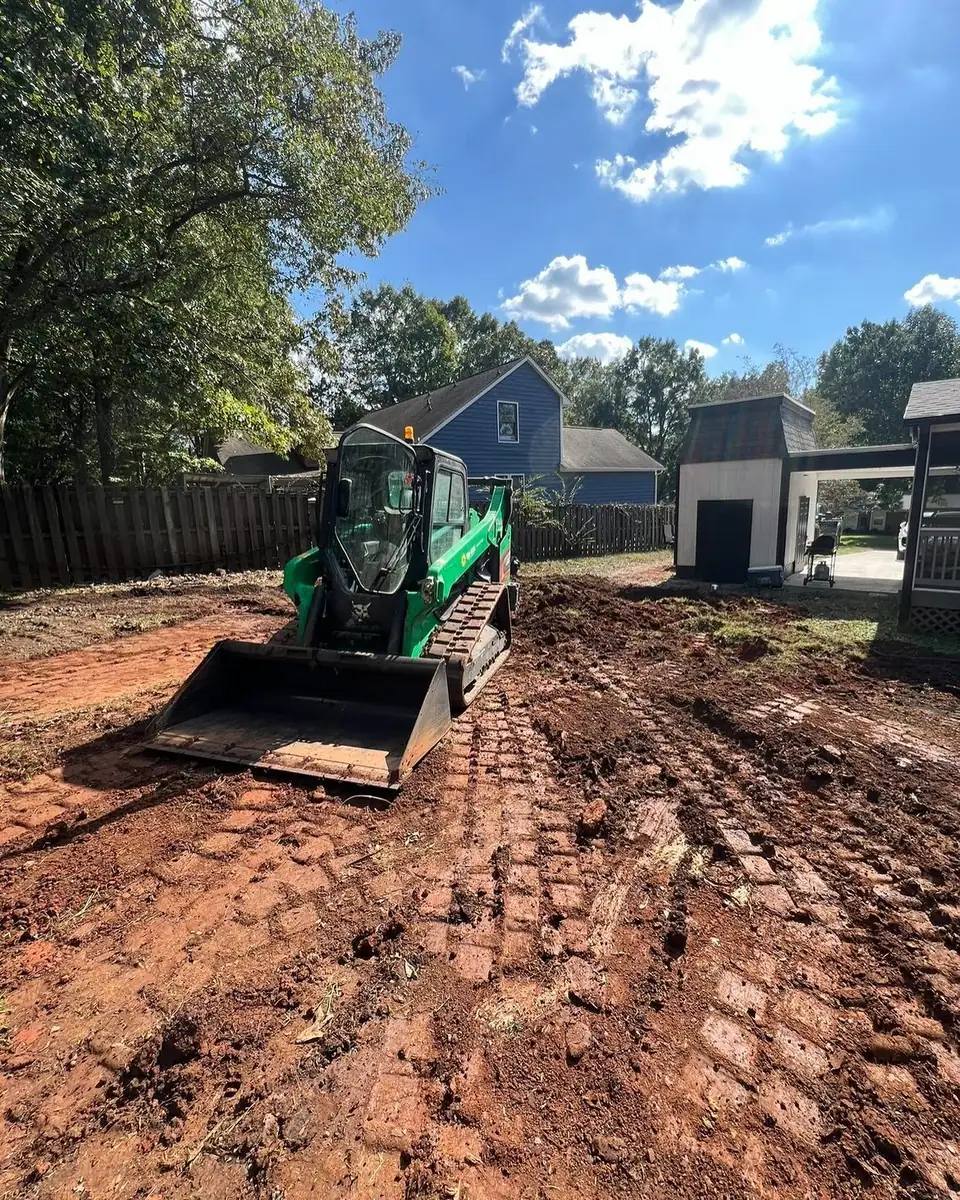
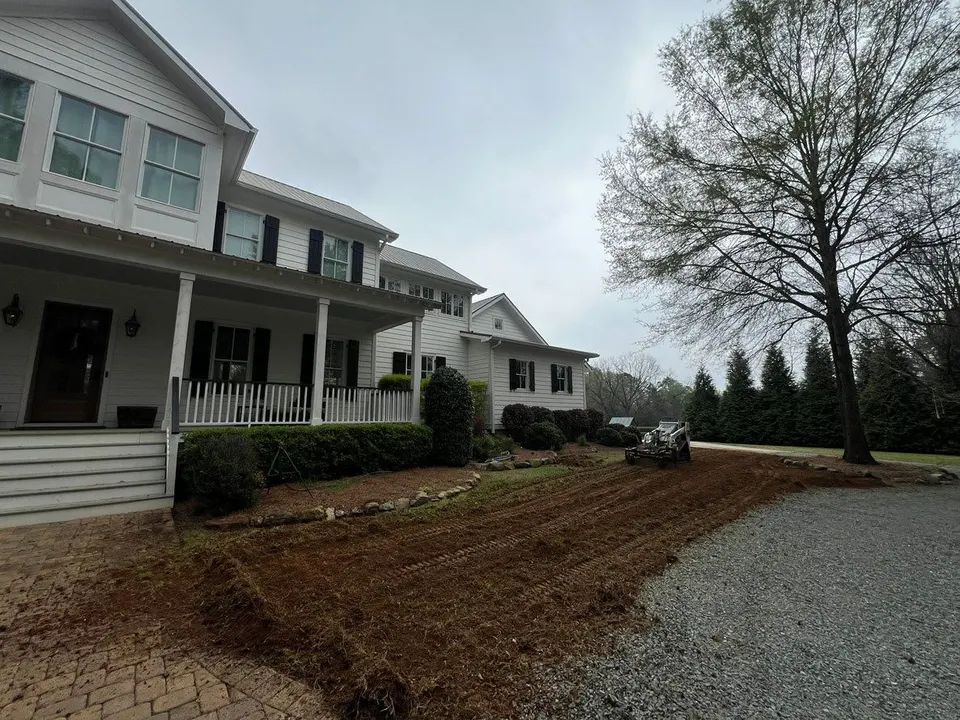
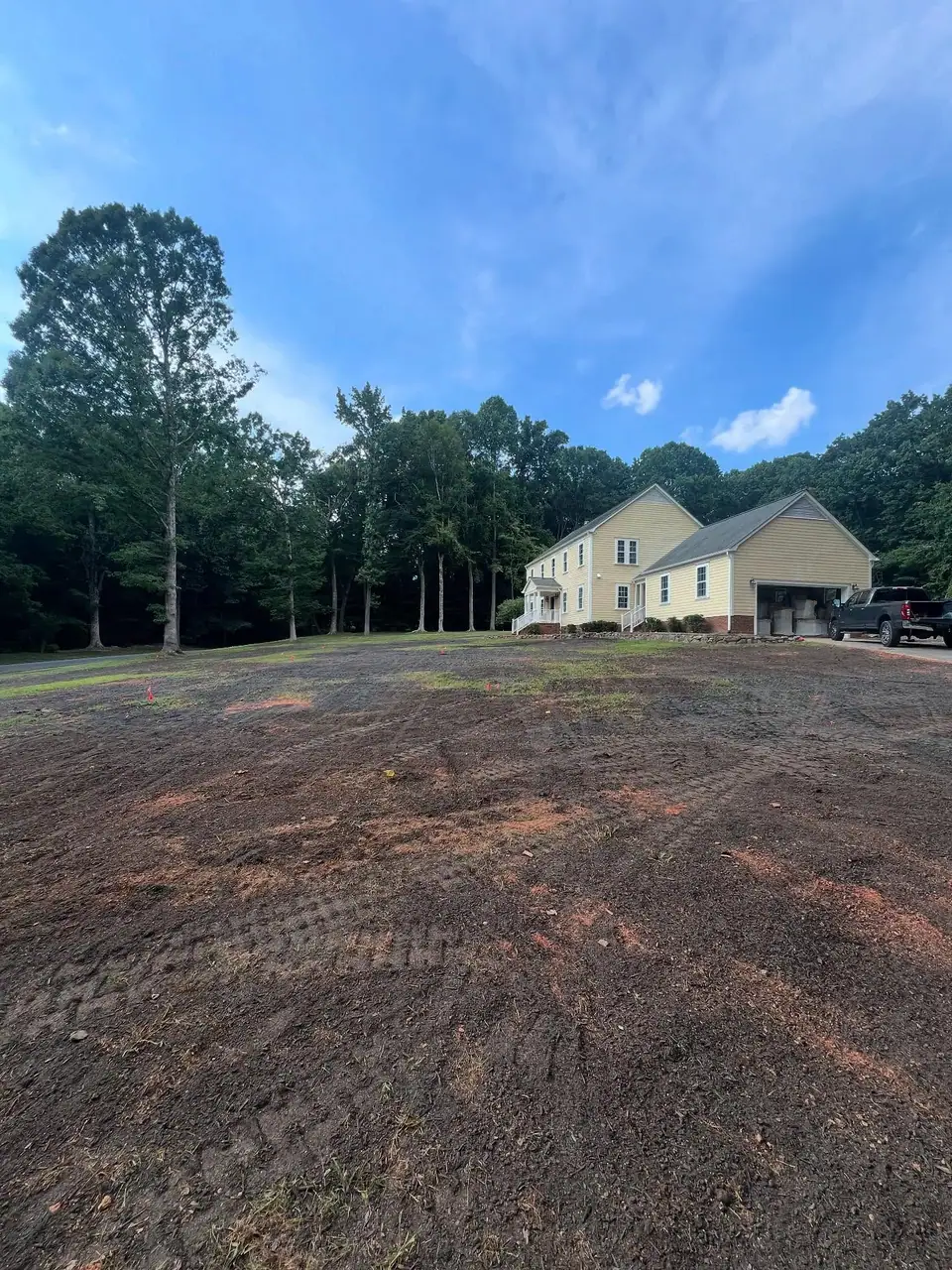
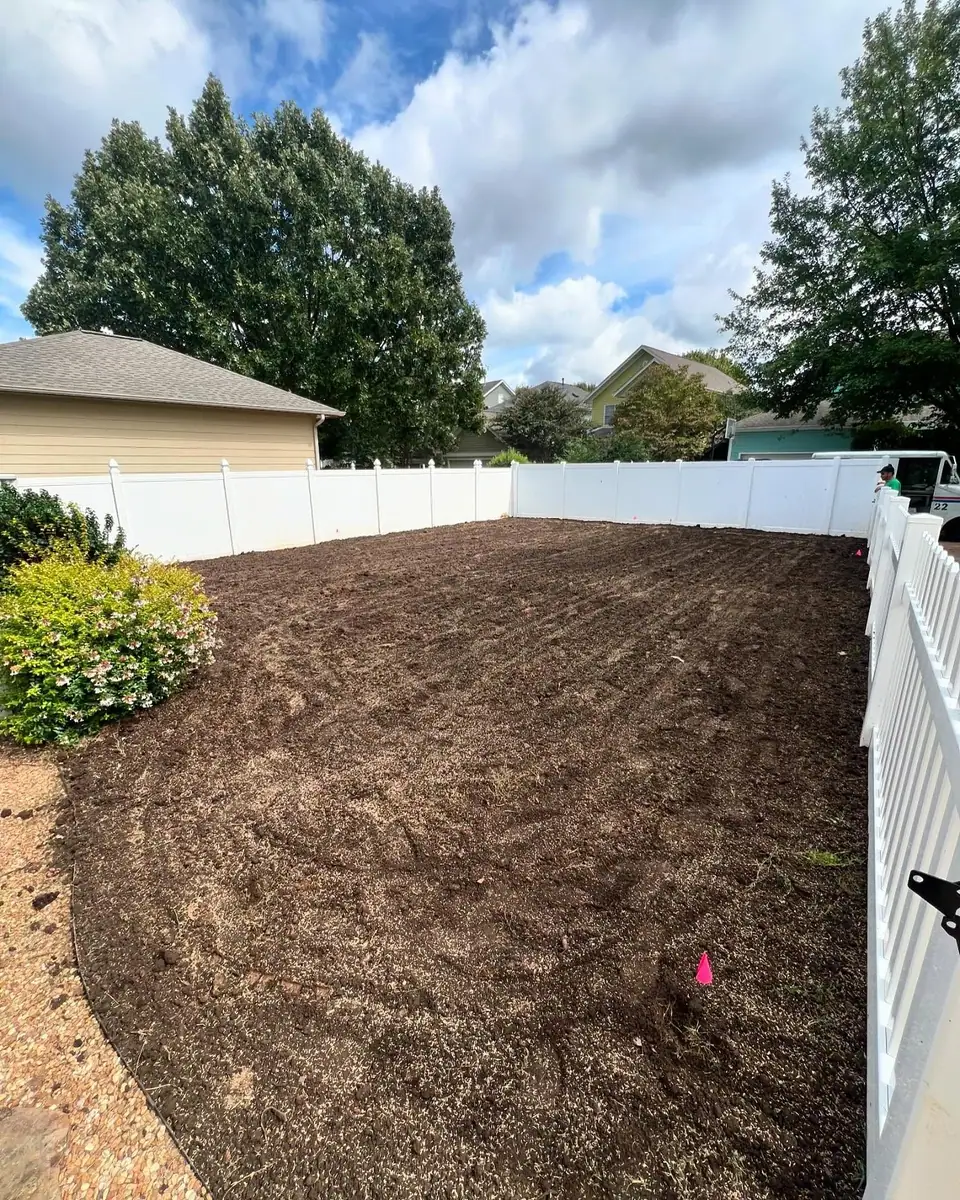
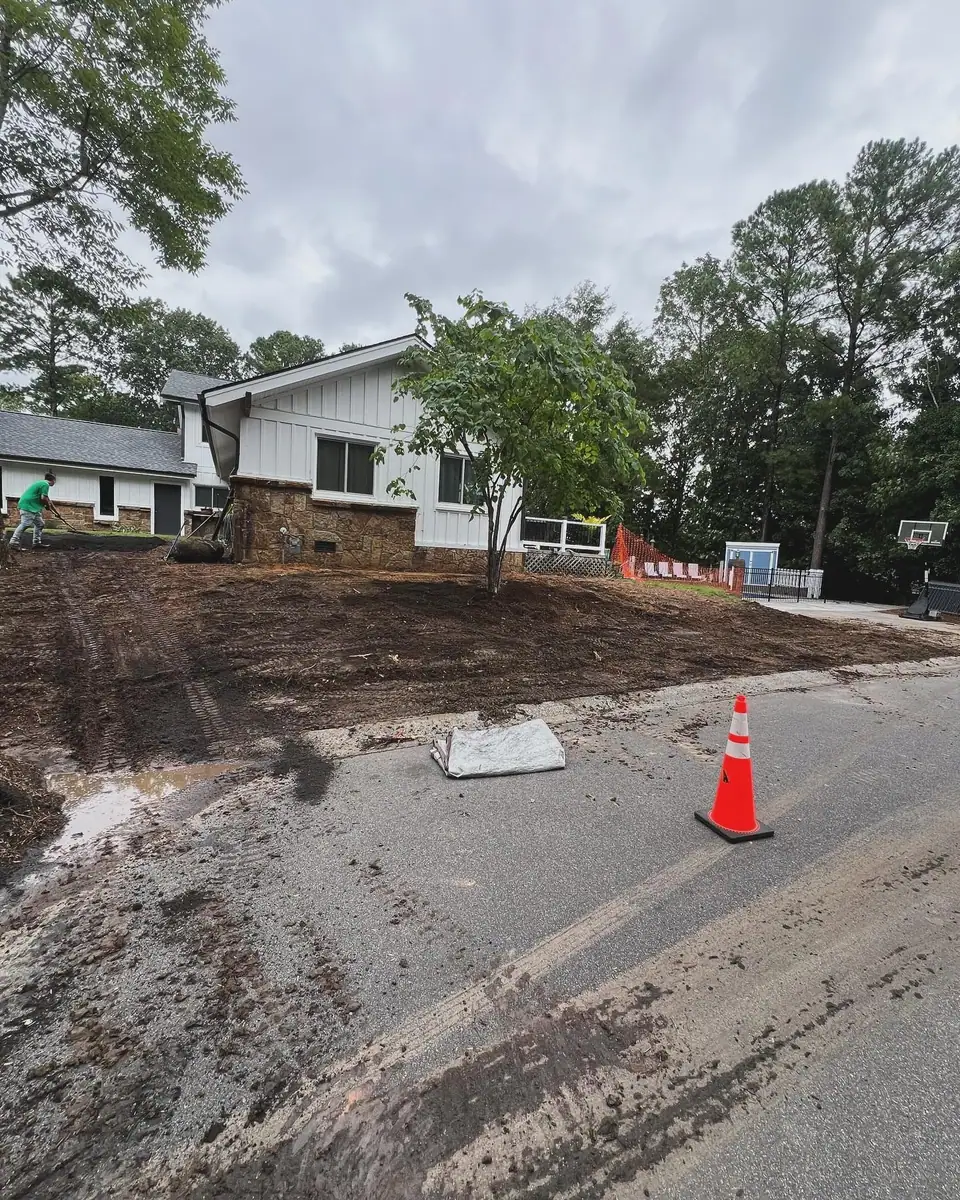
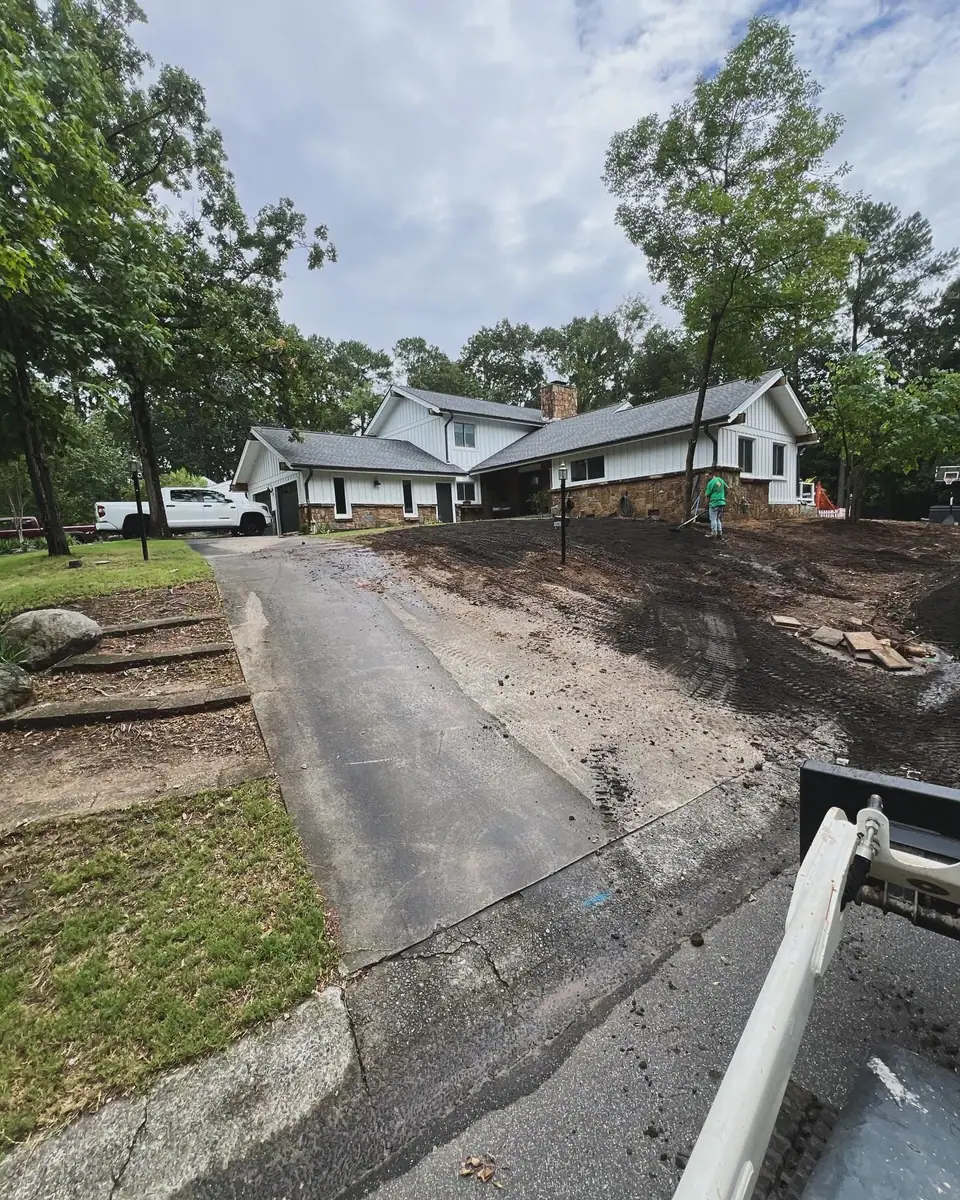
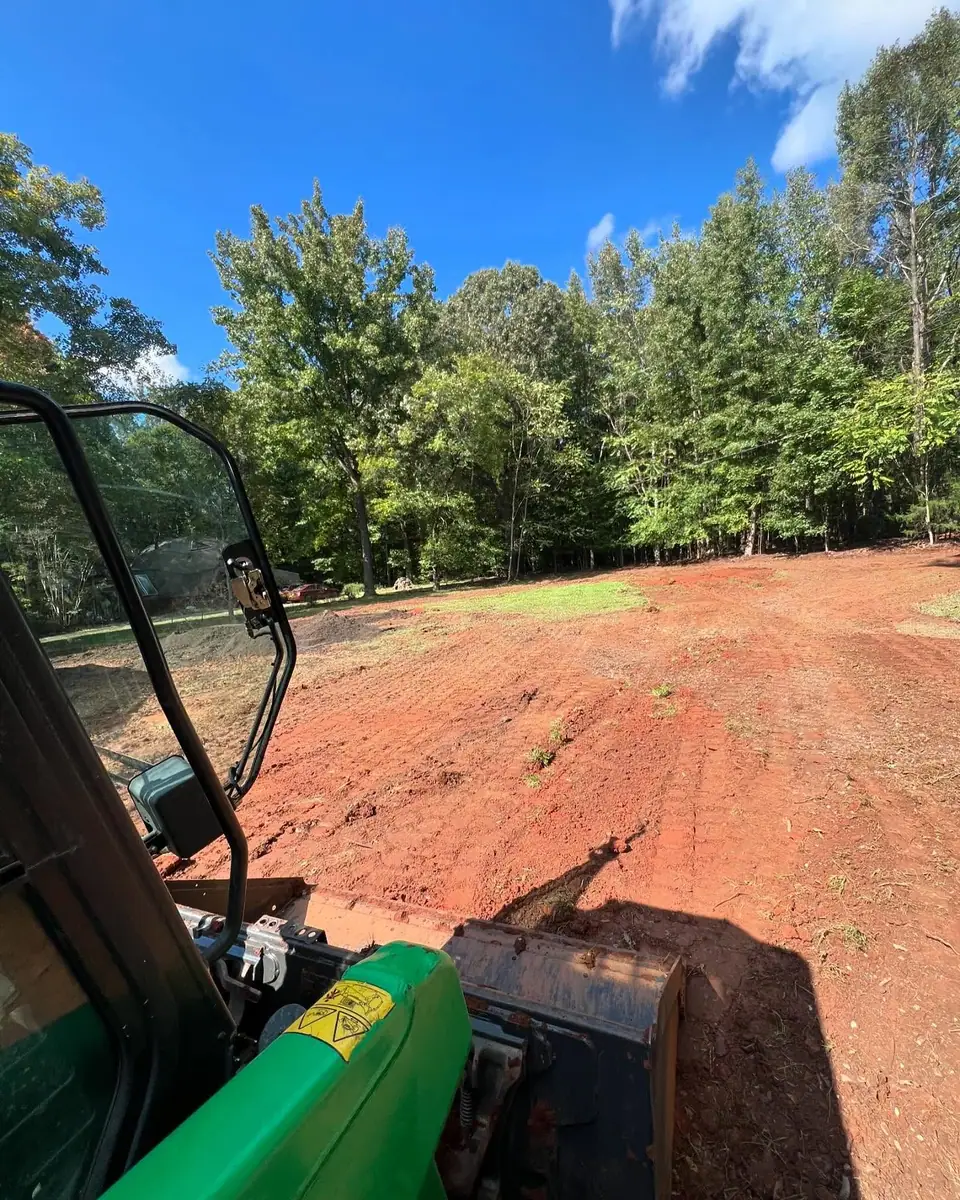
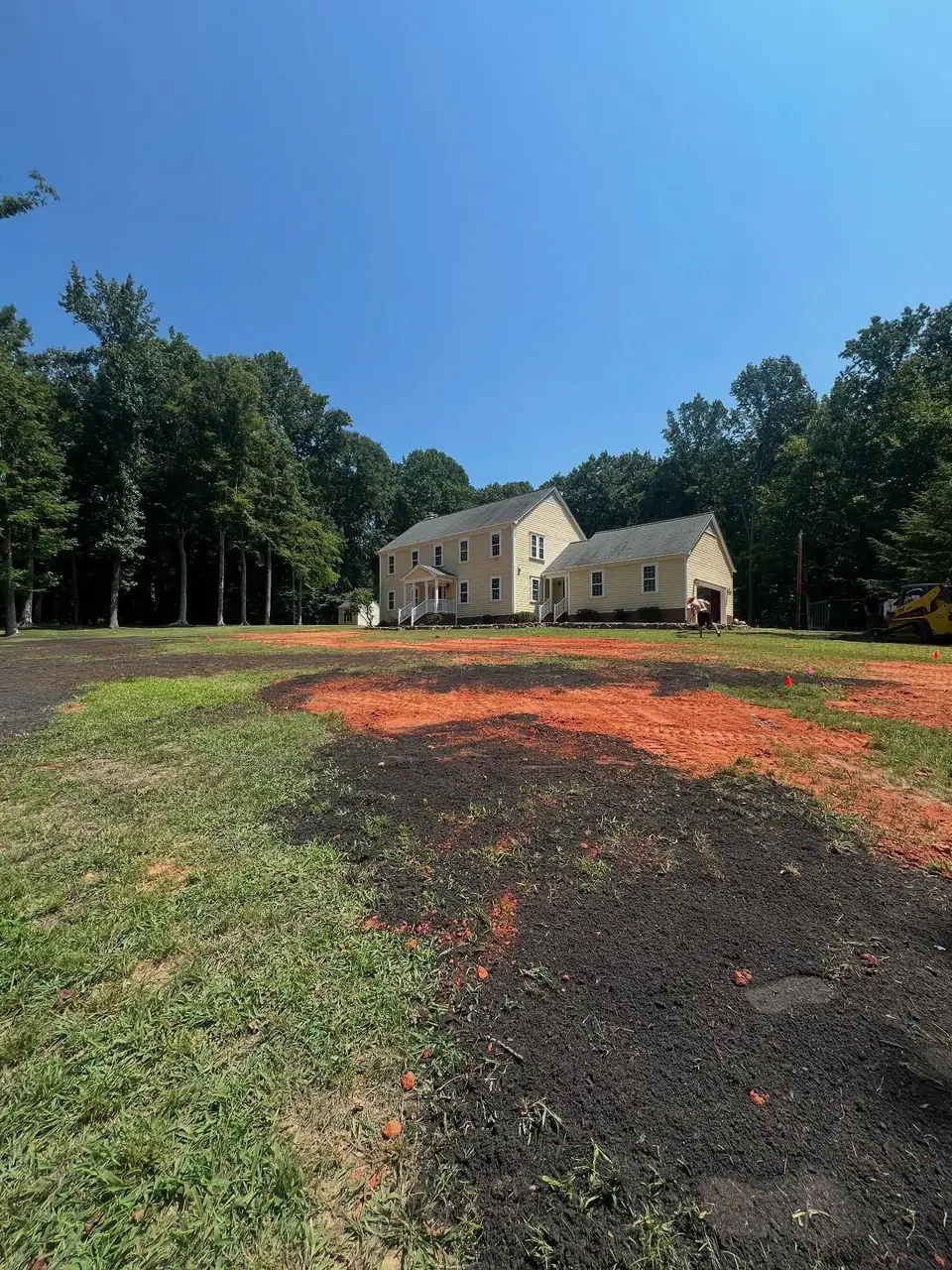
Yes. Freshly graded or cleared ground is extremely vulnerable until it is stabilized. Silt fence, straw wattles and erosion-control blankets hold soil in place during and immediately after work, then permanent cover such as sod, seed or plantings takes over. Galloway Scapes includes stabilization in its grading, land clearing and drainage projects, so disturbed ground isn't left bare for the next storm.
How it works
Four steps. No surprises.
From the first call to the final cleanup, you deal with the same owner-run crew.
01
Call or send the form
Tell us what’s bothering you about the yard. We get back to you within 24 hours.
02
Walk the property
We look at slope, soil, drainage paths, turf type and how you actually use the space. No guessing from a photo.
03
A written estimate
You get a plain-language scope and price. No surprise add-ons after the crew shows up.
04
Owner-led work and cleanup
Terry is on the job. Beds edged, debris hauled off and the driveway blown clean before we leave.
Erosion control cost depends on the size and steepness of the affected area, the cause of the erosion, whether drainage changes such as swales, catch basins or downspout lines are needed, the stabilization method, from sod or seeded blankets to plantings, stone channels or retaining walls, and access for equipment. Repairing small rills and re-sodding a section of lawn is a modest project; regrading and stabilizing a long, steep slope or a creek bank is larger. Galloway Scapes walks the property, identifies where the water is coming from and provides a free written estimate with the recommended approach.
What is the best way to stop erosion on a slope?
The most effective approach addresses both water and soil. Reduce and redirect the water reaching the slope by piping downspouts away, adding a swale or berm at the top, and capturing concentrated flows with drains. Then cover and hold the soil with dense vegetation: sod for sunny, mowable slopes, groundcovers and shrubs for steeper ones, and erosion-control blankets to protect seed or plantings until roots establish. Mulch protects beds. Where water must flow down the slope, a stone-lined channel or dry creek bed prevents gullies. On slopes too steep to stabilize with plants alone, terracing or a retaining wall may be necessary.
Will grass seed alone stop erosion?
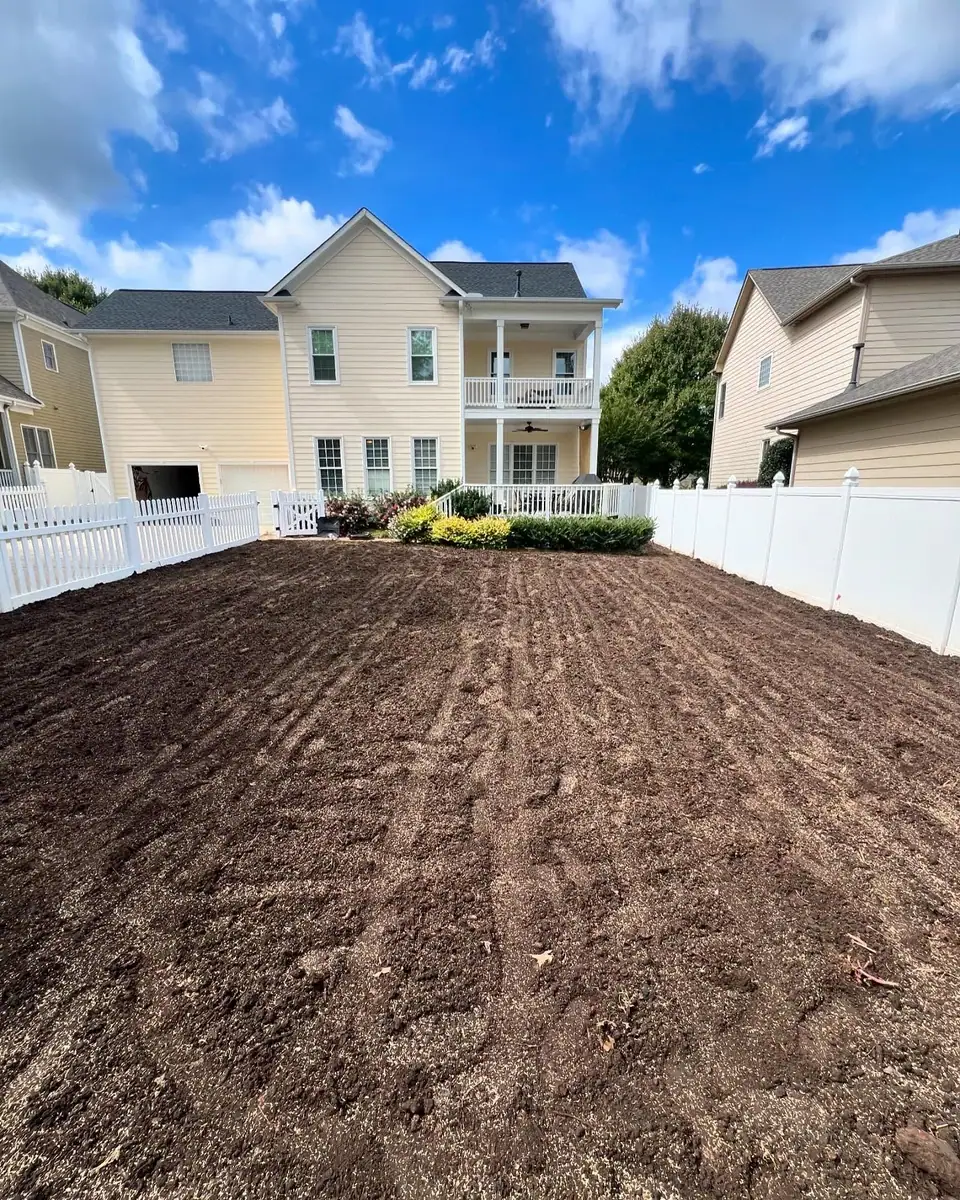
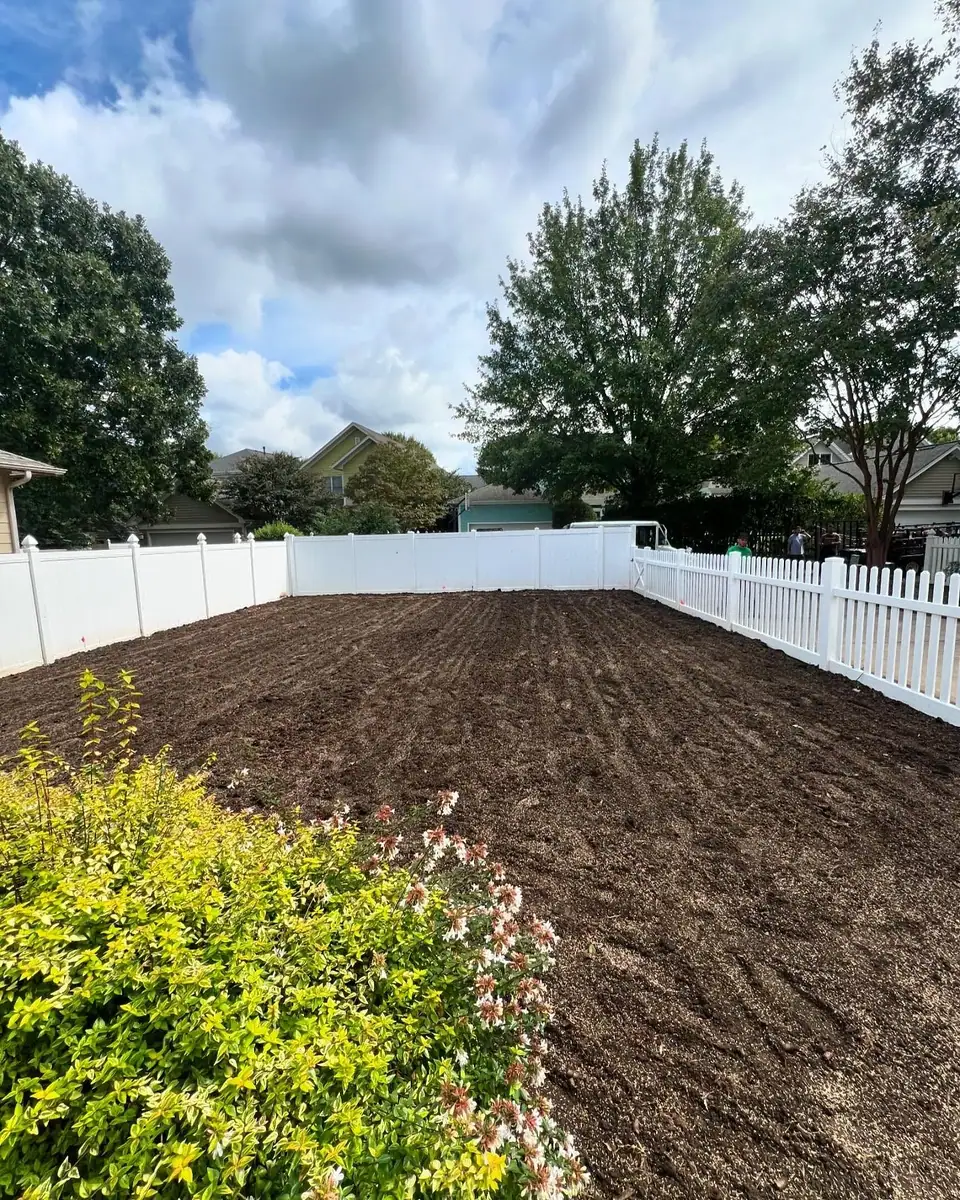
Usually not on its own, at least not right away. Bare seeded soil is extremely vulnerable until the grass develops roots, which takes weeks, and a single heavy storm can wash seed and soil downhill. On slopes and areas with runoff, seed should be protected with an erosion-control blanket or straw that holds it in place while it germinates, and the water causing the erosion should be redirected. Sod provides much faster protection because it arrives as a mature, rooted mat that can be staked on slopes. In shady areas where grass struggles, groundcovers and mulch are often a better long-term answer.
Do I need a retaining wall to stop erosion?
Not always. Many erosion problems can be solved with better drainage, grading and vegetation. A retaining wall becomes the right solution when a slope is too steep to mow safely or hold with plants, when you need usable flat space, or when soil is actively slumping toward a structure, walkway or property line. Walls must be designed with proper base, drainage behind the wall and appropriate height, since water pressure is the most common cause of wall failure, and taller walls may require engineering and permits. Galloway Scapes evaluates whether drainage and plantings will do the job or whether a structural solution is needed.
How do I stop mulch from washing out of my beds?
Mulch washes out when runoff flows through the bed, usually from a downspout, a sloped lawn above it or a hard surface draining into it. The first step is fixing the water: pipe downspouts underground and past the bed, add a swale or edging to divert lawn runoff, and grade the bed so it doesn't act as a channel. Double-shredded hardwood mulch knits together and stays put better than nuggets or pine straw on slopes. Groundcovers and denser plantings also help hold the surface. Where water must cross the bed, a stone channel or dry creek bed carries it through without taking mulch along.
We had several landscaping projects completed at our property, including new sod installation, mulching, and drainage work, and I couldn’t be happier with how everything turned out. The sod installation completely transformed the appearance of our yard.Cameron JonesSod, mulch & drainage
★★★★★
We contacted Galloway Scapes for lawn leveling and are very pleased with their service. Terry and his crew are incredible and did a great job on our lawn! They arrived on schedule and did a thorough job.Marianne NietoLawn leveling
★★★★★
Terry and his crew are the best! He is attentive, professional, and knowledgeable. I have a fast growing weed in my lawn and he works diligently on keeping it under control.Debbie HeilemannLawn care
★★★★★
Reliable, efficient, and professional, with great attention to detail. Everything looked clean, green, and well cared for.Blake TrewLandscaping
★★★★★
Very good, consistent service. They are responsive when asked about things and address concerns as they arise.David DeaconLawn maintenance
★★★★★
Reliable, punctual, creative, clean, and professional throughout the process. I really appreciated how easy they made everything.Ryan BrzyckiLandscaping
★★★★★
Knowledgeable and skilled approach to lawn maintenance and yard landscaping, with meticulous attention to detail. Fair pricing combined with outstanding results.Noelle IsheeLawn & yard landscaping
Free estimate
Tell us about your erosion control project.
A few quick details. We reply within 24 hours, usually sooner, and we walk the property before we price anything.