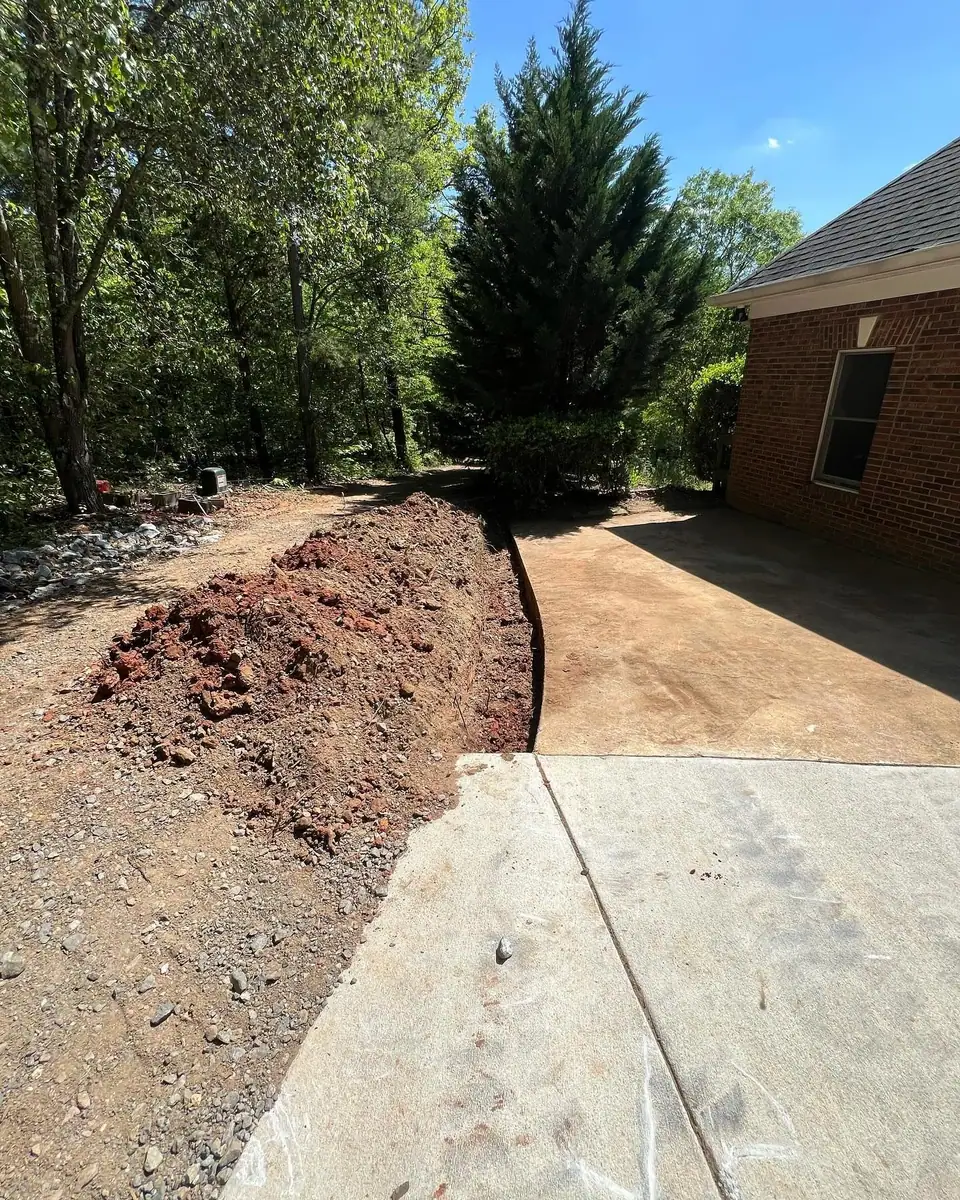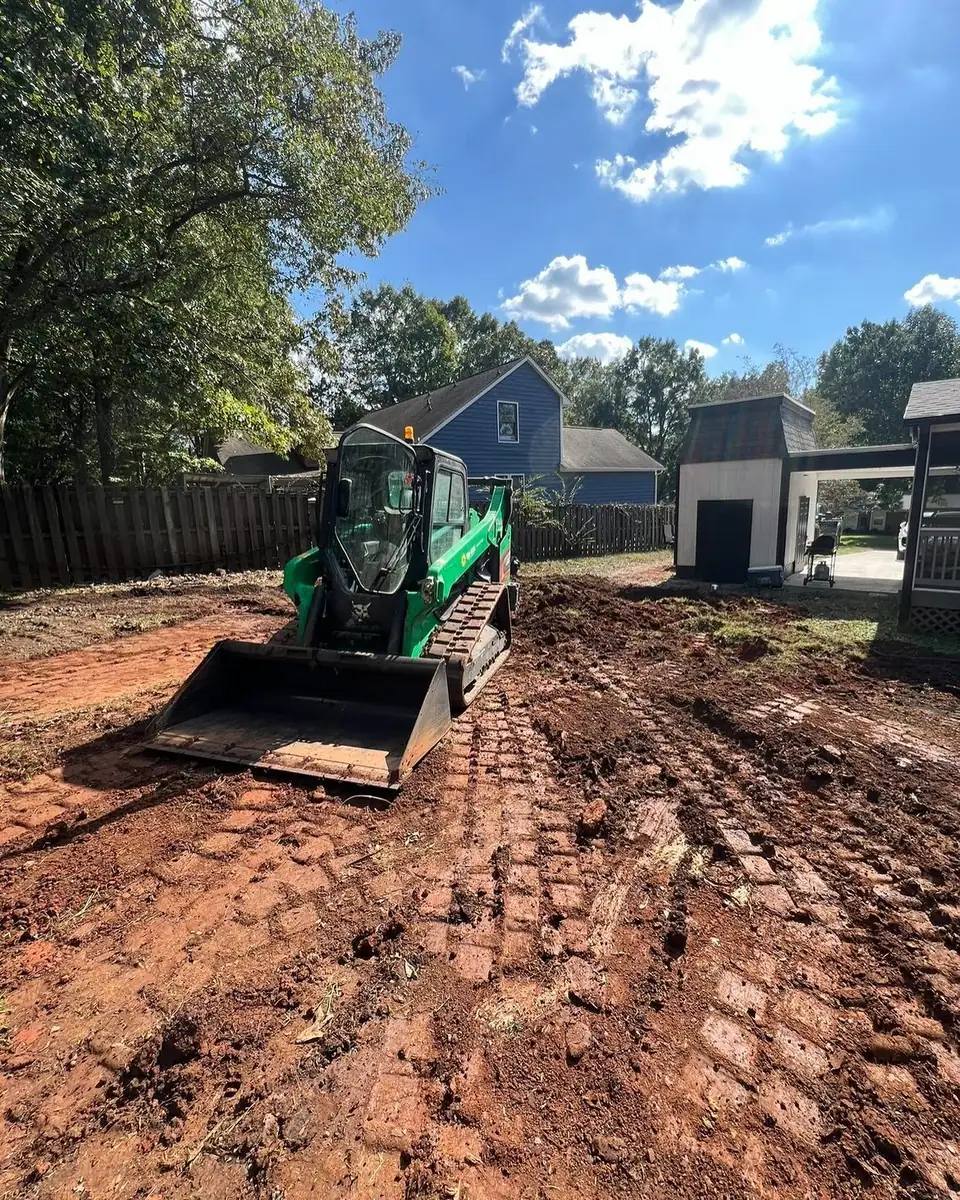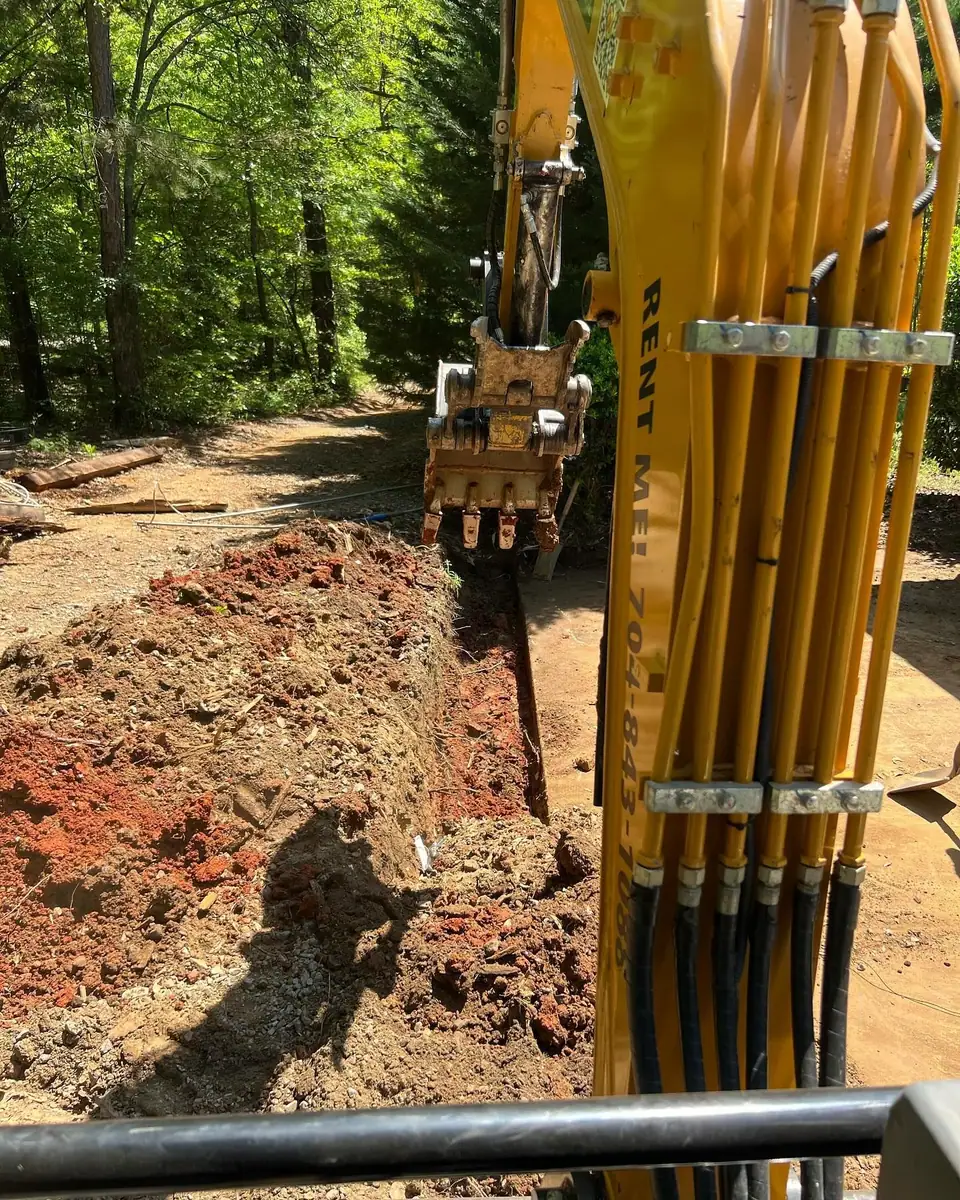
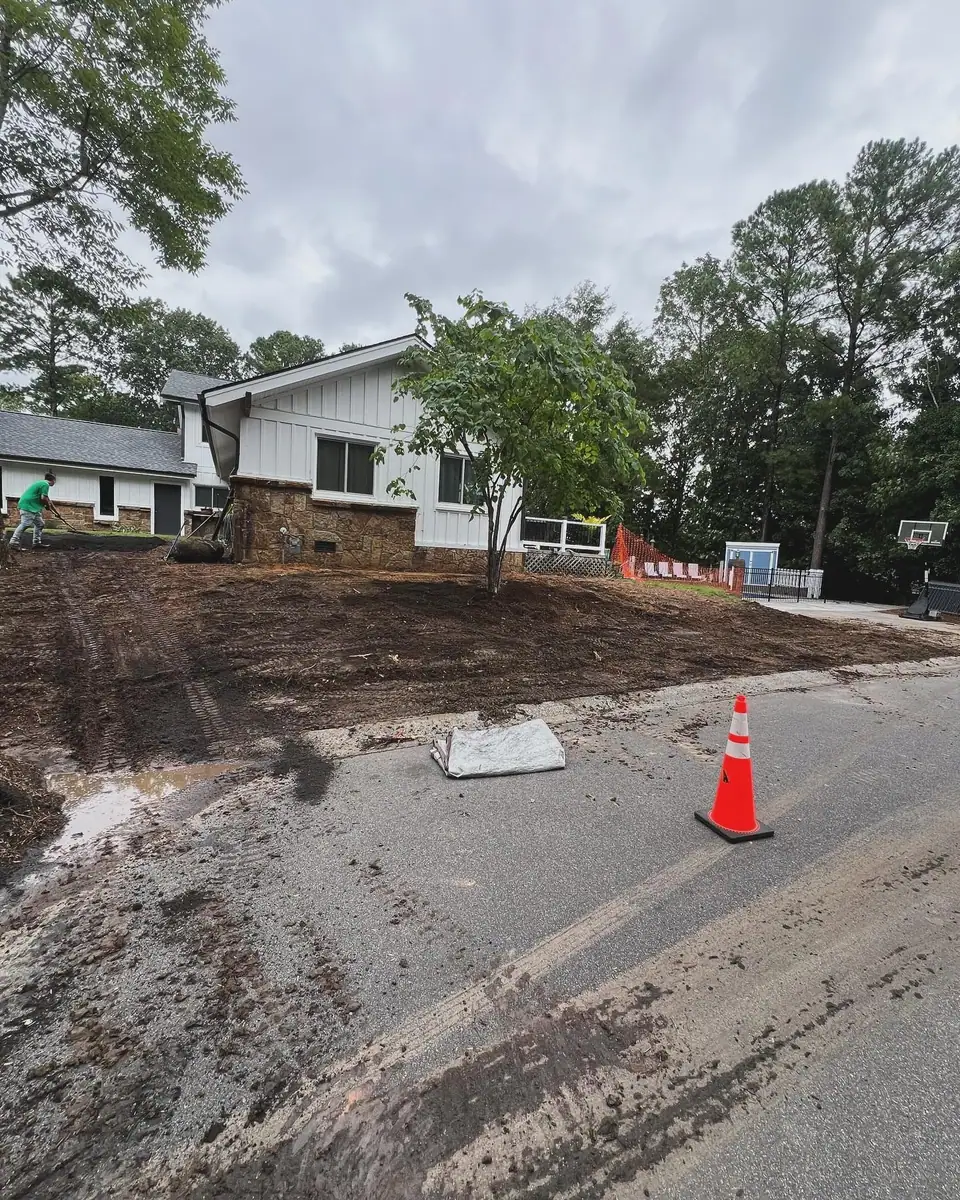
Poor drainage damages foundations in North Carolina because the Piedmont’s clay soil swells when wet and shrinks when dry. Water that collects against the house repeats that cycle and puts pressure on walls and footings. That leads to cracks, damp crawlspaces and settling. Regrading, French drains and downspout extensions stop it.
North Carolina’s Piedmont clay doesn’t absorb water quickly. When rain can’t soak in, it runs across the surface and collects wherever the grade lets it — and too often that’s right against the house.
How water damages a foundation
Soil next to a foundation that stays saturated swells, then shrinks as it dries. That repeated movement puts pressure on foundation walls and slabs and can lead to cracks, damp crawlspaces and settling. Standing water also softens the soil the footing sits on.
Warning signs to look for
- Puddles that stay near the house for more than a day after rain
- Mulch washing out of foundation beds
- Downspouts that empty right at the wall
- A damp or musty crawlspace
- Soil that slopes toward the house instead of away from it
How we fix it
We start by watching where the water actually goes. Surface water heading toward the house usually needs regrading or a swale. Ground that stays soggy needs a subsurface drain like a French drain. Downspouts often need underground extensions to a safe outlet. Many properties need a combination.
If water is already reaching your foundation, call Galloway Scapes at (803) 487-5240 for a free drainage estimate.
Need help with drainage?
Free, written estimates from an owner-led crew.