A strong HOA landscape maintenance contract in Waxhaw or Weddington lists every common area the association maintains, the exact services and frequency for each, a seasonal calendar, licensing and insurance requirements, how extra work is approved and how the contractor reports back. A written scope with a site map protects the board, sets expectations for residents and makes bids easy to compare.
Every homeowners association board eventually faces the same question: is our landscape contract actually protecting the neighborhood? In Waxhaw and Weddington, where entrances, medians and amenity areas set the first impression for buyers and residents alike, a vague contract is one of the most common reasons common areas slip. This guide walks through what an HOA landscape maintenance contract should include, written from the point of view of the crew that does the work.
Galloway Scapes is an owner-led landscaping company based in Waxhaw, NC. We maintain HOA common areas and commercial properties across Union County and the York and Lancaster County side of the state line. You can see how we structure those accounts on our HOA and commercial landscape maintenance page.
Why does the scope matter more than the price?
The scope is the part of the contract that decides what residents actually see. Two bids with the same monthly price can deliver completely different results if one includes weekly bed weeding and the other only includes mowing. When a board compares bids that were written from different assumptions, it is comparing guesses. The fix is simple: write one scope, attach a site map and ask every contractor to price that same document.
A clear scope also protects the property manager. When a homeowner emails about weeds in the island by the mailbox kiosk, the manager should be able to open the contract, see whether that island is included, how often it is serviced and what standard applies. If the answer takes more than a minute to find, the scope is not detailed enough.
List every area the HOA maintains
Start with an inventory. Walk the neighborhood with the plat or a satellite map and mark every piece of ground the association is responsible for. In most Waxhaw and Weddington communities, that list includes:
- The main entrance, monument signs and any secondary entrances
- Medians, traffic islands and cul-de-sac centers
- Amenity center, clubhouse, pool deck surroundings and playground
- Walking trails, greenways and the edges of sidewalks the HOA owns
- Retention or detention pond banks and outfalls
- Buffers, open space and right-of-way strips along the main road
- Mailbox kiosks and any small pocket parks
Give each area a name or number on the map. That simple step makes every conversation that follows faster, from the bid walk to the monthly report.
Define the service and frequency for each area
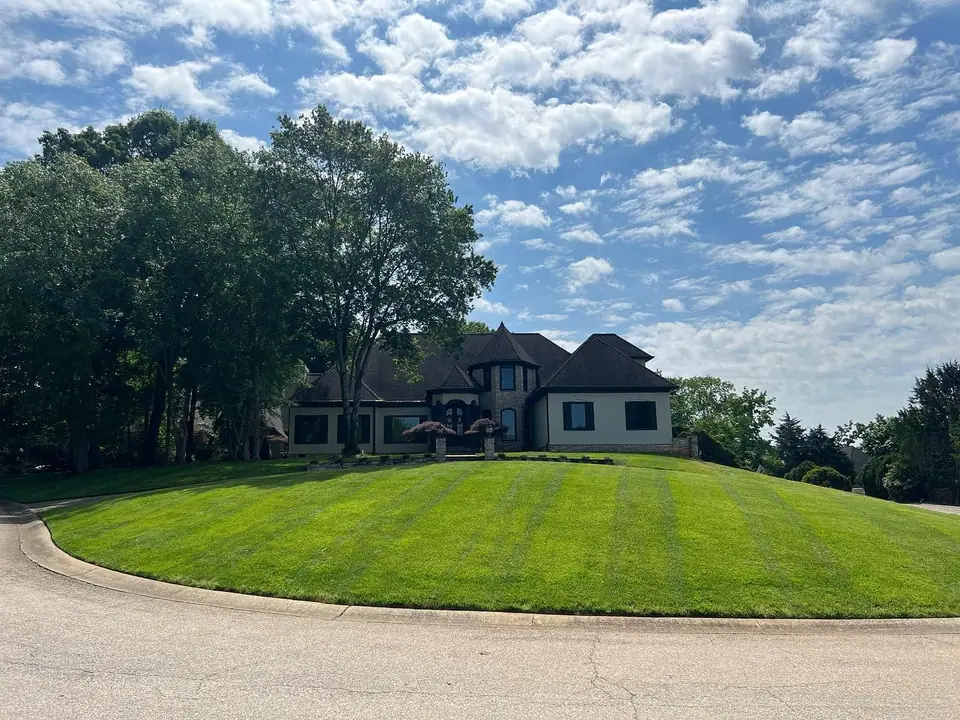
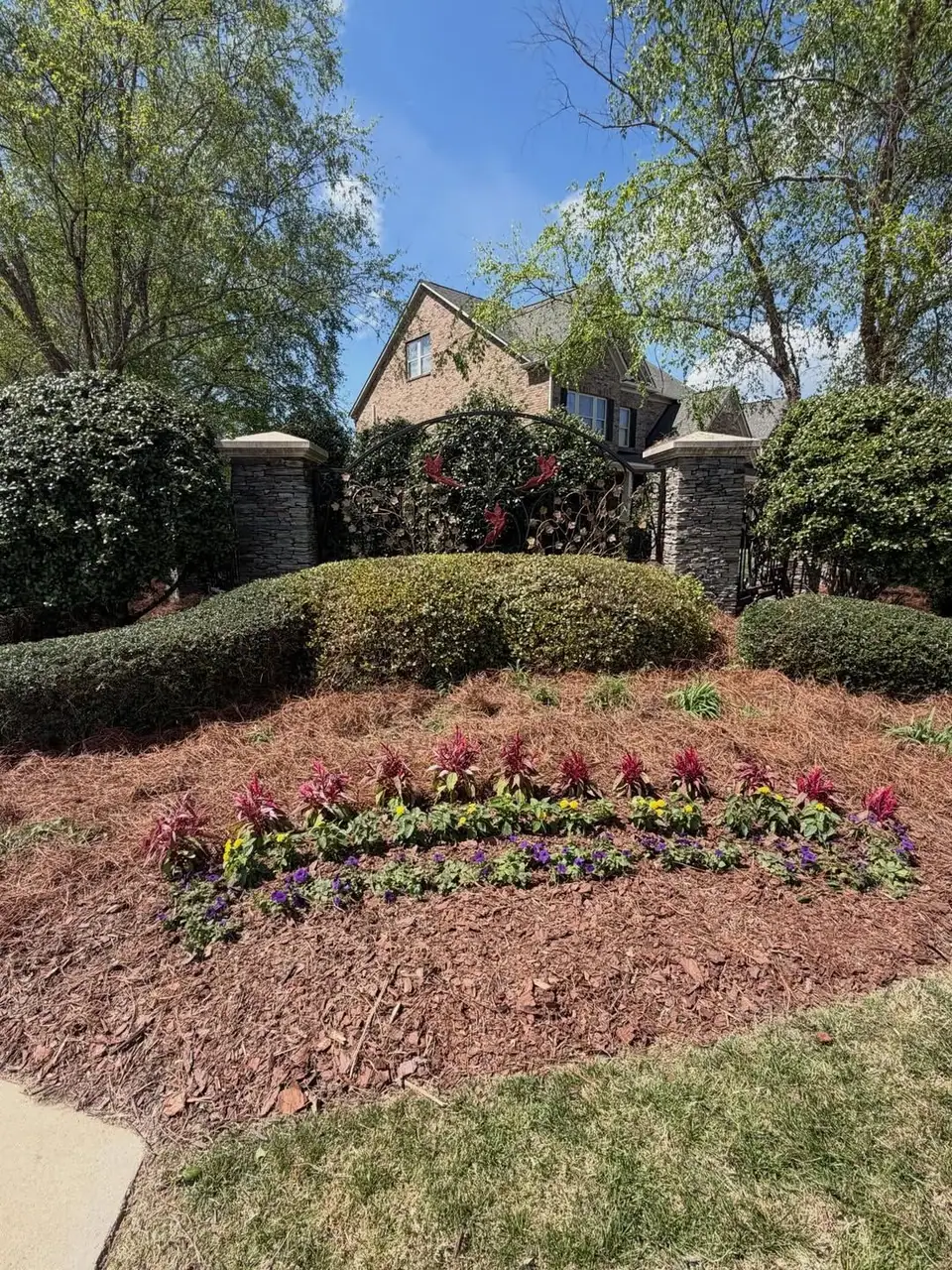
Not every area needs the same care. The entrance is the neighborhood’s front door and usually deserves the highest standard: weekly mowing in season, edging every visit, beds kept weed-free and seasonal color. A wooded buffer or pond bank may only need periodic cutting to keep it tidy and accessible. Writing a level of service for each area keeps the budget focused where people notice it.
Turf
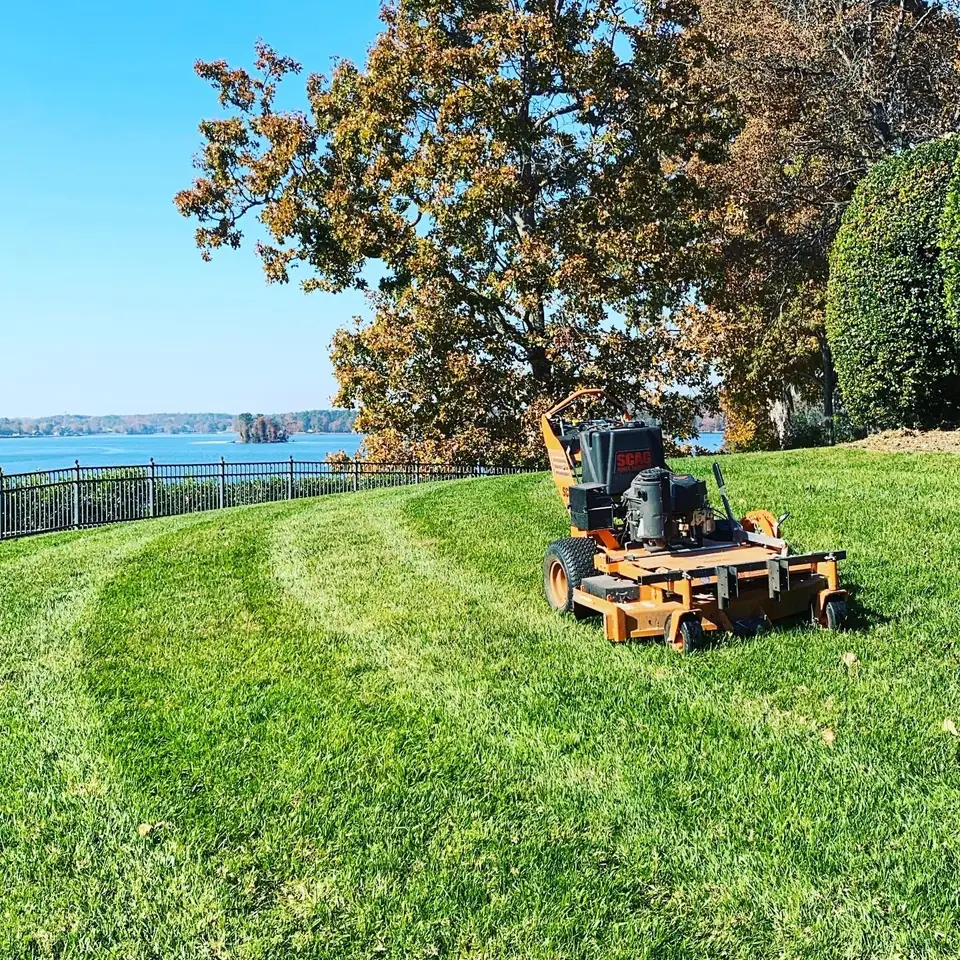
Specify mowing frequency by season, the target mowing height for the grass type and what happens on every visit. Most common areas around Waxhaw are Tall Fescue or Bermuda. Fescue should be mowed higher through summer heat, and Bermuda is mowed lower and goes dormant in winter, so the schedule should reflect the turf actually on the property. Include string trimming around obstacles, edging along curbs and walks, and blowing clippings off all hard surfaces.
Beds and shrubs
Spell out how often beds are weeded, how edges are maintained, the mulch or pine straw depth and when it is refreshed, and how often shrubs are pruned. A pruning rotation, for example spring and late summer for most evergreen shrubs, prevents the overgrown look that creeps in when pruning is left to “as needed.”
Seasonal color
If the HOA wants color at the entrance, write the number of rotations per year, the bed locations and who chooses the plants. Two rotations, a cool-season planting in fall and a warm-season planting in spring, is common in the Charlotte area.
Licensed applications
Pre-emergent, weed control in beds and curb cracks, and turf treatments should be listed with their timing. In North Carolina, anyone applying pesticides for hire must be licensed through the NC Department of Agriculture and Consumer Services. Galloway Scapes holds North Carolina and South Carolina Pesticide Application Licenses, so applications on common areas are handled by a licensed applicator.
Add a seasonal calendar
A calendar turns the scope into something the board can budget and the manager can share with residents. A simple version for a Waxhaw or Weddington HOA might look like this:
- January and February: dormant pruning, bed cleanup, pre-emergent
- March through May: mowing season starts, mulch or pine straw refresh, spring color
- June through August: weekly mowing at summer heights, weed control, hedge shaping
- September through November: aeration and overseeding of Fescue areas, fall color, repeat leaf removal
- December: final leaf cleanup, storm response and next-year planning
When a resident asks when the entrance will get new pine straw, the manager can answer with a month instead of a guess.
What insurance and licensing should the contract require?
The contract should require general liability insurance, workers’ compensation coverage where required, and a certificate of insurance naming the association and management company. It should also require that anyone applying herbicides or other pesticides holds a current license in the state where the property sits. These requirements protect the HOA if something goes wrong and are standard for any professional contractor.
How should extra work be approved?
Storm cleanup, dead shrub replacement, drainage repairs and irrigation fixes happen every year. The contract should say how those are handled: the contractor reports the issue, provides a written quote and waits for approval from the manager or a designated board member before starting, except in emergencies such as a tree blocking the entrance. This keeps surprise invoices out of board meetings.
How should the contractor communicate with the board?
Ask for one named point of contact, a phone number that gets answered and short visit notes or photos when something needs attention. A once- or twice-yearly property walk with the landscape committee is a good habit too. That is where small improvements, such as replacing tired shrubs at the entrance or fixing a wet spot near the kiosk, get planned and budgeted.
What contract term makes sense for an HOA?
Most associations do well with an annual agreement that renews with a review. It gives the board a regular chance to adjust the scope and confirm the service is meeting expectations, while still giving the contractor enough stability to staff the account properly. Check that the agreement includes a reasonable written notice period for termination, so a change can happen cleanly if it is ever needed.
Common mistakes in HOA landscape contracts
- A single line such as “maintain all common areas” with no area list or frequencies
- No mowing heights, which leads to scalped Fescue in July
- Mulch “as needed,” which in practice means rarely
- No leaf plan, leaving entrances buried from late October through December
- No approval process for extra work
- No licensing requirement for chemical applications
Frequently asked questions from HOA boards
How often should HOA common areas be mowed in Waxhaw?
During the main growing season, roughly late March through October, most entrances, medians and amenity lawns should be mowed weekly so they never look overdue. Fescue areas may slow down in the hottest stretch of summer and again in late fall, and Bermuda goes dormant in winter, so frequency can drop in the shoulder seasons. Low-visibility areas such as buffers and pond banks often need far fewer cuts. The contract should spell out frequency by area and by season rather than one number for the whole neighborhood.
Should the HOA contract include irrigation?
If the entrance or amenity areas have irrigation, decide whether the landscaper is responsible for seasonal startup, monthly checks, controller adjustments and winterization, or whether a separate irrigation company handles it. Either works. What matters is that the contract says who owns it, so broken heads and leaks do not go unnoticed for weeks while turf and plantings suffer.
Who should be the contractor’s point of contact at the HOA?
Pick one person, usually the property manager or a landscape committee chair, to receive reports and approve extra work. When the contractor hears from several board members with different requests, the scope gets muddy and nobody is sure what was approved. One contact on each side keeps the relationship simple.
Local conditions that belong in a Waxhaw HOA contract
Union County’s red clay compacts easily and drains slowly, which is why core aeration of Fescue common areas in early fall pays off. Many Waxhaw and Weddington neighborhoods also have mature oaks and maples along entrances and buffers, so the leaf plan matters more here than in newer, treeless subdivisions. Summer thunderstorms bring down limbs and wash mulch off slopes, so the storm-cleanup clause should be clear. Writing these local realities into the contract avoids surprises later.
Getting a bid from Galloway Scapes
If your board is reviewing its landscape contract or collecting bids, we will walk the property with you, help you build a clear scope and site map if you do not have one, and provide a written, itemized bid. We serve associations in Waxhaw, Weddington, Marvin, Wesley Chapel and the surrounding towns. Call (803) 487-5240 or request a free estimate online.
Need help with hoa & commercial landscaping?
Free, written estimates from an owner-led crew.